FACTDROP

860137_cda0d3b5c72f4e0b98e952b9f2227b18~mv2.gif

Pages

  • Home
  • Reports
  • Art
  • Podcasts
Showing posts with label crises. Show all posts

9/20/2011

EU: Economy enters 'dangerous phase'

Protests in Rome over the austerity cuts, the latest in a series of protests across Europe


Πηγή: BBC
By Kabir Chibber
Sep. 20 2011


Three nations in the eurozone - the 17 nations that use the euro - have been recipients of bailouts as attempts to solve the crisis keep stalling.

Italy became the latest to feel the domino effect of the markets when its debt rating was lowered, the latest in a series of downgrades.

Greece, Spain, the Irish Republic and even Cyprus have also had their ratings cut this year. The future of the euro is being questioned in a way it never has since 1999.

Which countries have fallen, and which are feared to be next?

GREECE

The problem: Greece's huge debts, about 340bn euros (£297bn; $478bn).

In late 2009, after months of speculation and sovereign debt crises in Iceland and the Middle East, Greece finally admitted its debts were the highest in the country's modern history.

Since then, a 110bn-euro bailout was passed by the eurozone last year and a second bailout of roughly the same size was agreed earlier this year - but not yet passed.

Most observers remain highly sceptical of Greece's ability to ever repay its huge mountain of debt. Talk persists of an unprecedented default or of Greece leaving the eurozone.

Because of the interconnectedness of the European economy, this would cause huge losses for French and German banks.

Thus, though Greece has been bailed out, fears of it running out of money continue to plague investors.

International credit markets remain wary of Greece because of its sovereign debt rating.

Ratings: Greece is now considered to be "junk" by the ratings agencies, meaning it has a very high chance of defaulting. S&P has cut its debt seven times since 2009, from A to CC, the third-lowest rung on its rating scale.

S&P: CC

Moody's: Ca

ITALY

The problem: Italy has the highest total debt in the eurozone, amid stagnant growth.

In the summer, the country was charged record levels to borrow, which prompted renewed calls to pass spending cuts.

The alternative, selling more debt, was unsustainable at rates that reached 6%.

Rome laid out 60bn euros of austerity measures and aims to balance its budget by 2013, but markets have been concerned over its growing debt load in relation to GDP - the second-highest behind Greece in the eurozone.

If Italy was to be bailed out, few think that the eurozone (or Germany in particular) could actually afford it.

But Italy has the advantage of having most of its debt owed to its own people rather than external investors. This buys it more breathing room than, say, Greece.

Ratings: Italy was last triple-A in 1995. Since then, its rating has been fairly stable near the top of the investment grade rankings.

S&P: A

Moody's: Aa2

SPAIN

The problem: The housing boom turned to bust, leaving the country's banks loaded with bad debt and the highest unemployment rate in the eurozone.

Spain has also seen record borrowing costs recently, forcing its government to adopt numerous austerity measures to get its finances under control.

Spain, like Italy, is considered too expensive a proposition for the eurozone to realistically bail out.

This is why the eurozone has tried to help lower its cost of borrowing, rather than give it loans as it did to its neighbour, Portugal.

Ratings: Last at the highest rating in 1992, the Iberian nation has been cut twice since 2009.

S&P: AA

Moody's: Aa2

FRANCE

The problem: The country's banks bear a heavy exposure to Greek debt.

While France's public finances have not yet been questioned heavily by the market, its banks have seen sharp falls on the stock market.

In September, Moody's downgraded Credit Agricole and Societe Generale after reviewing their exposure to Greek debt.

Credit Agricole and Societe Generale have seen their share prices fall by about two-thirds since February, while BNP has fallen by more than half.

France has also announced plans to cut spending by 45bn euros over the next three years.

Ratings: France was given the top rating by Moody's in 1988, and kept it ever since, despite anaemic growth.

S&P: AAA

Moody's: Aaa

GERMANY

The problem: Most of its neighbours are broke.

Unlike many of its neighbours, Germany enjoyed vigorous economic growth - GDP rose by 3.6% in 2010. Unemployment is lower than before the 2008 crisis.

And the government plans to cut the budget deficit by a record 80bn euros by 2014.

While that growth has slowed, the main problem is that Europe's largest economy is the biggest contributor to the bailout fund used to help stricken nations.

And Germany's banks have a heavy exposure to debt from Greece, Europe's biggest headache.

This means in the event of a Greek default, Germany would probably have to bail out its own banks.

But having taken the lead in bailing out three nations - Greece twice - how many more can the country afford?

Ratings: Following reunification, the country was given the highest possible creditworthiness by S&P in 1992 and Moody's in 1993.

S&P: AAA

Moody's: Aaa

UK

The problem: UK banks have a heavy exposure to Irish debt.

Other than that, the UK has been relatively unscathed, while its eurozone neighbours endure turmoil.

The coalition government has announced the biggest cuts in state spending since World War II.

UK gilts are viewed as one of the safest investments in the world, with the country's borrowing costs falling to recent lows.

But the situation remains precarious. The country's budget deficit was 10.3% last year - this is just behind Greece, greater than Spain's and more than triple that of Germany.

Ratings: In 2009, S&P lowered its outlook on British debt to "negative" from "stable" for the first time since the agency started rating its public finances in 1978. But the triple-A rating has been affirmed since 1993.

S&P: AAA

Moody's: Aaa

IRISH REPUBLIC

The problem: The country's banking system collapsed.

The country's biggest banks were taken under government control in the financial crisis and recapitalised. The cost of doing that has been about 70bn euros.

The Irish received a bailout worth 85bn euros from the eurozone and IMF, then passed the toughest budget in the nation's history.

Since then, the IMF has said the Irish Republic is "showing signs of stabilisation" and there is a sense that the worst has now passed.

Ratings: The Irish Republic held the highest triple-A rating as recently as 2001. S&P has cut it five times since 2009.

S&P: BBB+

Moody's: Ba1


PORTUGAL

The problem: A shrinking economy straining its budget.

The country has been the third to get a bailout, worth 78bn euros. The previous government fell after failing to pass austerity measures, which the subsequent government had passed.

Investors have since moved on to ongoing worries about Greece, Spain and Italy.

Ratings: Portugal has been cut four times since 2009. It was once triple-A, way back in 1993.

S&P: BBB-

Moody's: Ba2


0 comments
Email ThisBlogThis!Share to XShare to FacebookShare to Pinterest
Labels: crises, Europe, France, Germany, Greece, Irish republic, Italy, Portugal, Spain, UK

9/13/2011

German Leader Faces Key Choices on Rescuing Euro

Chancellor Angela Merkel of Germany speaking to the German Parliament last week on the European debt crisis.


Πηγή : New York Times
By NICHOLAS KULISH
Published: September 12, 2011


BERLIN — As Europe struggles to reverse a plunge in financial confidence, the world waits for Germany’s chancellor, Angela Merkel, to make a fundamental choice. She, more than any other European politician, will have to either summon the leadership to rescue the euro or concede that the political will is not there.

Mrs. Merkel, 57, faces far-reaching decisions about how to deal definitively with the debt crisis in Europe and, more immediately, whether to allow Greece to default or even to leave the currency union. American officials fear that if she does not act more decisively, bank lending could freeze up and the result would be another sharp financial downturn on both sides of the Atlantic.

Fears of a worsening debt crisis slammed European stocks on Monday, especially shares of French banks, forcing the French government to declare its support for its three largest financial institutions. The turmoil added to worries that the Greek crisis would prove difficult to contain without more robust action from Germany and, ultimately, its taxpayers.

The project of European integration, which began in the difficult years after World War II, is also on the line. If Greece were forced to abandon the euro, as more and more voices on the German right are demanding, it would be a jarring setback for solidarity on the Continent.

Critics say Mrs. Merkel has focused too much on protecting her political standing inside Germany, placing her position as chancellor above the need for bold, risk-taking leadership to rescue the European currency zone. But that would mean sinking more German money into an ever-deepening economic union that voters have shown an antipathy for.

Her governing coalition is already splintering over the Greece bailout, and her party, the Christian Democratic Union, has suffered setbacks in state elections, including this month in the state of Mecklenburg-West Pomerania, where her parliamentary home district is located. Her father died in the stretch run heading into that election, adding personal anguish to a politically fraught moment.

Mrs. Merkel’s efforts to please both sides on the question of the debt crisis — through stern talk about Greece’s failure and profligacy on the one hand and a series of conditional debt guarantees to prop up Europe’s problem child on the other — have succeeded in ultimately pleasing neither.

Supporters argue that Mrs. Merkel has worked in a typically low-profile, methodical fashion to make the best of a difficult situation, winning passage for unpopular bailouts while wringing greater fiscal responsibility from the most heavily indebted nations.

The resignation Friday of Jürgen Stark, a German member of the executive board of the European Central Bank, and the second significant German figure at the bank to leave its governing council this year, offered a window into the intensity of German opposition to the steps Germany and the central bank have already taken in bailing out the weaker southern nations.

“The chasm between what is needed in terms of economic policy and what is possible in terms of domestic politics and party politics has widened,” said Cornelius Adebahr, a Europe expert at the German Council on Foreign Relations in Berlin. “She needs to show stronger leadership, but so far she hasn’t even revealed in what direction she really wants to move.”

Events appear to be forcing Mrs. Merkel to tip her hand. With the latest market assault this week on French financial institutions, the spillover from the debt crisis has now reached the German border. With first Italy and now France affected, problems once dismissed as confined to the distant periphery of Greece and Portugal have arrived at the core of Europe, and with them unavoidable questions about the continent’s future.

President Nicolas Sarkozy of France, her buoyant, antic foil, hopes to draw Mrs. Merkel into deeper commitments to an economic government for the currency zone, once again making France and Germany the motor of European integration that the two countries have been since their reconciliation after World War II. And if France’s struggles are not enough to prod Germany and its phlegmatic leader to take bold action, analysts say, it is likely that nothing will.

“We’ve been pretending for a year and a half that the Greek crisis could be solved this way, but it’s not the case and this has created uncertainty,” said Guntram B. Wolff, deputy director of Bruegel, a research organization based in Brussels.

The latest volatility and vulnerability in European markets may well mark the end of Mrs. Merkel’s efforts to straddle the fence between shielding Greece from default and avoiding an irrevocable step toward deeper economic and fiscal union between the euro zone countries.

The prolonged state of confusion and uncertainty may be as bad or even worse than the underlying problems themselves.

“If they would agree on a specific solution, say to the default of Greece, I would see a relatively low likelihood that the euro zone would also default or be destroyed,” said Michael Schröder, head of the research department of international finance at the Centre for European Economic Research in Mannheim, Germany. “What’s really a danger is this chaos which we have at the moment.”

To observers outside Germany, the stern chancellor appears strong, but unwilling to act decisively. Inside Germany she sits atop a fractious and increasingly unreliable coalition of three parties — her Christian Democratic Union, the Christian Social Union of Bavaria and the pro-business Free Democrats.

France, as a presidential republic with a majority party in Parliament, has fewer domestic political problems than Germany, with its federal system and negotiated coalitions. But Mr. Sarkozy knows that he cannot move without Germany. Much as the two leaders do not like each other and have radically different personalities, Mr. Sarkozy has sought to ensure that France and Germany move as one, and that he is outwardly supportive of Berlin.

Much hinges on getting all 17 nations in the euro zone to ratify the decisions of July 21, as the French Parliament has done, which includes an increase in the bailout fund and an expansion of its powers. Those decisions would already mark a shift in Germany’s harder-line positions on the euro.

An expanded European Financial Stability Facility would be able to act as a kind of bank, supported by all the members. It would be a significant step toward using Europe’s collective clout with debt markets to rescue countries with much weaker standing.

Dedicated supporters of the European project agitate for a centralized fiscal union, more like the United States, to replace Europe’s current hybrid structure, in which member countries use a common currency even as they determine spending and debt levels on their own. But it is no longer clear whether Mrs. Merkel can even muster the votes to pass the Greek bailout deal reached in July, much less win backing for bold new steps.

In recent days, many of Mrs. Merkel’s conservative and free-market allies in Parliament and even respected German economists have grown ever harsher in their condemnations of Greece. The drumbeat from the right to not only cut off aid, but indeed force Greece out of the euro zone, has grown ever louder.

Eurobonds — issuing common European debt that any member of the currency zone could tap — is one popular solution among European Union officials in Brussels.

But analysts say that if forced to choose, the Free Democrats in all likelihood would vote no on them, a parliamentary defeat that could well bring down her government.

“That,” Mr. Adebahr said, “would be the end of the road.”

0 comments
Email ThisBlogThis!Share to XShare to FacebookShare to Pinterest
Labels: crises, ECB, euro, Europe, Greece, Merkel

9/02/2011

Greek Financial Crisis Takes New Dimensions

The Chairlady of the Parliament Budget Office resigned: "National debt is unchecked and beyond control"

Πηγή: Fromagreekangle
2/9/2011


Greek Finance Minister Evangelos Venizelos had long negotiations with Troika officials last night. Their third meeting is currently under way. The Troika representatives are “pushing” for a faster implementation of measures like a “one for all” payroll for the civil service, the privatisation of public utilities companies, the fight against tax evasion and so on.

In the meantime,the serial that started last night with the report on the debt written by the Parliament Budget office – an office set up by the present government- ended with the resignation of its Chairlady Ms. Balfousia.

The Parliament Budget office circulated a report which claimed that despite all the austerity measures the national debt has not been checked and is in fact beyond control. Financial Minister Evangelos Venizelos openly questioned whether the Office had the necessary “experience” to issue such a report. Ms. Balfoussia resigned from her post after a long meeting with the Parliament Chairman Mr. Petsalnikos.


0 comments
Email ThisBlogThis!Share to XShare to FacebookShare to Pinterest
Labels: Balfousia, crises, evangelos venizelos, Greece, Parliament Budget Office, Troika

8/17/2011

16 Statistics Which Prove That The American People Are Absolutely Seething With Anger


Πηγή: The Economic Collapse
August 16, 2011


According to a whole host of polls and surveys, the American people are incredibly angry right now. The American people are hopping mad at the government, the American people are hopping mad about the economy and the American people are hopping mad about the direction that this country is headed. Never before in modern U.S. history have the American people been this angry. There is vast disagreement about what the solutions to our problems actually are, but what everyone can agree on is that the American people are absolutely seething with anger right now. The statistics that you are about to read are mind blowing. We used to be such a happy country. Once upon a time we were one of the happiest places on earth. But as the economy has fallen to pieces anger has been steadily growing. If something is not done to turn the economy around eventually this anger is going to erupt in frightening and unpredictable ways.

The American people are not equipped to handle hard times. We are incredibly spoiled. Most of us have only known good times, and most of us have been taught that we will have endless prosperity all of our lives because we live in the greatest nation on earth.

Well, "the greatest nation on earth" is about to get a massive wake up call. We are up to our eyeballs in debt and we are bleeding jobs, businesses and wealth at an astounding pace. Our economy is dying right in front of our eyes, and most Americans have been so "dumbed-down" that they don't even realize what is happening.

But what most Americans do know is that things are "bad" and they want someone to "fix" things. They know that something is "not right" and they want things to go back to the way things used to be. The longer it takes for things to return to "normal", the angrier they are going to get.

The following are 16 statistics which prove that the American people are absolutely seething with anger right now....

#1 A new Washington Post poll has found that a whopping 78 percent of Americans are dissatisfied "with the way this country’s political system is working".

#2 That same poll found that only 26 percent of Americans believe that the federal government can solve the economic problems that we are now facing.

#3 Gallup says that Barack Obama's job approval rating has hit an all-time low of 39%.

#4 According to a recent CBS News/New York Times poll, Congress has a disapproval rating of 82%.

#5 A new Rasmussen survey has found that 85 percent of Americans believe that members of Congress "are more interested in helping their own careers than in helping other people."

#6 That same survey found that 46 percent of the American people believe that most members of Congress are corrupt. That figure was a new all-time high.

#7 According to a different Rasmussen survey, only 17 percent of Americans now believe that the U.S. government has the consent of the governed.

#8 A recent Reuters/Ipsos poll discovered that 73 percent of the American people believe that the nation is "on the wrong track".

#9 A recent poll taken by Rasmussen found that 68 percent of Americans believe that we are actually in a recession right now.

0 comments
Email ThisBlogThis!Share to XShare to FacebookShare to Pinterest
Labels: american people, crises, debt, economy, poll, poverty, statistcs, stress, unemployment, US

8/12/2011

The Next Greece


Πηγή: FinancialPost
By Daniel J. Mitchell
Aug. 4, 2011 3:08 AM ET


America is on a path to becoming a Greek-style welfare state. Thanks to the Bush-Obama spending binge, the burden of federal spending has climbed to about 25% of national economic output, up from only 18.2% of GDP when Bill Clinton left office.

But that's just the tip of the iceberg. Because of a combination of demographic forces and poorly designed entitlement programs, federal spending could consume as much as 50% of economic output by the time the Baby Boom generation is fully retired.

One symptom of all this excessive spending is that Washington is awash in red ink. The United States is now in its third consecutive year of trillion-dollar deficits and the politicians just had to increase the nation's US$14.3-trillion debt limit.

But it wasn't easy getting there. Just as happened with the "government shutdown" debate in March, Republicans and Democrats had fierce disagreements over the right approach. They bickered until the last minute and then finally agreed to more than US$900billion of supposed spending cuts and the creation of a "super-committee" charged with proposing another US$1.5-trillion of deficit reduction.

So which side won this fight? Republicans are bragging that they got spending cuts today, a promise of spending cuts in the future, and no tax increases. Democrats, meanwhile, are chortling that they took the debt issue off the table until after the 2012 elections, protected their favourite programs and created a super-committee that will seduce the GOP into a tax increase.

Ignore that bragging. The easy answer is that politicians of both parties were the victors and taxpayers are the ones left in the cold.

In other words, the budget deal was a victory for the political establishment.

Here's why Republicans are winners. They get to tell their Tea Party activists that they forced Obama to cut spending. It doesn't matter that federal spending will actually be higher every year and that the cuts were based on Washington math (a spending increase becomes a spending cut if outlays don't climb as fast as some artificial benchmark).

They also get to tell their anti-tax activists that they held the line. Perhaps most important, the super-committee must use the "current law" baseline, which assumes that the 2001 and 2003 tax cuts expire at the end of 2012. But why are GOPers happy about this, considering they want those tax cuts extended? For the simple reason that Democrats on the super-committee therefore can't use repeal of the "Bush tax cuts for the rich" as a revenue raiser.

This means that most Republican incumbents are well-positioned to win re-election.

Here's why Democrats are winners. Thanks to the magic of government math, despite all the talk of budget cuts, discretionary spending will be more than US$100-billion higher in 2021 than it is this year. And since defence spending in Iraq and Afghanistan presumably is winding down, this means even more money will be available for domestic programs.

In addition to telling the pro-spending lobbies that the gravy train is still on the tracks, they also get to tell the classwarfare crowd that there's an improved likelihood of higher taxes for corporate jet owners and other "rich" people. Notwithstanding GOP assertions, nothing in the agreement precludes the supercommittee from meeting its US$1.5-trillion target with tax revenue. The 2001 and 2003 tax legislation is not an option, but everything else is on the table.

This means that most Democratic incumbents are well-positioned to win re-election.

It's worth pointing out that this doesn't mean all Republicans and all Democrats are happy about the deal. The hard-core conservatives are upset that the deal is mostly smoke and mirrors on the spending side and that there may be a tax-increase trap on the revenue side.

The hard-core liberals, by contrast, are angry that there are any spending cuts, even ones based on Washington math. Moreover, they want higher tax rates on upper-income taxpayers today, not a super-committee that may or may not follow through on soak-the-rich policies in the future.

One group of people, however, unambiguously got the short end of the stick in this budget deal. Ordinary Americans are caught in the middle. They're not poor enough to benefit from the federal government's plethora of income-redistribution programs. But they're not rich enough to have the clever lobbyists and insider connections needed to benefit from the highdollar handouts like ethanol subsidies and bank bailouts.

Instead, middle-class Americans play by the rules, pay ever-higher taxes, and struggle to make ends meet while the establishment of both parties engages in posturing as America slowly drifts toward a Greek-style fiscal meltdown.
0 comments
Email ThisBlogThis!Share to XShare to FacebookShare to Pinterest
Labels: America, crises, debt, Greece

8/11/2011

Crisis may speed up big trade deals


Πηγή: Bilaterals
By Shin Hyon-hee
10 August 2011


Although a dreary outlook for the U.S. economy coupled with a rating cut has triggered mayhem throughout the world’s stock markets this week, it may serve as a catalyst for free trade agreements, experts said Wednesday.

A spate of grim economic figures stoked fears of a “double-dip” recession. The world’s largest economy grew at an annual rate of less than 1 percent in the first half of the year, its jobless rate is stuck at 9.1 percent and consumer spending fell in June for the first time in nearly two years.

The U.S. Federal Reserve now sees its economy remaining feeble for another two years but its $600-billion bond-buying bucket is already exhausted. The Fed would need further measures other than promising rock-bottom interest rates to bring the economy back ― such as trade deals ― experts say.

“For the U.S., the weak dollar means stronger export competitiveness,” said Kwak Soo-jong, a senior researcher at Samsung Economic Research Institute. “The current situation can stimulate competition in the manufacturing sector given lower prices of American products.”

Pending U.S. agreements with Korea, Colombia and Panama would benefit the U.S. economically and strategically, said the Brookings Institution, a Washington-based think tank.

“Carefully developed accords will boost U.S. exports significantly, especially in the key automotive, agricultural and commercial services sectors,” the organization said in a paper, adding to other benefits such as the enhancement of diplomatic ties and new investment opportunities.

Korea and the U.S. signed a deal in 2007 but legislatures of both countries have yet to approve it. President Barack Obama had sought its ratification before a summer recess begins on Aug. 6, but lawmakers got caught up in a partisan brawl over raising the federal debt ceiling.

If ratified, the pact would be the largest for the U.S. since the North American FTA with Canada and Mexico, which went into effect in 1994. Korea has seven free trade partners in effect with the European Union being the largest.

“For the U.S., the only means it could lean on right now is exports,” said Ko Hee-chae, a senior researcher at the Korea Institute for International Economic Policy.

“The slump has squeezed consumer spending and the government budget. The deal can be a good tool to invigorate sentiment despite a decline in Korea’s share in U.S. exports compared with the past.”

Upon implementation, tariffs on 95 percent of U.S. consumer and industrial exports will be eliminated within five years, data show.

U.S. Secretary of State Hillary Clinton said the tariff removal alone would boost U.S. exports by more than $10 billion and help the Korean economy expand by 6 percent.

“Whether you’re an American manufacturer of machinery or a Korean chemicals exporter this deal lowers the barriers to reaching your customers,” she said last month in Hong Kong.

According to the U.S. Chamber of Commerce’s estimates, failing to enact the deal with Korea will cause the U.S. to lose $35 billion in exports and 345,000 jobs.

U.S. Congress is now moving to pass the long-stalled deals next month as it made progress on the debate over a controversial worker aid program, which provides aid to workers who lose their jobs or suffer hours and pay cut as a result of increased imports and foreign competition.

The Trade Adjustment Assistance has been one of the lingering hurdles. The Obama administration is behind the trade deals but demands the extension of the 40-year-old program alongside it. Republicans have called for a separate legislative process.

“We believe we have a framework for an agreement that will allow us to approve and have a vote on TAA very quickly when Congress convenes in September and to move forward with passage of the FTAs at the same time,” Ron Kirk, the U.S. Trade Representative, told the Bretton Woods Committee last month in Washington.
0 comments
Email ThisBlogThis!Share to XShare to FacebookShare to Pinterest
Labels: Colombia, crises, FTA, Korea, Panama, trade deals, US

7/31/2011

Real Threat to Social Security Benefits is Government Spending


Πηγή: A View from the Nest
by The Resident Raptor in Life
July 25, 2011

In his Friday night prime time media event, the President Obama spread the notion that he might be forced to delay the August Social Security payments.

Jessica Yellin was one of the pre-selected White House reporters to set the President up with a friendly question .

Standing here tonight, Mr. President, can you assure the American people they will get their Social Security checks on August 3rd? And if not, who’s to blame?

With that question, Obama launched into a long discourse inferring that Social Security and more were in fact at risk and the Republican House of Representatives was to blame. You can read the entire transcript courtesy of the Wall Street Journal here

This is an oft-repeated strategy used by government to intimidate opposition to budget cuts. The same mantra is used over and over again. If you cut the federal budget at all senior citizens. the sick and infirm, education of our children, and the middle class will suffer. How many times must we hear ‘the sky is falling’ before we realize all these threats are lies. Yes there is a real threat to future social security benefits and it is simply federal spending. The failure to raise the debt limit should not affect social security in any way since President Reagan signed into law the 1983 social security reform act .

Since the inception of Social Security, the government had administrated it as a pay-as-you-go program, paying benefits out of current receipts rather than building up a capital fund for each contributor. However, in the mid-1970s, expenditures for Social Security benefits began to exceed tax payments coming into the trust funds. This occurred because a serious recession reduced employment and trust-fund revenues while inflation simultaneously created a need to increase benefits. Public concern developed over the possibility that the Social Security system might become bankrupt over time. Since the funds had been accumulating for over 35 years, they had a reserve of more than $40 billion in 1976, so the system was in no immediate danger. Nevertheless, experts warned that in the long-term the reserve would eventually become depleted. In an effort to restore the financial integrity of Social Security , the government began to reform the system of contributions and benefits. source

This was part of a much larger package of program changes designed to address the financial solvency of the program. One might fairly say that cutting benefits and raising revenues was the purpose of the 1983 Amendments, and the adoption of Social Security benefit taxation was simply one provision among many to facilitate these aims. It is also important to note that funds raised under this provision does not go into the General Fund of the Treasury but into the Social Security Trust Funds. This emphasizes again that the purpose of introducing this provision was to raise revenue to help restore Social Security’s financial solvency. (The Committees estimated the six-year savings from this provision at $26.6 billion, and estimated that this provision would supply almost 30% of the total additional long-range funding provided by the Amendments.)source

The reality however is less rosy. Since the federal government sees all revenues coming into the treasury as "government money" the funds that should have been held in reserve in the social security trust fund have long since been raided to spend on other government programs, and as kick-backs to political cronies to garner votes and to gain constituent support. In other words the federal government is the enemy of Social Security. The federal government has long ago spent any ‘social security surplus’ and replaced it with worthless paper IOU’s.
Had the government actually invested the funds it collected from the separate FICA payroll deductions into tradable treasury notes, then the value of the ‘trust fund’ would have gained value, instead they spent all the money and ‘promised’ to repay it with other funds taken from the general fund. These funds of course need to be raised from the private sector through taxation and regulation or out right theft.

In simple terms, the federal government stole the money they forced you to pay into a retirement fund. These funds that should have been held in secure treasury bonds were spent on other government programs and wasted in federal largess. The Social Security trust fund now only contains worthless IOU’s. As the number of retirees continues to grow and the number of workers to support these retirees continues to decline the deficit created by this funding disparity continues to grow year after year.

But since the Supreme Court has declared that Social Security is not a contractual entitlement and that the congress can do with the fund as they see fit, there is no incentive to secure your Social Security by this or any other congress.

Section 1104 of the 1935 Act, entitled "RESERVATION OF POWER," specifically said: "The right to alter, amend, or repeal any provision of this Act is hereby reserved to the Congress." Even so, some have thought that this reservation was in some way unconstitutional. This is the issue finally settled by Flemming v. Nestor .

Therefore it is reasonable to assume that unless you personally take control of your own retirement, congress has no obligation to honor Social Security payments to future generations. There is no law requiring this or any other congress to secure these FICA payments, in fact the law says this or any future congress can change the rules of Social Security or eliminate it altogether without any court remedy.

How secure do you feel now? So regardless of whether Social Security checks get issued on August 3 or not is not the question that should be asked. What should be asked is can we opt out of this gamble and select to use our own money to fund our own retirement accounts which congress can not eliminate with the stroke of a pen, and the funds are not made available to the federal government general fund.money flowing into the trust funds is invested in U. S. Government securities. Because the government spends this borrowed cash, some people see the trust fund assets as an accumulation of securities that the government will be unable to make good on in the future. Without legislation to restore long-range solvency of the trust funds, redemption of long-term securities prior to maturity would be necessary.source

Private-sector trust funds invest in real assets ranging from stocks and bonds to mortgages and other financial instruments. However, the Social Security trust funds are only "invested" in a special type of Treasury bond that can only be issued to and redeemed by the Social Security Administration. As the Congressional Research Service noted in a report on May 5, 1998:

When the government issues a bond to one of its own accounts, it hasn’t purchased anything or established a claim against another entity or person. It is simply creating a form of IOU from one of its accounts to another.

According to the Office of Management and Budget under the Clinton Administration in 1999:

These [trust fund] balances are available to finance future benefit payments and other trust fund expenditures–but only in a bookkeeping sense. These funds are not set up to be pension funds, like the funds of private pension plans. They do not consist of real economic assets that can be drawn down in the future to fund benefits. Instead, they are claims on the Treasury, that, when redeemed, will have to be financed by raising taxes, borrowing from the public, or reducing benefits or other expenditures. [Emphasis added.]

In short, the Social Security trust fund is really only an accounting mechanism. The trust fund shows how much the government has borrowed from Social Security, but it does not provide any way to finance future benefits. The money to repay the IOUs will have to come from taxes that are being used today to pay for other government programs. For that reason, the most important date for Social Security is 2018, when taxpayers must begin to repay the IOUs, not 2042, when the trust fund is exhausted. Source

The Social Security System is now, forever has been, and forever will be a system where money is taken from people who work and given to people who do not work. It is also one of the most incredible cons ever perpetrated on a citizenry. So the only solutions to the so-called Social Security crisis are these:

Raise Taxes

Raise the Federal Debt

Reduce Benefits

Some combination of these three things will happen. There absolutely is no avoiding it. As it is very unfortunate for a person with a brain tumor to be told he has a headache, and to treat it with aspirin, so, to, would the Social Security situation benefit from an honest appraisal of what it is and what it is not. It is not a retirement program.

How secure do you feel now? So regardless of whether Social Security checks get issued on August 3 or not the question that should be asked is can we opt out of this gamble and select to use our own money to fund our own retirement accounts which congress can not eliminate with the stroke of a pen, and the funds are not made available to the federal government general fund. Only when you take control of your own future can your future be guarenteed. No government run program has your best interest at heart. They simply can not be trusted.
0 comments
Email ThisBlogThis!Share to XShare to FacebookShare to Pinterest
Labels: budget cuts, crises, debt, federal government, Obama, Social Security

7/24/2011

Crisis and Prosperity: Status, Accountability and Time in Central Greece

(PDF Download) 
0 comments
Email ThisBlogThis!Share to XShare to FacebookShare to Pinterest
Labels: crises, Greece, socio-economic crisis, TriKala

7/21/2011

Euro reaches eleventh hour as Angela Merkel and Nicolas Sarkozy hold crisis talks


Πηγή: The Telegraph


By Louise Armitstead, and Bruno Waterfield
7:05AM BST 21 Jul 2011


Angela Merkel and Nicolas Sarkozy held crisis talks in Berlin amid warnings that a failure to break the debt crisis deadlock within 24 hours would send shockwaves around the global economy.
Early on Thursday morning, after seven hours of talks, Germany and France reached a common position on a second bailout of Greece but details of the the accord were not revealed.

The German chancellor and the French president had been barraged with pleas from political and financial leaders to reach an agreement – or risk the collapse of the single currency.

The accord between the two most powerful states in the eurozone will now be presented to the crisis summit in Brussels on Thursday of all 17 leaders of the bloc, described as the "last chance saloon" for the euro project.

Mr Sarkozy decided to travel to Berlin after the pair repeatedly failed to agree on how to get private bondholders to share the costs of a new €115bn (£101bn) bail-out for Greece.

Jose Manuel Barroso, the president of the European Commission, said: "Nobody should be under any illusion: the situation is very serious. It requires a response. Otherwise the negative consequences will be felt in all the corners of Europe and beyond."

In a rare outburst, Mr Barroso, accused European leaders of endangering "a strong single market and a strong euro".

"That is what is at stake. That is why we must provide a solution tomorrow. I believe now is the time to decide," he said. "Leaders need to come to the table saying what they can do and what they want to do and what they will do. Not what they can't do and won't do."

Mr Barroso rounded on Germany, France and the European Central Bank (ECB), blaming them all for obstructing a deal on the "feasibility and limits" of private sector involvement in a second Greek bail-out.

He criticised Germany for blocking "scope for more flexible action" through the European Financial Stability Facility (EFSF), France for holding up "repair of the banking sector" and the ECB for failing "to ensure the provision of liquidity to our banking system".

Jyrki Katainen, Finland's prime minister, said: "We are trying to avoid a total catastrophe, that is, Greece's insolvency which would most likely be highly contagious."

Meanwhile, George Papandreou, the Greek prime minister, called the summit "a make-or-break moment".

On Wednesday night tensions over the European sovereign debt crisis reached fever pitch as:

• A crucial meeting of "eurozone sherpas" – senior officials from all 17 finance ministries – was cancelled pending the possible agreement between Ms Merkel and Mr Sarkozy. The meeting, designed to thrash out details of a fresh Greek bail-out, has been pencilled in for Thursday morning, before the summit begins at lunchtime.

• A group of leading economists wrote an open letter to European leaders warning: "For the first time, the very survival of the euro is at stake." The 12 economists, including Richard Portes from the London Business School, called for the expansion of the EFSF and for permission for the fund to operate in secondary bond markets. They said: "The important thing is to acknowledge that leaders are out of time. Deciding to not decide could mark the end of the Eurozone as we know it."

• Yields on lower-rated eurozone debt fell for the second day running in the hope that European leaders can agree a fresh bail-out for Greece's debt burden and find a way to prevent the crisis from spreading. One trader said: "It might be wishful thinking – but the alternative is unthinkable."

In an attempt to assuage the rising panic across Europe, Alain Juppe, the French foreign minister, said that Mr Sarkozy and Ms Merkel's meeting was a good sign and he was "sure we will find an accord". He insisted that "there is a very broad convergence of views" among eurozone countries.

Steffen Seibert, the German government spokesman, said Ms Merkel and Mr Sarkozy knew the stakes were high. He said the pair were not intending to dictate terms to the other 15 eurozone countries, but admitted that "if France and Germany cannot agree, Europe does not move forward".

While Germany wants private bondholders to take a "haircut", France and the ECB are determined to avoid any credit event that could be seen as a default. The possible compromises, contained in a leaked document, include imposing a tax on eurozone banks; a vast debt swap in which investors would roll over their current bonds for new longer-term maturities; and an expansion of the EFSF.

Sharon Bowles, MEP, said: "The leaders must change tack from the squabbling and mixed messages ... the summit is the last chance saloon before problems become even greater."

Meanwhile, Brazil's central bank has boosted its main interest rate to 12.5pc, a quarter-point increase, extending its effort to rein in inflation in the booming South American economy.

The increase keeps the base rate at the highest in the G20 group of developed and emerging economies and was the fifth hike this year.

President Dilma Rousseff, who only took over from predecessor Luiz Inacio Lula da Silva on January 1, had promised to bring the rate down, but has been caught by rising consumer prices.
0 comments
Email ThisBlogThis!Share to XShare to FacebookShare to Pinterest
Labels: Barroso, crises, ECB, euro, France, Germany, Greece, Merkel, Sarkojy

7/19/2011

US - Greece: "Audit? What Audit?"

"For what citizen can there be found so ill-affected as to wish by one vote to draw two daggers against the Republic?"

"De petitione consulatus" (On running for the Consulship)
Quintus Tullius Cicero (66 - 54 BC)


In the end of May 2011 the Greek Parliament (the socialistic PASOK, the liberal ND and the far right LAOS parties) voted against the logistical audit of the national debt claiming that such an action "would foster the illusion that the international obligations of the country (against her creditors) could be averted". The two leading parties (PASOK and New Democracy) have ruled the country for more than a generation, namely for 37 years. So, if there is someone that holds the whole political responsibility for the present economic tragedy are those two parties that voted against the audit. In fact many of the present members participating in the process where active when the secret loans from Goldman Sachs (2001) were used to mask the deficit getting the country inside the OECD, when the logistic books were repeatedly cooked and when the "Stock market", the "Siemens", the "Vatopaidi" the "German submarines" or the "French Mirages" scandals broke up. So why taking pains to accuse themselves? 
The reasoning of this voting is admittedly a distortion. For if Greece was a little enterprise that her managers led to economic collapse by lending money secretly to mask the situation from the stakeholders (people) what would prevent the last from suing them? But this was in line with the ECB's reasoning for the denial of the disclosure of relevant papers concerning the G.S. secret loans that resulted to the Bloomberg's sue. The ECB claimed that "Releasing the papers could damage the commercial interests of the ECB’s counterparties, hurt the region’s banks and markets, and undermine the economic policy of Greece and the EU". 
Therefre if Bloomberg sued the ECB how come and the Greek people don't have any similar tool in their hands? 
The majority of us are like the small stakeholders of a ruined company that must pay back the huge loans that the executives took in secrecy (favoring foreign companies and the few big stakeholders that at best are going to share the whole deficit equally with the rest) without having any resort to unvaile the truth or to bring the responsible to justice. 
It is quite true that a reform is absolutely necessary. But are those responsible for the present situation willing and capable of shaping the social consensus for implementing (justly) those critical changes?

Similar cases...


0 comments
Email ThisBlogThis!Share to XShare to FacebookShare to Pinterest
Labels: austerity, Bloomberg, crises, debt, Goldman Sachs, Greece, Logistical audit, mesures, scandals, USA

7/18/2011

The coming global financial crisis


Πηγή: MSN Money

By Jim Jubak, 6/13/2011 10:30 AM ET|


Politicians in the US, China and Europe are all postponing tough financial decisions until after next year's elections. But in 2013, we'll have to face the (bigger) problems.

Politics virtually guarantee that the global economy won't go into crisis in 2011. Politics make it extremely unlikely that the global economy will slow down as much as the market seems to fear. Politics, in fact, put a safety net under the global economy this year.

And politics also virtually guarantee another, deeper crisis in 2012 or 2013. I'd bet 2013.

How come? You see, just about every politician in the world is trying to kick an economic problem down the road into 2012 or 2013. I think they'll succeed in postponing the day of reckoning in 2011 using a combination of funny accounting, additional spending and subsidies. But the price for that postponement will be that problems will be bigger and harder to truly solve in 2012 or 2013 than they are now. And that will raise the odds that the global economy will face another serious crisis -- just five years or so after the last one.

This kick-it-down-the-road effort is most obvious in the eurozone, where the effort to put together a new rescue package for Greece really comes down to putting off a Greek default from 2012 to 2013 or 2014.

But the effect is also visible in the United States, where I think the most likely result of negotiations in the U.S. to raise the debt ceiling will be to kick the problem into the 2012 election campaign, with a "solution" postponed to 2013. You can also see it in China, where the leadership that takes over in 2012 and 2013 from President Hu Jintao will be extremely reluctant to rock the boat until it's firmly in power.

Altogether, this politics of delay means that in 2011 the global economy will get enough stimulus to keep growth at the relatively high levels that politicians need to keep voters reasonably happy. Politicians won't even think about making the tough choices that might inhibit growth until well into 2012.
Greece example is clear

You should be familiar with the politics of procrastination from my posts on the Greek debt crisis. The original rescue plan for Greece, cobbled together last year with funding from the European Union, the European Central Bank and the International Monetary Fund, turned out to be an all-too-hopeful effort to push the problem down the road into 2012. The thinking last year, when the rescue program was put together, was that if Greece could get enough cash from a European Union rescue program to get to 2012, the country would have enough time to get its house in order so it could start to finance its debt from private investors again.

That turns out to have been exceedingly optimistic (I'd call it just plain wrong). Greece has failed to quickly reform its dysfunctional system of tax collection; instead, the country has continued to collect less tax than it is owed (and less than it promised its rescuers it would collect). Meantime, budget cutting and asset sales -- while painful enough to elicit widespread protests in Greece -- haven't lived up to projections, either. Add in the effects of the all-too-predictable slowdown in the economy as a result of these measures, and Greece clearly won't be embraced by financial markets in 2012 and maybe not in 2013.

Efforts at a new package are held up now by fighting between the German government and the European Central Bank about whether bondholders should be required to extend the maturity of Greek bonds as part of any deal. But the real focus of the talks is on getting enough money from the European Union, the European Central Bank and the International Monetary Fund to support Greece until 2013 or 2014 when -- hope springs eternal -- Greece will be able to sell debt in the financial markets again.

The political imperatives driving this thinking are clear. The only alternative to this deal -- if it can be sold to voters in Germany and other northern European countries and assuming that it works -- is a painful re-examination and restructuring of the entire euro project. In the current political climate it's unlikely that voters in the northern or southern eurozone would approve a restructuring that actually dealt with the problems of running a single currency for economies as different as those of Germany and Greece. Kick the problem down the road and hope seems like a pretty good alternative to European politicians.
US and the debt-ceiling debate

The situation is totally different in the United States, but the result is remarkably similar. In the U.S., the presidential election looms in 2012, and the anemic recovery is the issue where the Obama administration is most vulnerable to Republican attack. The Republican opposition certainly doesn't want to strike any deal over the debt ceiling -- the U.S. will run out of room to borrow in August, according to the U.S. Treasury. That would remove the shocking state of U.S. finances from the minds of voters.

On the other hand, pragmatic Republicans don't want to force the United States into even a technical default on its debt in August and risk creating a crisis a year too early or getting blamed for any crisis. Democrats, for their part, would like a deal this year that doesn't preclude the chance that the economy will pick up speed and look better in June 2012 than it does now.

That's why, in my opinion, the most likely outcome isn't a crisis this year but some patchwork compromise that gives both sides potential ammunition for 2012 and pushes off the hard work on reducing the U.S. deficit into 2012 or into the post-election period.

That would mean odds are relatively low that negotiations in Washington will produce budget cuts large enough to make a difference in the deficit or turn the current anemic slowdown into a double-dip recession. It's more likely that U.S. fiscal policy will remain muddled, with the Federal Reserve able to hold growth at 2% -- or perhaps even better if the first-quarter slowdown was a result of temporary factors stemming from the Japanese earthquake and tsunami.

By 2013, no matter how the election goes, the Federal Reserve will be under almost unbearable pressure to reduce its balance sheet and raise interest rates. That's when global bond markets will really pressure the United States to come up with a plan -- at the least -- for reducing its budget deficit over the long term.
As for China . . .

China won't hold U.S.-style elections to pick its next leaders, but the politicking is no less intense just because it's done behind closed doors and is limited to a handful of candidates at the top of the party hierarchy. All the evidence now points to intense jockeying as candidates for power try to move up the hierarchy as far as they can during the transition. The revival of Maoist slogans, songs and work campaigns in some regions in China are signs of that.

This transition is likely to be especially hard fought, because it marks the emergence of the so-called "princelings" onto the stage. The last generation was a transitional one between those who had led the revolution and the new generation, which is composed of the sons and daughters of revolutionary leaders. For example, Xi Jinping, the almost-certain successor to current President Hu Jintao, was born in 1963. His father, Xi Zhongxun, joined the party in 1928 and was deputy prime minister of China from 1959 to 1962. That background presents a generational contrast with Hu, the current president, who born in 1942, was a student during the Cultural Revolution and began his climb up the party hierarchy in the 1980s.

There are more princelings than leadership slots, and the princelings themselves represent a wide range of ideological positions, from economic reformers to cultural hard-liners who see the widespread corruption in China's government as a sign that Chinese capitalism and democracy have gone too far.

0 comments
Email ThisBlogThis!Share to XShare to FacebookShare to Pinterest
Labels: China, crises, Eastern Europe, economy, Federal Reserve, Greece

7/16/2011

Bernard Connolly's crystal sphere and the EU


Unrest, default, unemployment, austerity measures, fears for the Eurozone.

Those words are the new melody echoing around the EU louder and louder. But it's nothing really new. Back in 1995 a former EU economist and British Eurosceptic Mr. Bernard Connolly was punished for predicting all this in his book "The Rotten Heart of Europe: The Dirty War for Europe's Money”, sucked for being critical on the single currency.

According to his opinion "the single currency project would be used to generate an irresistible momentum for full scale political union in Europe, dominated by an implicit power-sharing agreement between the German and French political elites. This was a political project which had to be pursued by stealth because neither the peoples nor the parliaments of major European nations had ever been willing to support it when it was presented openly as an explicit aim". 


Back in 2001 the European Court of Justice ruled that the European Union can lawfully suppress political criticism of its institutions and of leading figures, sweeping aside English Common Law and 50 years of European precedents on civil liberties. In this framework found that the European Commission was entitled to sack Bernard Connolly, for his book.

The ruling stated that the commission could restrict dissent in order to "protect the rights of others" and punish individuals who "damaged the institution's image and reputation". The case has wider implications for free speech that could extend to EU citizens who do not work for the Brussels bureaucracy. The court called the Connolly book "aggressive, derogatory and insulting", taking particular umbrage at the author's suggestion that Economic and Monetary Union was a threat to democracy, freedom and "ultimately peace".

By that time the advocate - general Damaso Ruiz-Jarabo Colomer implied (unsuccessfully) that Mr Connolly's criticism of the EU was akin to extreme blasphemy, and therefore not protected speech.

Well, now that it is evident that the real threat to democracy and ultimate peace cannot be a book but rather the unregulated banking system of the EU I find it appropriate to quote a small fraction of his prophetic criticism from the "Dark Vision for the World Economy" :

"Within EMU, Ireland, Portugal and Finland have all gone through the up phase of a cycle generated by a discrepancy between the anticipated rate of return on capital and the ex antereal rate of interest. They are now clearly in the down phase of that cycle. In Ireland's case, the boom was so fierce that cock-eyed optimists can contemplate a sharp fall in the growth rate as perfectly absorbable. But in none of these countries -- with Greece to follow rather soon -- will the process end with a nice, smooth return to a "sustainable" long-run growth rate.

All of them will face depression, deflation and potential default. Public sector financial positions in all ofthem will deteriorate with amazing speed (in the "peripheral Europe" boom-bust cycle a decade ago, for instance, government borrowing as a percentage of GDP increased in several countries by more than a dozen percentage points of GDP in just three or four years), yet all of them begin with public sector debt ratios higher than was Argentina's at the beginning of its recession. And the accession countries will assuredly follow a similar path when they join EMU.


Can the EU stand idly by and watch this happen? At first, yes. The ECB will claim that individualcountry developments are not its concern. And the EU as whole may argue that the countries concerned knew the rules, including the budgetary rules of the so-called Stability Pact: theyhave made their own beds, now they must lie on them. But that attitude cannot possibly persist. For however small these countries may be, financial markets will be aghast once the full horrorof the slump, and it sociopolitical implications, becomes apparent. Ultimately, the ECB will beforced to behave as if it were the central bank of the small countries, easing monetary conditions massively depreciating the euro to keep the small countries afloat -- at the expenseof inflation elsewhere in the area -- until a "political" solution can be arranged.

What the politicians will decide will be to change the rules that currently prohibit EU bailouts of individual member countries. Bailouts will be instituted in return for the forced signature of the smaller countries on a new treaty which will extinguish what remains of national political independence in Europe.

The progenitors of EMU knew exactly what they were doing. Thus Jacques Delors,for instance, said in 1995 that, "Monetary union means [our emphasis] that the Union acknowledges the debts of the member states of the monetary union". The syntax is contorted, but the logic is clear: the "no bailout" provisions in the original EMU setup were a sham,designed merely to reassure the German public, which had always intuitively tended to believe that a monetary union without a political union must become a debt union".


0 comments
Email ThisBlogThis!Share to XShare to FacebookShare to Pinterest
Labels: Bernard Connolly, crises, debt, euro, Europe

6/20/2011

Greece's Economic Crisis and Natural Resources


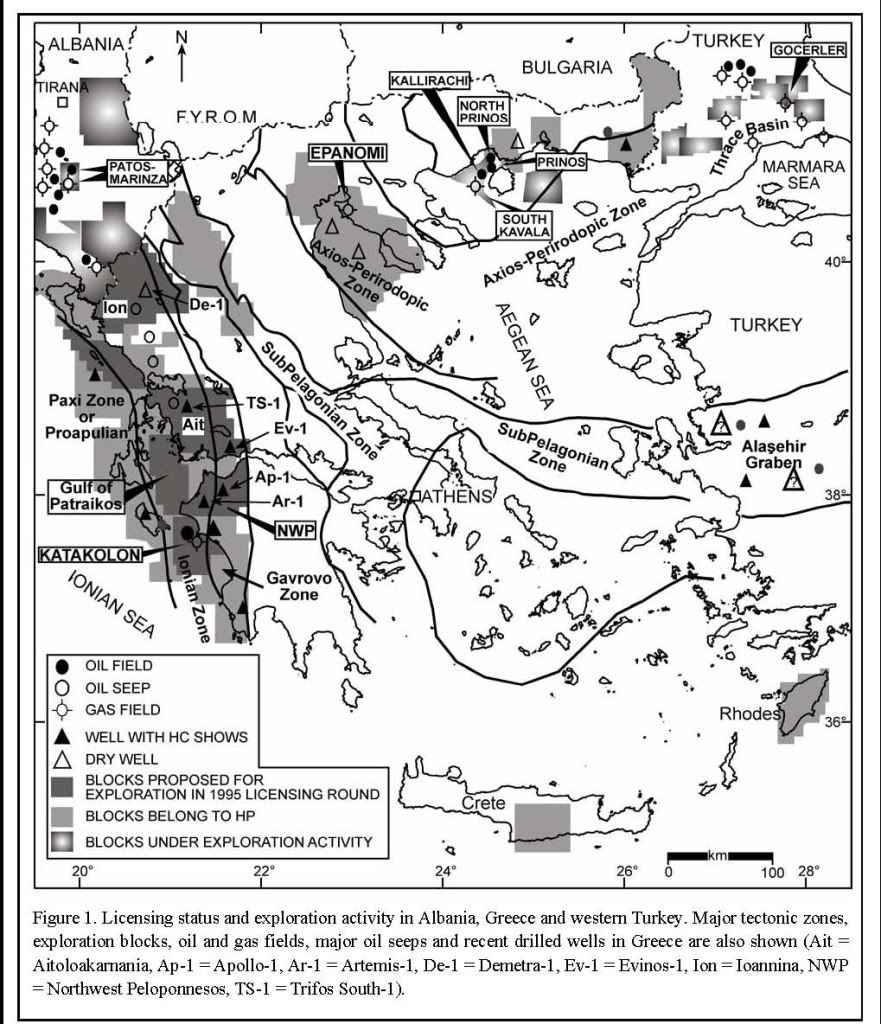
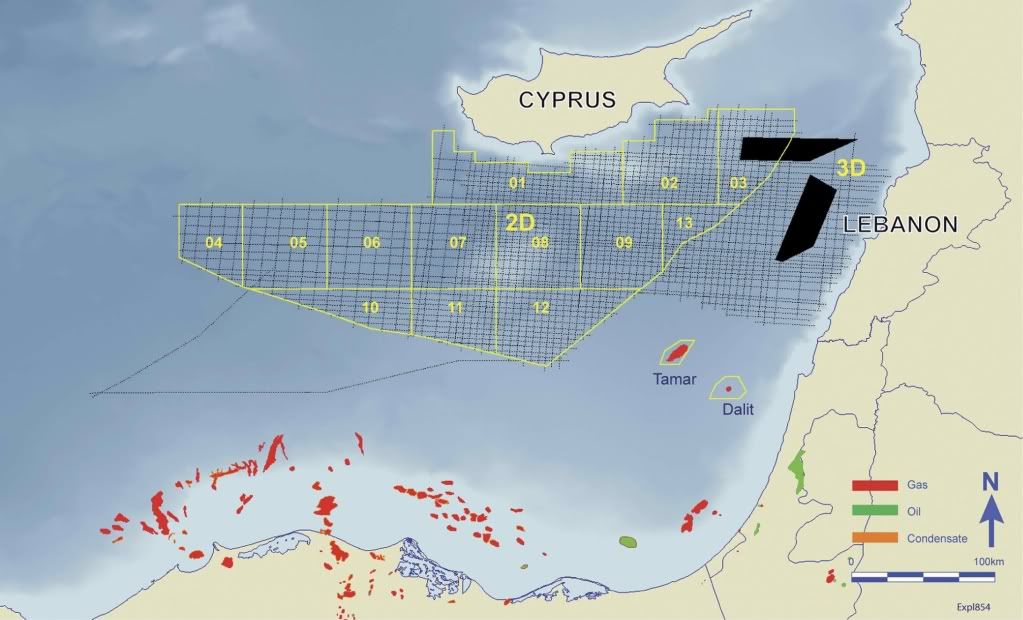
Austerity measures is one way of coping with the unprecedented economic crisis. The exploitation of National wealth like oil and gas is the other. To this direction this article is just a reminder. On January the Greek Prime Minister George Papandreou met with his Turkish counterpart Recep Tavyip Erdogan to hold private talks for several hours regarding hydrocarbons in the Aegean Sea, fuelling speculation of a major disagreement over territory and ownership rights. The spending reduction policy implemented day by day by itself is only serving the EU to buy time for it's effort to avoid a possible domino effect following the Greece's default. Facing an economic annihilation Greece has to do something about it's possible natural resources without any more delays...

Πηγή: A. Mavromatidis, V. C. Kelessidis, D. Monopolis, 2004, A review of recent hydrocarbon exploration in Greece and its potential, Paper presented at the 1st International Conference on Advances in Mineral Resources Management and Environmental Geotechnology, 7-9 June, Chania, Greece


Πηγή: Oil and gas worldwide. Offshore oil treasures in eastern Mediterranean sea


0 comments
Email ThisBlogThis!Share to XShare to FacebookShare to Pinterest
Labels: crises, gas, Greece, oil

6/18/2011

Greece: What Would Happen If it Defaulted?


Πηγή: The Wall Street Journal

By Dave Kansas MAY 24, 2011, 11:59 AM ET


Eurocrats insist that Greece will not default on its sovereign debt obligations, but the markets think otherwise.

As politicians and policy makers haggle, analysts are trying to game-out what would happen in the event Greece defaulted. Moody’s Investors Service in a note this morning tried to put a little meat on the default scenario, and it made for some pretty dark reading.

Let’s break it down, with a little Translation Time.

Moody’s: Moody’s Investors Service has explored possible Greek default scenarios in order to assess the impact on the country’s sovereign rating, the consequences for Greek banks and the possible paths of credit contagion to other European sovereigns, which are discussed in a Special Comment published today.

TT: Leading with “contagion” surely gets attention. If Greek defaults, it won’t be an Athens-only affair. Seatbelts, tighten ‘em.

Moody’s: Moody’s did not comment on the likelihood or the desirability of a debt restructuring, but focused more narrowly on some of the credit implications of different default scenarios.

0 comments
Email ThisBlogThis!Share to XShare to FacebookShare to Pinterest
Labels: crises, default, Europe, Greece

6/16/2011

Greece: Pick up your Butcher


The present clashes in Athens are usually analyzed in conjunction with the economic issues and the possible - or inevitable - bankruptcy. In this manner the deeper political roots of this fast growing unprecedented uprising are downplayed or ignored. The hart of the problem is the lack of confidence between government or parliamentary representation and society. A major crack in the ice of political accountability. The fact that an ex - prime Minister managed to easy the entry of Greece in the Eurozone by means of a secret mega - loan from Goldman Sachs is used to underline the misbehavior inter-graded with the Greek characteristics of a rather regressive nation mentality. But this action was not hidden only from the EU but from Greek people as well. Mr. Simitis by that time in view of the forthcoming Olympic Games summarized his alleged political success using the slogan: "Powerful Greece, Powerful Economy" which promised "Better Living Standards". The next government of "New Democracy" had promised that the many floating scandals including "Siemens" and the stock - exchange bubble, the hard - trick of PASOK's "user - friendly" socialism or the greater national massive deceit with the Minister of Economics urging people to put money in the bubble should be punished. Instead of this nobody took the blame and Greece was literally left unprotected to the subsequent summer fires that consumed a great part of the country's forest land. Additionally more scandals popped up with a Minister claiming that having money in off - shore companies while serving the public is not illegal but fair enough. Then Mr. Papandreou came on stage stating that "money do exist as billions were swiftly raised to support the banks to cope with the global economic crises" and that "we shall act in favor of the poor, the low and the middle classes".
But who was to take advantage of this Aegean stable? The "Greece - Eurozone" fraud made the Olympic Games a feasible business from which Siemens had the lion's share while Greece was left with an approximately 15 billion euros loss. Even more the euro offered the "opportunity" to the governments of lending more money while the logistic books were masking the real economic situation from people. More importantly the problems of Greece with her neighbors increased. To the Greece - Turkey disputes and the on - going heavy spending on army the name on the new born "Macedonia" and the Imia crises with three dead officers and the lowering of the Greek flag from this isled stemmed the downgrade of the Greece's geopolitical role underlying the weaknesses. Thousand of illegal immigrants roared into Greece without any consistent and responsible domestic or European policy based on some serious study of the impacts on the society and safety. Lastly the millions of euros that Greece took from the EU as a boost on her economy were spent unchecked without any plan for a real change on the production base of the country as the EU intended to induce a critical reduction on Greece's agriculture sector. Furthermore the hard euro rendered Greece as depraved from devaluation policies an expensive country for tourists that could go to Turkey or other low currency countries for vacations. But beyond tourism and agriculture what else could possibly Greece offer as a national economic base alternative? Being helpless and incapable of even claiming the Exclusive Economic Zone in the Aegean which could give her a major boost by the natural gas and possible oil she is now facing the possibility of a clearance sale of Nation Wealth.
This is far more than an economical problem. It is a high and crucial political one concerning not only Greece which is now the back - door of instability but the whole EU. And this is the only playing card left in her hands. She has to play it hard risking on the change of her geopolitical function in the Aegean and upgrading her role as a crossroad between East and West. She should leave everything behind and build new strategical alliances knowing that this is her last bid on the table. Biding with Russia and China is the only hopeful option as they are starving for lebensraum while having low interest rate capitals.
Picking up the butcher that will slay you is not a pleasant decision but remains the ultimate right of self - defense.


0 comments
Email ThisBlogThis!Share to XShare to FacebookShare to Pinterest
Labels: China, crises, Europe, geopolitics, Greece

6/04/2011

Los(t) Indignados


A couple of days ago I happened to be ad mist the young "indignados" at Syntagma square, where some of them stay day and night living in tents. The summer is ante portes and the scene of many young people in the center of Athens looked like a joyful celebration. Some kiosks were shelling food and drink while a big screen was playing a movie that nobody watched. Guitars were scattered around mingling their music with laughters and shouts of the young protesters. In the center there was someone talking to the microphone surrounded by many people standing or siting on the pavement. While I was approaching to the circle I heard him describing how the other day along with a hundred people had managed to prevent the ministers from living the nearby Parliament by blocking the parking. I had just noticed that there was a long cue of people waiting for him to finish so that they could take in turns the microphone when he asked in a rather rhetorical way: "Would be it preferable if we just prevent them while they try to enter the building instead?. I guess that day they had already voted some bills that will degrade our living standards a bit more!.." he said. Everybody started to applause enthusiastically.
It is said that the big loans of Greece along with interest payments render every citizen in a debt of approximately 29,190 $ regardless of his age. This means that a four member family sums up to a 116,760 dollars total debt. The "metapoliteusis" in Greece aka the democratic reform and the subsequent governments of the liberal "New Democracy" and the socialistic "PASOK" have managed in 36 years to throw the state and the future in the garbage. This young enraged generations are right to doubt the accountability of their patrons in the political parties and look distastefully to the ECB and IMF. This is not to say that the European countries are unfair by looking after their billions nor the IMF. But lets leave apart the economy issue for a moment and consider where the domestic political framework combined with the EU has led  us now as all this was supposed to be something more than a plain accounting business.
To begin with, Greece became a state member carrying along many problems with her neighbor Turkey with which is in a long - standing cold war. Those problems and the subsequent army expenses not only grew bigger but new ones were added like the name problem concerning the new born "Macedonia" and the hundred thousands of immigrants that made their way inside the country. Greece stands on a crossroad. It is not by mere coincidence that in the past there was a war in North (Yugoslavia) and now in South (Libya). As a Southeast borderline of the West and the EU not only had to cope alone with those problems and keep spending a nice 4% of the GDP buying arms from USA and her European partners but also was obliged to swallow down the death of three officers in the Imia crises and lower silently her flag from this islet. When the EU was planing the creation of a European army she made it clear that a Greek - Turkish war was out of range. Even now as we speak Greece is unable to claim the Exclusive Economic Zone in the Aegean which could give her a major boost by the natural gas and possible oil. By being obliged to accept the waves of many thousands of immigrants for whom she hold responsibility as being the country of entrance a fact that was applauded by many Human Rights advocates backed by the EU policy she is now facing the other side of the coin namely the all growing criminality,as a logical consequence of the economic pitfall. Of coarse there were millions of euros that Greece took from the EU as part of the economic sustainability of the Union. But these money were spent unchecked and the governments failed to create a production base or new foundations functioning rather as contractors for several short term projects implying corruption and kickbacks as the Siemens scandal among others proves.
The Greek market is very small. The whole population of the country equals with a big town in the West. In fact those who are talking about liberating the market are talking about oligopolies should change hands from the State to some private businesses. The situation is not to get better in the near future regardless the political parties, the austerity measures or privatization. It seems that there is not any bearable solution for the middle and lower classes. The only way out would be to find another "protector" like China and offer him everything in order to cut the rope from our neck. Only such kind of a geopolitical table turn may give a glimpse of hope. But this is not going to happen. The whole political system has become a debt counter and the Greek people have signed the "memorandum" by the hand of the Minister of Economics while the Parliament was not a part of the process in the first place.
There is not any sunshine in the horizon for Greece. But yet it is summertime. One is feeling the joy with the youth seeing them full of life at Syntagma square but the same time he feels sorry for this foredoomed generation that is to be called los(t) indignados.


0 comments
Email ThisBlogThis!Share to XShare to FacebookShare to Pinterest
Labels: crises, Greece, indignados, protests, Syntagma
Older Posts Home
Subscribe to: Posts (Atom)

Total Pageviews

Art

Death in Art

Radial Chart
Infogram

Latest News

Subscribe

Enter your email address:

Delivered by FeedBurner

Links

  • Voltaiernet
  • The Progressive Realist
  • The Middle East Channel
  • The Coming Depression
  • Stratfor
  • Just Foreign Policy
  • Greek American News Agency
  • Global Research
  • Strategy Report

Headlines

Top Posts

  • Λιβύη Ώρα Μηδέν (PDF)
  • Το Καρτέλ του Δικομματισμού στην Ελλάδα και η Χρεοκοπία της Μεταπολίτευσης
  • Template Revolutions: Marketing U.S. Regime Change in Eastern Europe (2008)
  • UPD - Austerity Measures: ‘Causes and Possible effects on Greek society’
  • 5 explosive secret intelligence memos on Libya everyone must read [VIDEO]
  • Defense News: Ukraine seeks to break Russian arms monopoly in India
  • In Syria, CIA & Pentagon-Funded Militias Clash (Video)
  • Gaddafi son Saif al-Islam wants to 'contribute to unification of Libya'
  • Blackwater in Greece: Fears of Coup as Mercenaries Drafted for Guarding Govt, Overseeing Police
  • Greece 'deliberately' exploited migrants: Research

Search FACTDROP

Blog Archive

My Ping in TotalPing.com
Powered by Blogger.