Showing posts with label Europe. Show all posts

7/02/2023

BRICS at a Historical Turning Point: Unexpected Challenges


Source : moderndiplomacy
July 2 2023
By Tiomfey Bordachev


The BRICS group (Brazil, Russia, India, China, South Africa) was created in conditions where the universal power of the West had already entered a period of slow decline, but few had any doubts that the United States and Europe would be able to determine the main characteristics of the world economy and international politics for a long time. Globalisation and the system of international institutions created with their vigorous participation were still coping, on the whole, with their tasks, and there were not enough obvious prerequisites and reasons for their landslide collapse. In fact, it was globalisation and the international institutions created by the West that determined the “packaging” of the international order, centred around the wealth accumulated over several centuries and the military and political capabilities of its founders.

The main systemic characteristic of BRICS is that it is a community of revisionists, i. e. powers that did not set as their goal the destruction of the world order, but sought to achieve the inclusion of their interests in this order. All its participants were able to extricate themselves from their previous plight thanks to the opportunities that the unjust international order led by the West gave them. All of them grew at the expense of resources, although they were dramatically curtailed in the realisation of their basic interests and values. Finally, none of the BRICS countries has plans to forcibly change the existing order of things, as revolutionary France, Germany and Japan have tried to do at one point or another over the past 250 years.

However, as contradictions accumulated in the world, even the modest revisionist wishes of the BRICS members became a factor that is leading, if not to the destruction of the existing international order, then to its most fundamental restructuring. Accordingly, the expectations regarding the BRICS countries are being shaped by their main partners, as well as opponents to their rise. Many countries throughout the world are now looking at the BRICS as a group that can, if not pick up the banner of global governance from the West, then at least become its second pillar; one that is more just and less selfish in relation to the small and medium-sized states of the world. In other words, expectations about the role of the BRICS in world affairs are shaped independently of the will of the participants in this group: they become the product of the evolution of the entire international order in a direction whose main features we have yet to witness.

The most striking manifestation of such hopes is the numerous ideas about expanding the BRICS by including new states. A list of countries has already been formed — candidates for joining the group, some of which look like real heavyweights. But in order to move forward in understanding how the BRICS’ contribution to new global governance can truly be decisive, we need to ask ourselves a few questions. First, can the BRICS group maintain internal unity in an era when even the strongest international partnerships are being severely challenged? Second, is it possible in the current circumstances for the BRICS to maintain the revisionist nature of their behaviour in relation to the order that was created with their minimal participation and, in part, at the expense of their interests?

No one can doubt that the decisive influence of the BRICS in the shaping of the main aspects of the global agenda will make the world more just and stable. Russia, which assumes the chairmanship of the group in 2024, can set this as one of its main general political goals. Such a contribution is virtually inevitable, simply because the BRICS countries are not parasitic powers whose success and achievements depend on the ability to get the rest of the world to serve their interests. Their economic opportunities and political influence aren’t grounded in a history of bloody wars, conducted with the purpose of establishing regional and global dominance. On the contrary, it was through wars — within itself and with those around it — that the modern community of Western countries, has created “its own” international order.

However, in order to fully realize the BRICS mission, this association will very likely have to answer the aforementioned questions, regarding its own destiny. We cannot ignore the fact that all the experience of strong institutions and global governance is the experience of the West, i.e. a community united by common values and, most importantly, interests in relation to the surrounding world. This is what allows them to stick together and be relatively effective in opposing the rest of humanity. Only forceful dictate of the US against its main allies would not be enough. It certainly plays an important role, but it cannot be the only fundamental factor. In the centre are the interests and values that led to the situation of the impossibility of any serious internal conflicts among the countries of the West.

Unlike the US and Europe, the BRICS community is not based on the idea of exploiting other countries and regions. The political systems of its members do not come from a single source, as is certainly the case of Europe and the United States. Moreover, the different civilizational foundations of the BRICS countries directly prevent them from creating an association whose internal discipline would be comparable to the West. Therefore, any observer can now question the ability of the BRICS to set the world agenda in the same way as the G7 countries have been doing for decades. The BRICS members may yet have to figure out how they can respond to the expectations of the international community, which has come to expect the dictatorship of the West and the patronage of Brazil, Russia, India, China and South Africa. The BRICS are already establishing concrete ways of contributing to the formation of the agenda for the whole world, and there are obvious achievements. However, as the ability of the United States and Europe to indicate the direction of movement to everyone collapses, the demand for clear support from the BRICS will only increase.

This means that the member countries of the group may, theoretically, face some challenges to their unity. Forming an alternative agenda to the dictates of the West is one thing, but creating ways to solve global development and security problems for the whole world, or at least for the countries of the World Majority, may turn out to be a more difficult task. In the near future, the BRICS may be required to be able to offer others new tools to address their core development problems, which means that the group’s degree of unity on key issues will need to go beyond weighty political statements.

An equally serious issue may be the preservation of the nature of the BRICS as a community aimed not at destroying the existing world order, but at improving it for the better. This is what makes it revisionist, and not revolutionary in terms of the intentions of the participating countries and the tasks that they set for themselves. The BRICS countries do not want the collapse of globalisation, institutions and international law. This means that their task is more complex: to create within the existing order such rules, norms and ways of cooperation that would allow for the preservation of its advantages and the elimination of its shortcomings. That revision, and not revolution, is the goal of the BRICS countries, the basis for the sustainability of this association and its relations with other countries of the World Majority. Preserving this nature is completely within the interests of the BRICS member countries and the entire international community. The alternative can only be a split in the group and the continuation of the power of that narrow group of countries, to counteract whose egoism the BRICS was created.

Timofey Bordachev: PhD in Political Science, Programme Director of the Valdai Discussion Club; Academic supervisor of the Center for Comprehensive European and International Studies, HSE University, RIAC Member.


4/17/2020

WHO warns Europe is still at risk as countries ease virus lockdowns


Source: New Europe
April 17 2020

As the number of confirmed coronavirus cases in Europe near one million, countries should be cautious when considering easing lockdowns, the World Health Organization has warned on Thursday.

Speaking at an online briefing, WHO’s European director Hans Kluge said that in the past ten days the number of coronavirus cases reported in Europe has nearly doubled to close to one million, meaning that about half of the global burden of the COVID-19 pandemic is in Europe.

‘‘The storm clouds of this pandemic still hang heavily over the European region,‘‘ he said.

Europe is the hardest-hit continent by the coronavirus outbreak, recording 957,551 coronavirus cases and 91,978 deaths as of April 17, according to a tally by the European Centre for Disease Prevention and Control (ECDC).

The countries with the highest number of coronavirus-related fatalities are Italy with 22,172, Spain with 19,130, France with 17,920, United Kingdom with 13,729 and Belgium with 4,857 deaths.

Since the emergence of the COVID-19, more than two million people have been infected with the disease worldwide, and over 145,000 have died.

While several countries have already announced plans to start lifting coronavirus lockdowns, including Germany, Denmark, Spain, the WHO’s regional director said it was critical to understand the complexity and uncertainty of such transitioning.

‘‘People are rightly asking: How much do we have to endure? And for how long? In response, we, governments, and health authorities must come up with answers to identify when, under what conditions and how we can consider a safe transition,‘‘ he noted.

Kluge said that before taking any steps to ease lockdown measures, countries should first ensure, among others, that virus transmission is under control, outbreak risks are minimised and that health systems have the capacity to identify, test, trace and isolate COVID-19 cases.

‘‘We remain in the eye of the storm,’’ he warned, adding that the next few weeks will be ‘‘critical’’ for Europe.


2/23/2018

TRT World documentary reveals extensive PKK network in Europe

https://www.dailysabah.com/war-on-terror/2018/02/23/trt-world-documentary-reveals-extensive-pkk-network-in-europe

3/13/2013

Russia risks billions of dollars if Cyprus defaults - Moody's


Πηγή: Reuters
March 13 2013

* Russia has strong financial ties with Cyprus

* Default could freeze $19 billion in corporate deposits

* EU in bailout talks with Cyprus


MOSCOW, March 13 - Russian banks and companies exposed to Cyprus risk losing billions of dollars should the island's government default on its debt obligations, Moody's credit-rating agency said on Wednesday.

Cyprus is been negotiating with the European Union and Russia on a 17 billion euros aid package that would recapitalise its oversized banking sector, but also service debt and government expenses.

Euro zone finance ministers have pledged to agree a bailout for Cyprus by the end of March and have set a meeting for Friday, but there are still no details on financing the rescue attempt.

Moody's said there is a high probability of Cyprus defaulting, or at least the authorities being forced by the size of the debt to "pursue every avenue for debt reduction, including private-sector losses on Cypriot debt."

Russian banks had between $30-$40 billion in cross-border loans to Cypriot companies tied to Moscow and around $12 billion on deposit with Cypriot banks at the end of last year. There is a risk that some $19 billion may not be recovered, Moody's said.

Cyprus is a favoured offshore centre for Russian big business, thanks to its low taxes and light regulation. It ranks as the largest source of foreign direct investment into Russia - money that is largely Russian in origin.

Losing the possibility to repatriate the $19 billion - the amount estimated by Moody's in corporate deposits at Cypriot banks - could also affect the servicing of bank debt back in Russia, Eugene Tarzimanov, author of the Moody's report, said.

"A potential Cyprus moratorium on external payments could block loan repayments to Russia, leading to some asset-quality pressures," Tarzimanov said.

Cyprus has asked Russia for a 5-year extension of an existing loan of 2.5 billion euros that matures in 2016 as well as a reduction in the 4.5 percent rate of interest.

Most of Russia's largest banks have some credit exposure to Cyprus. VTB, Russia's second-largest bank by assets, had $13.8 billion in assets and $374 million through its Cypriot subsidiary, Russian Commercial Bank, at the end of 2011.

Cypriot President Nicos Anastasiades is to travel to Russia to meet President Vladimir Putin in the coming weeks. One risk to Russia's state banks identified by Moody's is that the Kremlin may direct them to lend more to tide Cyprus over.

Euro zone officials have said that Russian investors were interested in buying a majority stake in Cyprus Popular Bank and increasing their holdings in Bank of Cyprus - the two biggest banks on the Mediterranean island.

German officials, backed by the Netherlands and Finland, as well as the International Monetary Fund, have pushed for depositors in Cypriot banks, many of whom are Russian and British business people, to help pay for the cost of the rescue.

Should all rescue plans fail, Russian loans, which corresponded to 15-20 percent of Russian banks' capital base last year, will suffer, Moody's said.

"In case of restrictions, Cyprus would simply block debt repayments to Russian banks."


3/11/2013

China boosts Cyprus housing sector

Looking East: Tourists walking past a real estate promotion billboard in Chinese on the seafront promenade in Paphos recently, as the Cypriot property sector turns to Chinese investors seeking easier access to Europe.
Πηγή: The Manila Times
March 10 2103

PAPHOS, Cyprus: The real estate sector on the recession-hit Mediterranean holiday island of Cyprus, a European Union (EU) member, is turning to Chinese investors seeking easier access to Europe.

Hundreds of Chinese have purchased second homes on the island thanks to a Cypriot law revised last year granting permanent resident status to foreign buyers of homes costing at least 300,000 euros ($390,000).

“The Chinese are not interested in houses as such in Cyprus. They are interested only in the permanent residency. They buy houses through visa firms,” said leading real estate agent Antonis Loizou.

While Cyprus has been an EU member since 2004, it does not belong to the Schengen passport-free zone, meaning permanent residency does not guarantee free travel across the bloc.

But “it is much easier to get a European visa” with Cyprus residency, stressed Wuang Hong, herself a long-time resident and telecoms employee who said that she assists Chinese investors.

She said that most Chinese investors are businessmen who buy on the coast, especially in and around the western resort of Paphos.

“Some want to give a better future to their children—give them an opportunity to live in a cleaner environment and go to good international private schools, which are much more expensive in China,” she said.

But only few Chinese have so far opted to settle in Cyprus, where residency does not grant a work permit, and none of them were willing to speak to Agence-France Presse.

Skirting the law

The investors, who are banking on a medium-term rise in house prices, have had to come up with methods to skirt Chinese law which in theory limits foreign currency exports to an annual $50,000 per person.

Apart from opening up Europe as a destination, Cyprus can provide a political refuge, access to the Cypriot banking sector and a way to circumvent China’s one-child policy.

But the players in Cyprus, where billboards have sprung up in Mandarin advertising luxury homes, insist money-laundering is not a factor.

“All this money has to come through a bank. No one can come with a suitcase full of cash and buy a house. It is all checked out,” said Nick Antoniades, who runs a service company for Chinese investors.

He said that the buyer must show documentation to prove annual income of at least 30,000 euros.

Fed Injects Record $100 Billion Cash Into Foreign Banks Operating In The US In Past Week


Πηγή: Zero Hedge
By Tyler Durden
March 9 2013

Those who have been following our exclusive series of the Fed's direct bailout of European banks (here, here, here and here), and, indirectly of Europe, will not be surprised at all to learn that in the week ended February 27, or the week in which Europe went into a however brief tailspin following the shocking defeat of Bersani in the Italian elections, and an even more shocking victory by Berlusconi and Grillo, leading to a political vacuum and a hung parliament, the Fed injected a record $99 billion of excess reserves into foreign banks. As the most recent H.8 statement makes very clear, soared from $836 billion to a near-record $936 billion, or a $99.3 billion reserve "reallocation" in the form of cash - very, very fungible cash - into foreign (read European) banks in one week.


Furthermore, as we first showed, virtually all the "reserves" created by the Fed end up allocated as cash at commercial banks operating in the US: both domestically-chartered (small and large), but more importantly, foreign. And of the $1.884 trillion in very fungible cash parked in various domestic and international US banks, just half of it, or $949 billion is actually allocated to US banks. The other half, or $936 billion, is parked within, again, very fungible cash accounts of foreign (read European) banks operating in the US. This is shown in the chart below (green area is cash of foreign banks), and what is also shown is the total change in the Fed's excess reserves, which proves, once more, that the Fed continues to fund European banks with hundreds of billions in cash on a week by week basis. And what is perhaps most important, is that of the $250 billion in new reserves created under QEternity, all of it has gone to foreign (read European) banks.


It may anger American to learn that by the time the Fed is done with QEternity (if ever), all of the newly created cash will have gone to mostly European banks. Because with every passing week, whatever new reserves are created by the Fed in exchange for monetizing the US deficit, end up as cash solely at European banks: a sad reality we have seen non-stop since the advent of QE2 when US bank cash balances remained relatively flat in the ~$800 billion range, and every incremental dollar went straight to Europe.

As a reminder, we don't know how, via assorted shadow banking and other repo pathways, these banks manage to use said cash in other fungible activities. Recall that as we said, "So whether European banks will continue buying the EURUSD, or redirect their Fed-cash into purchasing the ES outright, or invest in other even riskier assets, remains unknown." It is also unknown is the Fed's reserves, reappearing as cash, and then siphoned over to European bank HoldCo via payables, is then used by, say, Italian and Spanish banks to purchase BTPs and Bonos, and give the impression that all is well. Because unlike before, keeping the EURUSD high is not as critical any more. But what is critical is to give the impression that Italian and Spanish sovereign risk is contained. And after all, let's not forget that as of January, Italian bank holdings of Italy state bonds just hit a record of EUR200 billion.

Is it possible that the Fed, in all its generosity, transferred over several hundred billion over to these same Italian banks, courtesy of the cover provided by QE, so that the same Italian banks may monetize Italian bank bonds? And the same for Spain. Any wonder then that we got news of how flyingly great Spanish and Italian bond auction were in the past week?

After all, in Europe Germany has a heart attack whenever anyone perceives the ECB as monetizing, or even greenlighting the monetization of local sovereign bonds. But Germany has never said what it thinks about the Fed, indirectly, doing the same, using Italian and Spanish banks as conduits.

Finally, while we don't know what the cash is being used for, we know that sooner or later, sometime around December 2013, when European, pardon, foreign bank holdings of US reserves, i.e., USD cash, hits well over $1.5 trillion, and when the Interest on Excess Reserves starts going up and the Fed is directly providing tens of billions in interest payment to European banks, some Americans may be angry to quite angry with that development.

But for now, everyone is blissfully unaware and even if they were, nobody cares. Why just look at the Dow Jones Industrial Average: how can one possibly allege that all is not well with the world...

Source: H.8


2/27/2013

Chinese Foreign Direct Investment (FDI): Going On A ‘Shopping Spree’ In Europe


Πηγή: IBT
By Moran Zhang
Feb 27 2013

With trillions of dollars in foreign-exchange reserves, China is gradually diversifying from its custom of simply parking that wealth in low-risk government bonds. The Chinese are now buying up depressed assets on foreign soil. And their favorite destination is Europe.

Since 2008, China has been allocating an increasing share of its $3.18 trillion worth of foreign-exchange reserves, the world’s largest, to both Europe and the U.S.

The world's second-biggest economy’s outbound direct investment from non-financial firms in January totaled $4.9 billion, up 12.3 percent from a year ago, according to China Commerce Ministry data released last Wednesday.

The debt crisis in Europe presents the prospect of discounted prices, while an increasingly strong yuan is making European (and American) assets look more attractive. Just seven years ago, the Chinese yuan (CNY) traded at 8.23 to the dollar. Now the CNY trades at 6.23 and continues to strengthen.

(Photo: Rhodium Group) Annual Chinese foreign direct investment in the U.S. and Europe.
After a similar take-off phase, patterns diverged in the past two years, with Europe receiving almost twice as much investment as the U.S., according to a new report from the Rhodium Group.

Annual flows to the European Union grew from less than $1 billion annually before 2008 to an average of $3 billion in 2009 and 2010, before tripling to more than $10 billion in the past two years. Ten years ago, there were fewer than 20 cross-border deals. But that has changed: 573 deals have been done between 2000 and 2011, with Germany in the leading position.

Meanwhile, in the U.S., Chinese investment surged from less than $1 billion in 2008 to $5 billion in 2010, before dropping again to $4.7 billion in 2011. In 2012 investment reached a new record of $6.5 billion, but values remained below the levels seen in the EU in the past two years.

(Photo: Rhodium Group) Chinese FDI in the U.S. vs. E.U. by industry
“Chinese investors seized opportunities to buy into cash-strapped European industrials and assets promising stable long-term returns such as utilities and other infrastructure,” the Rhodium report said.

Geographically, Chinese investment is concentrated in a few large EU economies – namely, France, the UK and Germany.

China's foreign-exchange regulator has been actively but quietly investing in British property and infrastructure, the Wall Street Journal reports. Since last May, U.K.-registered Gingko Tree Investment Ltd., a wholly owned unit of China's State Administration of Foreign Exchange, has invested more than $1.6 billion in at least four deals, including a water utility, student housing, and office buildings in London and Manchester.

Rhodium Group researchers Thilo Hanemann and Adam Lysenko found that U.S. security reviews have killed some deals and likely dissuaded other investors.

By contrast, European officials welcomed Chinese investment in sensitive, high-profile assets like airports, electricity grids and ports. Including utilities, Chinese firms spent close to $6 billion on European infrastructure assets.

Investments in U.S. infrastructure assets would make commercial sense for Chinese state enterprises and sovereign investment vehicles as well, but the reactions to similar earlier investments such as the Dubai Ports World controversy in 2006 seem to have made Chinese investors cautious about U.S. infrastructure plays.

National security concerns are also affecting investment in high-tech sectors. Chinese telecommunications equipment firms, for example, spent more than three times as much in Europe than in the U.S., where the Committee on Foreign Investment in the United States (CFIUS) has interfered with several deals and firms have seen their business prospects diminished by intervention from U.S. government officials, members of Congress and security agencies, according to the report.

While much of the world, including Europe, is embracing China’s telecommunications giant Huawei Technology Co. Ltd. (SHE:002502), the U.S. market is wary.

A House Intelligence Committee report released in October urged the U.S. government to block acquisitions or mergers by Huawei and ZTE Corporation (HKG:0763), China’s two largest phone-equipment makers, for fear that this will provide opportunities for Chinese intelligence services to tamper with U.S. telecommunications networks for spying.

The congressional report concluded that with their ties to the Chinese government, neither of these companies can be trusted with infrastructure of such critical importance.

“The risks associated with Huawei’s and ZTE’s provision of equipment to U.S. critical infrastructure could undermine core U.S. national security interests,” the report said.

“As the Chinese economy matures and firms become more experienced at doing business abroad, Chinese interest in advanced economy assets will continue to be strong in coming years,” the Rhodium report states. “The political response will be critical for future deal-making in both economies.”

11/19/2012

We are all Greeks!


Πηγή: Social Europe Journal
By RONALD JANSSEN
Nov 15 2012

The attack on workers’ rights, wages and collective bargaining systems in Europe is continuing. The latest incident can be found in the new DG ECFIN report on labour market developments in Europe.

This report has a specific chapter examining those labour market reforms which member states have implemented over the past decade. This analysis is based on the so called LABREF database. The Commission, in cooperation with the Economic Policy Committee, has been developing this database since 2005 (for those unfamiliar with it, the Economic Policy Committee advises the ECFIN council on the issue of reform of economic policies and is composed of member state representatives from finance and/or economic ministries).

The LABREF database collects information on 9 broad labour market policy domains. These cover labour taxes, unemployment benefit systems, job protection institutions, active labour market policies and wage setting institutions. The database mainly describes the aim and main features of the labour market reforms that have been carried out. In addition however, the database also assigns binary indicators to each policy measure that has been taken. Reforms considered being ‘employment friendly’ gets a score of minus 1. On the other hand, reforms that are not supposed to impact in a positive way on employment are counted with a score of plus 1. This makes it possible to assess the ongoing process of labour market policy reforms in a quantitative way.

For example, one of the trends which the chapter picks up is that reforms in wage setting systems have become more frequently ‘employment friendly’ in the aftermath of the financial crisis: Whereas hardly any member state engaged in a so called ‘employment-friendly’ reform of wage setting in 2006 and 2007, the number of countries doing so started to increase rapidly from 2008 and 2009 on. For 2010, the LABREF database registers that half of all EU member states have implemented a reform of wage setting system that would be ‘employment friendly ‘.

A full blown attack on trade unions

The reader will be curious to know what type of reforms of labour market policy DG ECFIN considers to be employment friendly.

The answer will not come as a surprise but is nevertheless still shocking (see appendix I of the above mentioned Commission publication). With the exception of active labour market policy and measures in the field of maternity or parental leave, reforms that decrease worker and social rights in all of the remaining policy domains are systematically rated by the Commission as ‘employment friendly’: This ranges from measures decreasing the generosity of unemployment benefits, measures that decrease notice periods, measures that increase trial periods in permanent contracts, measures that increase the maximum cumulated duration of fixed term contracts to measures that increase retirement age and age or penalties for early retirement schemes.

The previous elements already constitute a wide deregulation of labour markets. Unfortunately, things get even worse concerning the wage setting framework. Here, we find the view that policies that decrease minimum wages are to be classified as job friendly measures. Things become even more scandalous when the Commission states that ‘government interventions thatreduce the coverage of collective bargaining and result in an overall reduction in the wage-setting power of trade unions are employment friendly’.

Poor excuses

DG ECFIN tries to cover its back by formulating the caveat that classifications such as these ‘should not be given mechanistic normative implications’ (page 66 of the report). At the same time, the vision upon which this classification is based as well as the signals it is sending to policy makers are extremely clear: Any policy that in one way or the other blocks the downward flexibility of wages or jobs is to be questioned and has to go. The more member states weaken institutions that act as labour market floors, the more good points DG ECFIN will be awarding them.

Moreover, this is not just about statistical classifications or technical reports. The fact is that this ideological vision of ultra flexibility that is so clearly shown in this report is also being pushed through in reality. DG ECFIN, bolstered by the fact that member states are under much pressure, not only from financial markets but also from the ECB (which has a similar deregulation agenda), is also in a position to impose these reforms and does not hesitate to do so. This is especially the case for the so called program countries. In fact, in the case of Greece in particular, this is exactly what DG ECFIN, in cooperation with the IMF and the ECB, has effectively been implementing: By cutting established minimum wage rates, by ending the legal extension of collective bargaining agreements, by even giving small groups of non representative workers (‘yellow’ unions set up by the company itself) the competence to set wages at a reduced level, the power of trade unions to set wages in Greece has indeed been reduced substantially.

Quo Vadis Europe?

This raises fundamental questions. When the Commission refers to the importance of social dialogue, can this be taken seriously? What is the value of social dialogue if the real objective of the Commission is to weaken what constitutes the core business and the ‘raison d’existence’ of one of its dialogue partners?

Where is the Social Commissioner who, as guardian of the European Treaty stating that one of the key objectives of the Union is to lower inequalities, should be arguing strongly in favour of anincreased role of trade unions in setting wages? Indeed, if there’s one striking empirical observation, it is that the existence of representative trade unions and collective bargaining institutions limits inequalities.

What about the European Social Aquis as such? What about ILO conventions on the freedom to bargain and to organize? What about the Council of Europe and the Charter of Fundamental Rights? Do these institutions and instruments not offer any protection against this ‘wild west’ attack from the cowboys of DG ECFIN?

Finally, where is the European Parliament? At the very least, Members of Parliament should make the responsible Commissioner account for this scandalous design of his services’ database and demand the removal of its anti labour bias.


EU institutions set to clash over banker bonuses


Πηγή: New Europe
By PETER TABERNER
Nov 18 2012

The European Council and Parliament are set for showdown talks on the 20 November due to their disagreements over the capping of bankers’ bonuses following the ECOFIN meeting.

MEP’s have come out in favour of ratio of 1:1 between the level of bonuses that can be paid compared to the full salary over a year, Michael Barnier the commissioner for the internal market has backed the MEP’s in saying that member states should soften their stance towards them, and has asked for a compromise to be found.

Sources at the Parliament have also said that a middle ground is the most favourable outcome over the issue, and hope that the 20 November meeting will lay the groundwork for a deal to be brokered.

It is expected that negotiations between both parties will continue after the first meeting, with the imbroglio resolved hopefully before the 4 December ECOFIN meeting that will be the last one of this year.

The Council say that they do not necessarily disagree with the cap, but wish to implement a deferral principle, where bonuses that are over the 1:1 ratio within a financial year can be passed over, and then paid within a five year period.

If bonuses amount to being over the proposed ratio then the Council say that they be should be capped at 300% over a year’s salary, although this can be extended to 500% if there is a majority vote of over half of company shareholders decide to increase the cap.

The advocated single supervisory mechanism (SSM) was also discussed at the ECOFIN meeting, where the ECB will have an overseeing role over all Euro zone banks while in close cooperation with national banking authorities.

Negotiations are continuing on how the SSM will affect non- Euro member states of the EU that will sit on the outside of the SSM, but still wish to maintain strong links with the supervisory system.

An EU official said : “This is still in the negotiating phase and there will have to be a lot of creative solutions to be discussed between now and the 4 December at the next finance minister’s gathering. Non-euro member states must have to accept that they will not have the right to vote on supervisory decisions.”

“It will be a system where the making of difficult choices will be made by the governing supervisory body, the non euro states who still have ambitions to join the euro will be safeguarded from conditions becoming too difficult to be included in the future.”

Any decision taken on this issue will require unanimous support from the ECOFIN meeting next month.

To meet the end of year deadline meetings continue over the “Basel II” agreement, approved by the G20 in November 2010, and concluded by the Basel Committee on banking supervision in line with articles 114 and 53(1) of the Treaty on the Functioning of the European Union. Focusing respectively on the functioning of the internal market as agreed by the Parliament and Council, and the liberalisation and mutual recognition of professional qualifications.

The vision is to rearrange two legislations into law adhering to “Basel III” from the “CRD 4" package, that aims to amend the EU's rules on capital requirements for banks and investment firms. They are a regulation establishing prudential requirements that institutions need to respect, and a directive governing access to deposit-taking activities.

Also discussed was the common resolution authority and a common deposit guarantee scheme, in line with the pledge at the October ECOFIN meeting that both legislations’ legal framework will be decided by 1January next year, the Council say that negotiations are progressing well and hope to meet their deadline.

The European Banking Federation (EBF) has kept a close eye on developments this week, A spokesperson said: “Given that the Basel Committee (BCBS) is finalising its adjustments to the Liquidity Coverage Ratio , it seems wiser to wait for the final version before setting the details lest the EU applies different criteria to other jurisdictions. We would highlight two issues of great importance to the EU economy, the run-off factor envisaged in the BCBS for retail customers should be applied without further restrictions, for example to all individuals regardless the amount of the deposit and to all SMEs with a turnover of less than EUR 50 million.”

“We have consistently advocated strong support for the single rule book in order to create a level playing field for EU banks and reduce their heavy administrative burden. Our ultimate aim is the creation of a true single market in financial services, not the fragmentation of the financial services market. Strengthening of the single market in financial services via further supervisory integration in the European Union is a main priority for the EBF, and the proposal for a Single Supervisory Mechanism under a Banking Union is a vital step in that direction.”

The EBF would adhere to more of what the European Council is proposing for bankers’ bonuses, with companies having the right to decide on pay and approve remuneration schemes. Any further restrictions that are suggested should not be too draconian, as that may drive away talent and imbalance a global market.

“We think that the objectives pursued at International level and the European Commission, namely ensuring that remuneration schemes are more strongly integrated components with a long-term incentive effect and appropriate risk character, in order to ensure that excessive risk-taking is not encouraged, are right from a risk perspective.” The spokesperson added.


11/08/2012

Europe’s fears over US energy gap


Πηγή: FT
By Gerrit Wiesmann
Nov 7 2012

Europe’s ability to compete against the US as a manufacturing centre is being damaged by rising energy costs as North America benefits from cheap natural shale gas, Germany’s biggest companies have warned.

The energy cost advantage for US companies is rising and is expected to persist until at least 2020, according to the BDI, the German industry lobby group.

German industrial companies such as Bayer and BASF are among the those alarmed over the gap.

Some executives fear a growing divide between European and US energy costs could see energy-intensive manufacturers divert investments that might have gone into Europe to the US instead.

Harald Schwager, the member of BASF’s executive board responsible for Europe, told the Financial Times: “We Europeans are currently paying up to four or five times more for natural gas than the Americans ... Of course that means increased competition for all the European manufacturing sites.”

BASF, the German chemicals company, recently converted its steam-cracker in Texas to run on shale gas and says its production complex in Louisiana – where it is building a formic acid plant – is very competitive.

Marijn Dekkers, the chief executive of Bayer, the German drugs and plastics maker, also told the Financial Times: “Energy costs in Europe and Germany in particular will continue to rise. That will have an effect on the competitiveness of several sectors.”

In a report to be published in coming days, the BDI forecast US natural gas prices would remain at €16 per ­megawatt hour (MWh) until 2020 – some 40 per cent less than the last peak, around €25 in 2008.

In contrast, German gas prices will rise from €48 per MWh to €61, an increase of 27 per cent by the end of the decade.

Compounding German industry’s fears is chancellor Angela Merkel’s plan to phase out nuclear power by 2022 and replace it with renewable energy sources, which companies say could drive a bigger transatlantic divergence in electricity prices.

The BDI’s projection, put together by BCG, the consultancy, says electricity prices for German industrial users will rise from €90 per kWh today to €98 or even €110 in 2020. US prices are expected to rise only from €48 to €54 in the same period.

“Europe’s politicians should be careful not to make already pricy energy even pricier by levying new taxes or surcharges,” Mr Schwager said in reference to the German renewable-energy surcharge from which big industry is excluded for now.

The BDI blames costly long-term gas contracts and a lack of US gas exports for Europe’s energy woes.


10/21/2012

U.S. actively helping gas pipeline project to bypass Russia - Clinton


Πηγή: Interfax
Oct 19 2012

The United States supports the Southern Corridor project to weaken the monopoly on gas supplies to Europe, U.S. Secretary of State Hillary Clinton said.

Giving a lecture on Energy Diplomacy in the 21st Century at Georgetown University on Thursday, Clinton said that one of the focuses "of our energy diplomacy is helping to promote competition and prevent monopolies."

"Consider what's been happening in Europe. For decades, many European nations received much of their natural gas via pipeline from one country: Russia," Clinton said.

"But that has now changed in part because of the increased production here in the United States, there's a lot more natural gas in the global market looking for a home. Plus, there's natural gas in the Caspian and in Central Asia. They'd like to sell it, and Europe would like to buy it. But first, they need to build pipelines. And that's the goal of a project called the Southern Corridor, which would stretch across the European continent. The United States has been an active partner to all those participants to help move this project to fruition," Clinton said.

The Southern Corridor project calls for building gas pipelines from the Caspian and Central Asia to Europe, bypassing Russia.

Clinton said the U.S. is helping to move this project along because "we want to see countries grow and have stronger economies, but also because energy monopolies create risks."

"Anywhere in the world, when one nation is overly dependent on another for its energy that can jeopardize its political and economic independence. It can make a country vulnerable to threats and coercion. And that's why NATO has identified energy security as a key security issue of our time. It's also why we created the U.S.-European Union Energy Council to deepen our cooperation on strategic energy issues. It's not just a matter of economic competition, as important as that is. It's also a matter of national and international security," Clinton said.


9/13/2012

BAE puts conditions on EADS talks


Πηγή: FT
By Carola Hoyos, Andrew Parker and David Oakley
Sept 13 2012

BAE Systems has warned EADS that it will walk away from merger talks unless the combined European champion in aerospace and defence was allowed to operate as a normal company without political interference.

BAE is also insisting that the combined entity’s defence business would have to be based in the UK if the plan, news of which was leaked on Wednesday before the structure was finalised, is to go ahead.

The management of EADS has indicated it would be willing to de-politicise the company, but it remains far from certain that Paris, in particular, and Berlin would agree to give up their strategic stakes.

The uncertainty over the fate of the deal as well as the lack of clarity on possible cost-savings and strategy prompted deep investor scepticism. Shares in EADS fell 10.2 per cent to €25.2 and BAE dropped 7.3 per cent to 337.1p.

In hastily arranged conference calls, several major BAE investors expressed concerns over the tie-up. They warned that they would become sellers if BAE was unable to shed more light on its long-term dividend policy and the degree of French and German influence over the merged entity.

People close to BAE said the company would give up on the deal if it did not create a commercial company, with a balanced board, free of political influence. The UK-based company’s talks with EADS which started in March came after BAE considered a combination with Northrop Grumman of the US or a tie-up with engine maker Rolls-Royce. Neither however was as attractive as a deal with EADS, which would give BAE a strong balance sheet and a diversified portfolio in defence and civil aerospace, one person close to BAE said.

BAE and many analysts see the French government as the biggest potential obstacle in the way of the deal. However, both companies, believe Francois Hollande, the socialist president, could be more amenable to a deal than his predecessor, Nicolas Sarkozy, a close ally of Dassault, BAE’s and EADS’s fiercest French competitor.

Tom Enders, who became chief executive of EADS in May, wants to use the deal to reduce the level of political influence of the French and German governments, whose involvement has lost EADS contracts and dictated key executive appointments, said people close to the company.

The French and German governments each effectively control 22.5 per cent of EADS, but Mr Enders wants their shareholdings in the combined entity to fall below 10 per cent.

EADS is proposing that the French, German and UK governments would each have a golden share, allowing them to block hostile takeovers but no additional veto rights.


7/09/2012

Why did China, Europe cut interest rates simultaneously?


Πηγή: Peoples Daily
July 9 2012

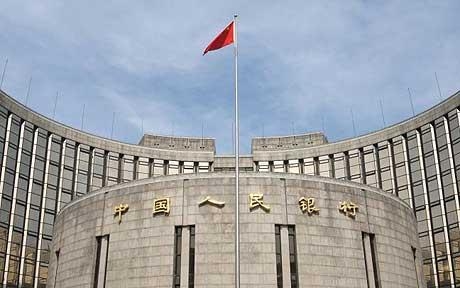
The People's Bank of China announced on the night of July 5 that the benchmark yuandeposit and loan interest rate will be cut since July 6, 2012. Almost at the same time,the European Central Bank also announced the reduction of interest rate.

Reduction of interest rates in succession will have a superimposed effect

On June 8, 2012, the People's Bank of China cut the interests rate for the first timesince three and a half years and it again announced to reduce it on July 5, which is thefirst time for Chinese central bank to carry out an asymmetric reduction of interestrates.

Remarkably, the European Central Bank also announced to cut interest rate of 25basis points to 0.75 percent in less than an hour after the Chinese central bankannounced the news. It was the third reduction of interest rates since Mario Draghi waselected the president of European Central Bank and it also is the lowest benchmarkinterest rate in the history of the European Central Bank.

Why the two central banks simultaneously announced the reduction of the interestrates?

Sun Lijian, vice president of the School of Economics under the Fudan University, saidthat this is a coordinated reduction between Chinese central bank and its Europeancounterpart. It is obvious that a superimposed effect caused by simultaneous reductionwill have a positive impact on the world and plays a great role in stimulating theinternational market.

However, in the opinion of Xie Taifeng, dean of the School of Finance under the CapitalUniversity of Economics and Business, China's reduction of interest rate is based onboth China's economic growth situation and the external economic environment and isa comprehensive consideration.

Ba Shusong, deputy director of the Financial Research Institute under theDevelopment Research Center of the State Council, said that recently the majoreconomic entities, whether they are the developed economic entities or the developingeconomic entities, have an economic growth weaker than expected. The synchronousweakening made these central banks return to the slack policy. It can be said thatChina's central bank's reduction of interest rate was launched in the global backdrop.

Rate cuts help inspire market confidence

Xie said that the economic downturn in European countries is an obvious drag onChina and other economic entities and a deceleration also appeared in the export-oriented economy of the developing countries. The simultaneous reduction of interestrates by the two central banks has sent a positive signal and can help stimulateinvestment and demands and inspire market confidence in a downturn period of theworld economy.

"It is necessary for the European Central Bank to cut interest rate," Sun Lijian said.

Sun said that lowing interest rates can greatly reduce the financing cost of the marketand is conducive to saving Spain and Greece. The decline in the financing cost of theenterprises can promote investment and has a positive effect on the maintenance ofgrowth proposed by the Europe. It also can improve the debt repayment capacity of thecommunity as a whole and solve the employment problem.

The experts generally believe that the reduction of interest rate by China's central bankwill also be beneficial to the steady growth of Chinese economy.

Lian Ping, the chief economist of the Bank of Communications of China, said it is anexpected reduction by Chinese central bank and at present the CPI has an obviousdecline. In a short period of time, the commodity prices will continue to go down, whichwill provide a space for regulation and control policy to cut the interest rate.

Interest rate may be further reduced in the future

As for the future direction for monetary policy, Sun believes that as domestic banks stillface a lack of liquidity, the central bank is likely to again lower the reserve requirementratio to release liquidity.

Xie said that China’s monetary policy decisions mainly depend on domestic andinternational economic situations. If this latest rate cut helps increase China’s economicgrowth rate, the country may not further cut interest rates. However, due to the sluggishglobal economy, this rate cut is possibly not enough to halt China’s economicslowdown, and further rate cuts in Europe would not be surprising.


7/06/2012

The Non-Alligned Movement Summit in Tehran: A Political Wedge to US-NATO Plans to Isolate Iran


Πηγή: Global Research
By Kourosh Ziabari
July 6 2012

While the United States, Israel and their European allies are pulling out all the stops to isolate Iran over its nuclear program, the upcoming meeting of the heads of state of the Non-Aligned Movement in Tehran seems to be throwing a spanner in their works.

The Non-Aligned Movement, the rotating presidency of which will be conferred to Iran on August 26, is a major international organization comprising 120 member states that represent the political, cultural, economic and social interests of the developing world.

The movement which consists of two thirds of the UN member states was established in 1961 in Belgrade and despite the fact that the majority of its members are developing nations, many of them play a defining and determining role in such strategic regions as the Middle East, North Africa and Latin America.

Over the past weeks, Iranian President has been sending envoys to different NAM member countries to invite their heads of state and government to attend the forthcoming summit in Tehran. The latest NAM summit was held in Egypt’s Sharm El Sheikh from July 11-16, 2009 and Tehran will host representatives from 120 countries in the forthcoming gathering.

Now, Iranian officials expect that a great number of the member states will attend the summit in high levels and it goes without saying that the presence of so many officials from different world countries in the conference which will be hosted by Tehran may not be pleasant and favorable to those who want to see Iran’s regional dominance and international influence derailed.

NAM enjoys remarkable capacities for shaping a new global order based on respecting the rights of the developing nations which are more often than not treated indecorously by the hegemonic powers. With the active cooperation of the member states, NAM can realize its innumerable potentialities and extricate itself from the domination of the superpowers that are usually after exploiting the precious natural resources of these countries.

The Non-Aligned Movement is said to be the largest international organization after the United Nations and it has the capability of effectively influencing the international developments if its member states take its mechanisms seriously and are convinced that their participation in the process of decision-making and collaboration will help them have a say in the global political and economic equations. They can assist each other in diplomatic lobbying in important events such as the UN General Assembly, selecting the non-permanent members of the Security Council and making decisions in the UN Human Rights Council as well as contributing to the progress of entities such as the African Union and the Organization of Islamic Cooperation.

Although non-association and non-alliance with the Western and Eastern superpowers is a characteristic feature of the members of the movement, emerging superpowers such as China, Brazil and Mexico serve NAM as observing members. Moreover, countries such as India, Indonesia, Saudi Arabia and South Africa which have strong ties with the United States and are members of the G20 group (the bloc of 20 world major economies) are among the NAM member states.

Iran’s presidency over such a prominent international organization comes while the European Union has just put into effect its intended oil embargo against Iran, banning the European states from importing oil from Iran, the world’s fourth largest oil producer. At the same time, the United States has imposed a fresh round of sanctions against Iran’s banking sector, penalizing the foreign banks which have financial transactions with Iranian counterparts.

The United States, Israel and Europe are pressing Iran on multiple fronts so as to isolate the country and undermine its regional clout: from propagating falsehood and mendacity about Iran and Iranians in the mainstream media to launching malicious cyber attacks against the computers operating in Iran’s nuclear facilities, passing anti-Iranian resolutions in the UN Security Council, relentlessly murdering the country’s nuclear scientists, imposing hard-hitting financial sanctions and beating the drum of war.

However, Iran has persistently and determinedly has tolerated all the hardships and now is foiling the mischievous plots one after another.

The upcoming NAM summit in Tehran is an invaluable opportunity for Iran to show its diplomatic prowess and demonstrate that it’s impossible for the bullying powers and their stooges to isolate it.

Although it’s an unwritten convention that not all the heads of state will take part in such summits as NAM, it can be predictable that the important event which will take place with the participation of several high-ranking officials from different world countries will mark the spring of Iranian diplomacy and a backbreaking blow to those who want to find Iran isolated, secluded and fragile. The event will unquestionably testify that Iran has not become that lonely and friendless country which the United States and its lackeys want.


6/26/2012

Foreign investment into Europe rises despite Eurozone crisis


Πηγή: Ernst&Young
June 20 2012

Despite the fragility of the Eurozone economy, inward investment continued to rise in Europe in 2011 with the total number of projects significantly higher than precrisis levels, according to Ernst & Young’s 10th annual European Attractiveness Survey. This report combines an analysis of international investment into Europe over the last year with a survey of more than 800 global executives on their views about how and where global investment will take place in the next decade.

Across Europe there was a 2% increase in projects from 3,757 in 2010 to 3,906 in 2011. Even more striking, the average project was markedly larger and foreign direct investment (FDI) job creation was up 15%. The US continued to be the largest investor in Europe, providing 1,028 projects, 26% of the total. This is a 6% increase on the number of projects that the US invested in last year and the highest number in the decade since the survey began.

Marc Lhermitte, head of Ernst & Young’s International Location Advisory Services and author of the report comments: “Despite the current turmoil in Europe, its fundamental strengths continue to endure. While the spotlight has focused on the world’s rapid-growth economies, Europe, too, remains a key destination for foreign investors. It remains the world’s largest single economy, and the attraction of its 500 million high-spending consumers, together with a stable and transparent legal and regulatory environment, remains a powerful draw for investors.”

Analysis by country and sector

The UK remained the most attractive country in Europe for investment with 679 projects, 17% of the total. The French total fell to 540 from 562 in 2011 as France, who was in second place last year, was overtaken by Germany who secured 579 projects in 2011. The increasing investment into Germany reflects its relatively strong economic performance.

More surprisingly, Spain achieved a remarkable 62% increase in the number of projects to 273 (+ 104 FDI announcements over 2010) as investors saw opportunities in cities and regions providing relatively low labor costs and a highly skilled and educated workforce.

With the exception of Poland, Central and Eastern Europe (CEE) saw a disappointing decline in investment as investors aired their concerns about CEE’s dependence on exports to Western European economies and a weak and largely foreign-owned banking system. Russia experienced a 36% decline with numbers falling to 128 projects.

Business services and software sectors remain the biggest recipients of FDI projects in Europe with an increase of 19% to 666 and 15% to 436 respectively. Altogether the two sectors accounted for 28% of total projects in 2011, providing more than 16,000 jobs. The automotive sector also saw an increase in the number of FDI projects to 270 from 258 last year and it was also the sector that created the highest number of jobs, at 37,790. The sectors that saw the biggest declines were financial intermediation which fell by 16% and electronics by 8%.

Where is investment coming from?

Although the US remains by far the largest single investor in Europe, Europeans also like what they see in their neighbors and in 2011 seven European countries were among the region’s top 10 inward investors. Germany, the UK and France remain the top three investors with 412, 294 and 192 projects respectively. Aside from the US, Japan and China were the only two countries outside of Europe that were in the list of top 10 investors with 150 and 140 projects respectively.

When measured by project numbers, Germany outpaced the UK, securing 69 projects from BRIC companies, up 35% from 2010. The UK, with 54 FDI projects, was second followed by France and Belgium.

Investors express “cautious confidence”

More than 80% of respondents are confident that Europe will overcome the ongoing economic crisis. In terms of Europe’s investment attractiveness in the medium-term respondents are broadly optimistic.

The fragility of the Eurozone economy has left investors more hesitant than usual about the ongoing challenges faced by the region. Research from the 840 global executives interviewed for the European Attractiveness Survey in late spring 2012 shows that only 26% had plans to establish operations in Europe during 2013, down from 33% who were planning to invest in the 2011 survey. However, more than a quarter are eyeing possible acquisitions: a sign that many European assets are expected to become available as vendors adjust to be more realistic about recovery prospects and valuations. With many companies sitting on cash, M&A could be an important complement to Greenfield investment in 2013.

Europe still demonstrates a strong, perhaps surprising, level of attraction. In terms of investor perception, Western Europe and Central and Eastern Europe rank second and third respectively behind China as the most attractive destinations for FDI.

Among survey respondents, 36% say that Europe’s future attractiveness will improve but it’s interesting to note that this rises to 51% among investors from the US, India, China and Japan who are more confident about Europe’s future prospects than Europeans themselves.

Indications for 2012

In terms of how the weakening European economy and ongoing political challenges are already impacting FDI flows into Europe, the indications for 2012 are encouraging.

As Marc explains: “Despite investors remaining cautious, early indications show that foreign investment into Europe is holding up. However, given the current economic climate it remains to be seen if this will hold true for the rest of the year.”

Mark Otty, Area Managing Partner for Europe, Middle East, India and Africa concludes: “Against the backdrop of the Eurozone crisis it is essential that solutions are found to Europe’s pressing educational, entrepreneurial and innovation challenges. These issues must be addressed to create the conditions for balanced and sustainable growth. Continued strong FDI will be pivotal in achieving this goal.”


6/09/2012

Is Greece European?


Πηγή: Stratfor
By Robert D. Kaplan
June 6 2012

Greece is where the West both begins and ends. The West -- as a humanist ideal -- began in ancient Athens where compassion for the individual began to replace the crushing brutality of the nearby civilizations of Egypt and Mesopotamia. The war that Herodotus chronicles between Greece and Persia in the 5th century B.C. established a contrast between West and East that has persisted for millennia. Greece is Christian, but it is also Eastern Orthodox, as spiritually close to Russia as it is to the West, and geographically equidistant between Brussels and Moscow. Greece may have invented the West with the democratic innovations of the Age of Pericles, but for more than a thousand years it was a child of Byzantine and Turkish despotism. And while Greece was the northwestern bastion of the anciently civilized Near East, ever since history moved north into colder climates following the collapse of Rome, the inhabitants of Peninsular Greece have found themselves at the poor, southeastern extremity of Europe.

Modern Greece in particular has struggled against this bifurcated legacy. In an early 20th century replay of the Greco-Persian Wars, Greece's post-World War I military struggle with Turkey led to a signal Greek defeat and as a consequence, more than a million ethnic Greeks from Asia Minor escaped to Greece proper, further impoverishing the country. (This Greek diaspora in Asia Minor was a massive source of revenue until the Greeks were expelled.) Not only did World War I have a bloody and epic coda in Greece, so did World War II, which was followed by a civil war between rightists and communists. Greece's ultimate escape from the Warsaw Pact was a rather close-run affair: again, the effect of Greece's unstable geographical location between East and West.

Greece struggled on. As recently as the mid-1970s it was governed by a particularly brutal military dictatorship (led by colonels from the backwater of the Peloponnese), which lasted for seven years, and fear of another coup persisted during the initial stage of its reborn democracy. Even though the Olympic tradition began in Greece in antiquity and the first modern Olympics were held in Greece in 1896, Greece was denied the right to host the centenary modern Olympics in 1996 owing to the country's lack of preparedness in organization and infrastructure. Greece did host the 2004 Olympics, but the financial strain that the games put on Greece contributed to the country's economic fragility in the run-up to the current debt crisis.

It is not entirely an accident that Greece is the most economically troubled country in the European Union. The fact that it is located at Europe's southeastern back door also has something to do with it. For Greece's economic and political development bear marks of a legacy not wholly in the modern West.

Roughly three-quarters of Greek businesses are family-owned and rely on family labor, making meritocratic promotion difficult for those outside the family. Tax cheating is rampant. The economy suffers from a profound lack of competitiveness, even as Greece is mainly a service economy, relying on tourism, in which manufacturing constitutes a weak sector. Of course, these features have much to do with bad policies enacted over the years and decades, but they are also products of history and culture, which are, in turn, products of geography. Indeed, Greece lacks enough productive land to be an agricultural power.

Then there is political underdevelopment. Long into the 20th century, Greek political parties had a paternalistic, coffeehouse quality, centered on big personalities -- chieftains in all but name -- with little formal organizational support. George Papandreou, the grandfather of the recent prime minister of the same name, actually headed a party called the "George Papandreou Party." Political parties have been family businesses to a greater extent in Greece than in other Western democracies. The party in power not only dominated the highest echelons of the bureaucracy, as is normal and proper in a democracy, but the middle- and lower-echelons, too. State institutions from top to bottom were often overly politicized.

Moreover, rather than having a moderate left-wing party and a modern conservative one, as is common throughout Western Europe, in Greece through the early 1990s there was a hard-left party, the Pan-Hellenic Socialist Movement (PASOK), which during the Cold War openly sympathized with radical Arab regimes like Hafez al Assad's Syria and Moammar Gadhafi's Libya, and a somewhat reactionary right-wing party, New Democracy. The drift of both those leading parties toward the center is a relatively recent affair.

And so the creation of late of a hard-left party, SYRIZA, and a hard-right neo-Nazi movement, Golden Dawn (vaguely reminiscent of the military junta that ruled Greece from 1967 to 1974), both harbor distant echoes of Greece's mid-20th century past. Ironically, while Greece's extreme economic crisis created these radical groupings in the first place, if these new parties fare badly in the upcoming poll it might indicate a firm rejection of extremism by Greek voters and a permanent turn toward the center -- toward political modernity, that is.

There is a tendency in all of this to throw one's hands up at the specter of the Greeks and declare them too much trouble than they're worth, at least for Europe. But such an attitude reeks of hypocrisy, even as it denies Western self-interest. When Greece joined the European Union in 1981, its economy was manifestly not ready; Brussels had made a rank political decision, not an economic one -- just as it would in admitting Greece to the eurozone in 2002. In both cases, the ground-level, domestic reality of the Greek economy was swept aside in favor of an abstract quasi-historical vision of Europe stretching from Iberia to the eastern Mediterranean.

Of course, Greece, during the 1980s -- when I lived there for seven years -- might have used the influx of cash from the European Union in order to discipline and reform its economy. Instead, then PASOK Prime Minister Andreas Papandreou used the money to swell the ranks of the bureaucracy. Thus, did Greece remain underdeveloped, and the dream-gamble of Brussels failed. The saddest irony is that the sins of the hard-left Andreas Papandreou were visited upon his well-meaning, center-left son, George, who had his short tenure as prime minister from 2009 to 2011 poisoned by his father's economic legacy.

But Western self-interest now demands that even if Greece leaves the eurozone -- and that is a big "if" -- it nevertheless remains anchored in the European Union and NATO. For whether Greece drops the euro or not, it faces years of severe economic hardship. That means, given its geographic location, Greece's political orientation should never be taken for granted. For example, the Chinese have invested heavily in developing part of the port of Piraeus, adjacent to Athens, even as Russia's economic and intelligence ties to the Greek area of Cyprus are extremely close. It has been speculated in the media that with Greece short of cash and Russia enjoying a surplus, were the Russians ejected from ports in Syria in the wake of a regime change there, Moscow would find a way to eventually make use of Greek naval facilities. Remember that Greece and Cyprus both have modern European histories mainly because they were claimed by Western powers for strategic reasons.

In other words, from the point of geography and geopolitics, Greece will be in play for years to come.


3/26/2012

What America Lost Over Libya


Πηγή: Strategy Page
March 26 2012

Air operations in Libya made it clear that European made missiles and smart bombs were every bit as good as the American stuff. As a result, the major European arms manufacturers (mainly BAE, EADS, and Finmeccanica) suddenly have billions of dollars in new orders. While some of this business comes from existing customers replacing all the missiles and bombs they used in Libya, a lot of new customers have shown up. These European weapons are now "battle tested" in a highly publicized and successful operation. Many countries are glad to see credible competition for American weapons. Competition means the buyer can negotiate a better deal.

The air campaign over Libya also demonstrated that one European missile, the Brimstone, was unique and superior to anything the U.S. had. Brimstone also demonstrated, once more, that smaller is often better. Smaller missiles and bombs reduce civilian casualties and enable aircraft to carry more weapons (and hit more targets). The star of this category in Libya was the British 55 kg (109 pound) Brimstone. Originally developed as an upgraded version of the American Hellfire, Brimstone ended up as a Hellfire in general shape only. Weighing the same as the Hellfire (48.5 kg/107 pounds), Brimstone was designed to be fired by fighter-bombers, not just (as with Hellfire) from helicopters and UAVs. Aircraft can carry more of these lightweight missiles. These are perfect for small targets, including vehicles that need to be hit, without causing injuries to nearby civilians or friendly troops.

Four years ago, Britain added a dual-mode (radar and laser) seeker to its Brimstone missiles. Originally, Brimstone was to be just an American Hellfire with a British seeker (a miniature, millimeter wave, radar) and configured to be launched from jets. Brimstone did that, but never got a chance to show how effective it was until Afghanistan and Libya. The performance of Brimstone was particularly impressive in Libya, and that got the Americans and French interested in using it as a highly effective anti-vehicle weapon for their fast-movers (jet fighter-bombers).

Hellfire was first developed three decades ago as a helicopter launched anti-tank weapon, but has proved to be very useful against enemy infantry hiding out in buildings or caves. Hellfire later proved to be an ideal weapon for use by larger UAVs. The current version has a range of eight kilometers, while Brimstone has a range of 12 kilometers.

The Brimstone radar seeker makes it easier to use the missile in "fire and forget" mode. The laser seeker is more accurate (to within a meter or two of the aim point.) When used on jet fighters, like the Tornado, there is a special launcher that holds three Brimstone missiles (instead of one larger missile). The launcher hangs from one of the Tornado hardpoints. This launcher will also be used on the new Eurofighter. The nine kilogram (20 pound) warhead is sufficient to destroy vehicles, without causing a lot of casualties to nearby civilians. British fighter pilots have become quite good at coming in low and taking out individual vehicles with Brimstone missiles. Carrying a dozen Brimstones, a fighter-bomber can easily use all of them in one sortie, all the while staying out of range of ground fire.


2/13/2012

Protests erupt across Europe against ACTA

ACT NOW: Protesters take part in a demonstration against the Anti-Counterfeiting Trade Agreement (ACTA) in central Sofia, Bulgaria.

Πηγή: Stuff
By Reuters
Feb 13 2012

Tens of thousands of protesters took part in rallies across Europe on Saturday against an international anti-piracy agreement they fear will curb their freedom to download movies and music and encourage Internet surveillance.

More than 25,000 demonstrators braved freezing temperatures in German cities to march against the Anti-Counterfeiting Trade Agreement (ACTA) while 4000 Bulgarians in Sofia rallied against the agreement designed to strengthen the legal framework for intellectual property rights.

There were thousands more - mostly young - demonstrators at other high-spirited rallies despite snow and freezing temperatures in cities including Warsaw, Prague, Slovakia, Bucharest, Vilnius, Paris, Brussels and Dublin.

"We don't feel safe anymore. The Internet was one of the few places where we could act freely," said Monica Tepelus, a 26-year-old programmer protesting with about 300 people in Bucharest.

Opposition to ACTA in Eastern Europe is especially strong and spreading rapidly. Protesters have compared it to the Big Brother-style surveillance used by former Communist regimes. Downloading films and music is also a popular way for many young Eastern Europeans to obtain free entertainment.

"Stop ACTA!" read a banner carried by one of the 2,000 marchers in central Berlin, where temperatures were -10 Celsius.

"It's not acceptable to sacrifice the rights of freedom for copyrights," Thomas Pfeiffer, a leader of the Greens party in Munich where 16,000 people protested against ACTA, was quoted telling Focus magazine's online edition on Saturday.

Governments of eight nations including Japan and the United Stated signed an agreement in October aiming to cut copyright and trademark theft. The signing was hailed as a step toward bringing ACTA into effect.

Negotiations over ACTA have been taking place for several years. Some European countries have signed ACTA but it has not yet been signed or ratified in many countries. Germany's Foreign Ministry said on Friday it would hold off on signing.

In Sofia, most of 4000 demonstrators on Saturday were youths. Some wore the grinning, moustachioed Guy Fawkes masks that have become a symbol of the hacker group Anonymous and other global protest movements.

ACTA aims to cut trademark theft and tackle other online piracy. But the accord has sparked concerns, especially in Eastern European countries as well as in Germany which is sensitive about its history with the Gestapo and Stasi secret police, over online censorship and increased surveillance.

"We want ACTA stopped," Yanko Petrov, who attended the rally in Sofia, told state broadcaster BNT. "We have our own laws, we don't need international acts."

SURVEILLANCE

The protesters are concerned that free downloading of movies and music might lead to prison sentences if the ACTA was ratified by parliaments. They also fear that exchanging material on the Internet may become a crime and say the accord will allow for massive online surveillance.

In Warsaw, some 500 protesters demonstrated, brandishing placards saying "No to ACTA," "Down with censorship" and "Free Internet." Several hundred turned out in the southwestern city of Wroclaw, the Baltic port of Szczecin and Poznan.

In Paris, about 1,000 people marched ACTA. "It's a demonstration without precedent because it's taking place in all of Europe at the same time," said Jeremie Zimmermann, spokesman for Internet freedom group Quadrature du Net.

In Prague, about 1,500 people marched against ACTA. Some waved black pirate flags with white skull and crossed bones, and others wore white masks of the Guy Fawkes character.

Some carried banners against the ACTA treaty such as "Freedom to the Internet" and "ACTA attacks Freedom," and chanted "Freedom, Freedom." Smaller gatherings took place in other Czech cities.

The Czech government has held off on ratification of the ACTA treaty, saying it needs to be analyzed.

Romanian state-news agency Agerpres said 2,000 people protested in the Transylvanian city of Cluj against ACTA, carrying banners that said: "Paws off the Internet."

In Croatia, protests were held in Zagreb, Split and Rijeka, with demonstrators, some masked, carrying banners reading "Stop internet censorship."

A group identifying itself as Anonymous hacked into the webpage of Croatian president Ivo Josipovic, who has defended copyright measures. It remained unavailable for several hours.

It also crashed the pages of ZAMP, a Croatian professional service that looks after the protection of composers' rights and copyright, and the Institute of Croatian Music.

In Bratislava, hundreds of young Slovaks rallied, many also wearing Guy Fawkes masks. About 1,000 people demonstrated in Budapest.

Local media reported about 600 people protested at the government building in Vilnius. Lithuania Justice Minister Remigijus Simasius said in his blog some of ACTA's provisions could pose a threat to Internet freedom.

"I don't know where it (ACTA) comes from and how it originated, but I don't like that this treaty was signed skillfully avoiding discussions in the European Union and Lithuania," Simasius wrote.