Showing posts with label Coronavirus. Show all posts

4/11/2021

Israeli data shows South African variant able to ‘break through’ Pfizer vaccine


Source: Times of Israel
April 11 2020
By Nathan Jeffay


Strain is more effective than original COVID and the British variant at bypassing the shot, Israeli scientists find, in first-of-its-kind, real-world study.

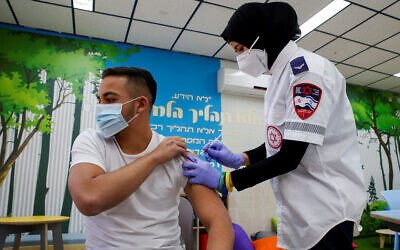
The South African variant of the coronavirus is notably more adept at “breaking through” the Pfizer-BioNTech vaccine than other variants are, Israeli scientists have found, in a first-of-its-kind real-world study.

Israel has used the Pfizer vaccine almost exclusively to vaccinate millions of citizens, with a version by Moderna, based on similar innovative mRNA technology, used minimally.

A team from Tel Aviv University and the Clalit healthcare organization sequenced the swabs of 150 Israelis who tested positive for COVID-19 despite having been vaccinated.

In their study, the prevalence of the South African strain among vaccinated individuals who were infected despite their inoculation was eight times higher than its prevalence in the unvaccinated infected population. Though the number of such infections among the vaccinated was relatively small, the findings indicated that this variant was far more successful in getting through vaccinated individuals’ defenses than other strains.

“Based on patterns in the general population, we would have expected just one case of the South African variant, but we saw eight,” Prof. Adi Stern, who headed the research, told The Times of Israel. “Obviously, this result didn’t make me happy.”

She said that the results show that the South African variant, compared to the original strain and the British variant, “is able to break through the vaccine’s protection.” However, she said that the sample size is too small to put a figure on its increased ability.

“We can say it’s less effective, but more research is needed to establish exactly how much,” she said.


Professor Ran Balicer, head of innovation at Clalit, Israel’s biggest health services provider, in Tel Aviv, on June 10, 2020. (EMMANUEL DUNAND / AFP)

Prof. Ran Balicer, director of research at Clalit, said the study was “very important.”

“It is the first in the world to be based on real-world data, showing that the vaccine is less effective against the South African variant, compared to both the original virus and the British variant,” he said.

Balicer added that the results call for continued vigilance against the coronavirus, including social distancing and wearing masks in indoor spaces, to prevent infection.

“These preliminary findings necessitates close continued attention to the dissemination of this strain in Israel, emphasizing the need for epidemiological monitoring and systematic sequencing, in order to contain further spread of the South African variant in Israel,” he said.

Students receive COVID-19 vaccine injections, at Amal high school in the southern city of Beersheba, March 17, 2021. (Flash90)

The research, which has been posted online but not yet peer-reviewed, is likely to raise questions about Pfizer’s own real-world study, which found that in South Africa, despite the local strain being prevalent, the vaccine was 100 percent effective.

The Tel Aviv research appears to corroborate a recent study from Ben-Gurion University of the Negev, which found that the vaccine response is less effective against the South African variant. It drew its conclusion by analyzing blood samples, while the new research is based on actual sequenced test results.

Prof. Adi Stern of Tel Aviv University’s School of Molecular Cell Biology and Biotechnology (courtesy, Tel Aviv University)

Stern emphasized that the South African variant remains uncommon within the vaccinated population, and stressed that the study does not precisely indicate the level of protection against the variant, because its prevalence in Israel is very low – about 1% of all cases.

The study also examined the so-called British variant’s ability to break through the vaccine’s defenses, compared to the original strain. No difference was found in the UK variant’s ability to infect fully vaccinated individuals (after two doses). However, it was more able to infect partially vaccinated individuals than the original.

In Israel, the massive spread of the extra-contagious British variant starting in early January — to the point that it now accounts for more than 90% of COVID cases — is believed to have been responsible for a major wave in the first months of the year, slowing the exit from the pandemic.

But Stern said it may well have had a silver lining: In the battle between variants, the British is far stronger, and may well be keeping the South African at bay.

“It is possible that the extensive spread of the British variant is blocking the spread of the South African variant,” she said. “Because it spread so effectively, it basically didn’t allow the South African variant to spread — it won the competition.”

With more than half the population fully vaccinated, the pandemic is now on the decline, with new daily infections in the low hundreds.


10/07/2020

This Overlooked Variable Is the Key to the Pandemic. It’s not R.


Source: The Atlantic
Sept. 30 2020
By Zenyep Tufekci

Updated at 1:17 p.m. ET on October 1, 2020

There’s something strange about this coronavirus pandemic. Even after months of extensive research by the global scientific community, many questions remain open.

Why, for instance, was there such an enormous death toll in northern Italy, but not the rest of the country? Just three contiguous regions in northern Italy have 25,000 of the country’s nearly 36,000 total deaths; just one region, Lombardy, has about 17,000 deaths. Almost all of these were concentrated in the first few months of the outbreak. What happened in Guayaquil, Ecuador, in April, when so many died so quickly that bodies were abandoned in the sidewalks and streets?* Why, in the spring of 2020, did so few cities account for a substantial portion of global deaths, while many others with similar density, weather, age distribution, and travel patterns were spared? What can we really learn from Sweden, hailed as a great success by some because of its low case counts and deaths as the rest of Europe experiences a second wave, and as a big failure by others because it did not lock down and suffered excessive death rates earlier in the pandemic? Why did widespread predictions of catastrophe in Japan not bear out? The baffling examples go on.

I’ve heard many explanations for these widely differing trajectories over the past nine months—weather, elderly populations, vitamin D, prior immunity, herd immunity—but none of them explains the timing or the scale of these drastic variations. But there is a potential, overlooked way of understanding this pandemic that would help answer these questions, reshuffle many of the current heated arguments, and, crucially, help us get the spread of COVID-19 under control.

By now many people have heard about R0—the basic reproductive number of a pathogen, a measure of its contagiousness on average. But unless you’ve been reading scientific journals, you’re less likely to have encountered k, the measure of its dispersion. The definition of k is a mouthful, but it’s simply a way of asking whether a virus spreads in a steady manner or in big bursts, whereby one person infects many, all at once. After nine months of collecting epidemiological data, we know that this is an overdispersed pathogen, meaning that it tends to spread in clusters, but this knowledge has not yet fully entered our way of thinking about the pandemic—or our preventive practices.

The now-famed R0 (pronounced as “r-naught”) is an average measure of a pathogen’s contagiousness, or the mean number of susceptible people expected to become infected after being exposed to a person with the disease. If one ill person infects three others on average, the R0 is three. This parameter has been widely touted as a key factor in understanding how the pandemic operates. News media have produced multiple explainers and visualizations for it. Movies praised for their scientific accuracy on pandemics are lauded for having characters explain the “all-important” R0. Dashboards track its real-time evolution, often referred to as R or Rt, in response to our interventions. (If people are masking and isolating or immunity is rising, a disease can’t spread the same way anymore, hence the difference between R0 and R.)

Unfortunately, averages aren’t always useful for understanding the distribution of a phenomenon, especially if it has widely varying behavior. If Amazon’s CEO, Jeff Bezos, walks into a bar with 100 regular people in it, the average wealth in that bar suddenly exceeds $1 billion. If I also walk into that bar, not much will change. Clearly, the average is not that useful a number to understand the distribution of wealth in that bar, or how to change it. Sometimes, the mean is not the message. Meanwhile, if the bar has a person infected with COVID-19, and if it is also poorly ventilated and loud, causing people to speak loudly at close range, almost everyone in the room could potentially be infected—a pattern that’s been observed many times since the pandemic begin, and that is similarly not captured by R. That’s where the dispersion comes in.

There are COVID-19 incidents in which a single person likely infected 80 percent or more of the people in the room in just a few hours. But, at other times, COVID-19 can be surprisingly much less contagious. Overdispersion and super-spreading of this virus are found in research across the globe. A growing number of studies estimate that a majority of infected people may not infect a single other person. A recent paper found that in Hong Kong, which had extensive testing and contact tracing, about 19 percent of cases were responsible for 80 percent of transmission, while 69 percent of cases did not infect another person. This finding is not rare: Multiple studies from the beginning have suggested that as few as 10 to 20 percent of infected people may be responsible for as much as 80 to 90 percent of transmission, and that many people barely transmit it.

This highly skewed, imbalanced distribution means that an early run of bad luck with a few super-spreading events, or clusters, can produce dramatically different outcomes even for otherwise similar countries. Scientists looked globally at known early-introduction events, in which an infected person comes into a country, and found that in some places, such imported cases led to no deaths or known infections, while in others, they sparked sizable outbreaks. Using genomic analysis, researchers in New Zealand looked at more than half the confirmed cases in the country and found a staggering 277 separate introductions in the early months, but also that only 19 percent of introductions led to more than one additional case. A recent review shows that this may even be true in congregate living spaces, such as nursing homes, and that multiple introductions may be necessary before an outbreak takes off. Meanwhile, in Daegu, South Korea, just one woman, dubbed Patient 31, generated more than 5,000 known cases in a megachurch cluster.

Unsurprisingly, SARS-CoV, the previous incarnation of SARS-CoV-2 that caused the 2003 SARS outbreak, was also overdispersed in this way: The majority of infected people did not transmit it, but a few super-spreading events caused most of the outbreaks. MERS, another coronavirus cousin of SARS, also appears overdispersed, but luckily, it does not—yet—transmit well among humans.

This kind of behavior, alternating between being super infectious and fairly noninfectious, is exactly what k captures, and what focusing solely on R hides. Samuel Scarpino, an assistant professor of epidemiology and complex systems at Northeastern, told me that this has been a huge challenge, especially for health authorities in Western societies, where the pandemic playbook was geared toward the flu—and not without reason, because pandemic flu is a genuine threat. However, influenza does not have the same level of clustering behavior.

We can think of disease patterns as leaning deterministic or stochastic: In the former, an outbreak’s distribution is more linear and predictable; in the latter, randomness plays a much larger role and predictions are hard, if not impossible, to make. In deterministic trajectories, we expect what happened yesterday to give us a good sense of what to expect tomorrow. Stochastic phenomena, however, don’t operate like that—the same inputs don’t always produce the same outputs, and things can tip over quickly from one state to the other. As Scarpino told me, “Diseases like the flu are pretty nearly deterministic and R0 (while flawed) paints about the right picture (nearly impossible to stop until there’s a vaccine).” That’s not necessarily the case with super-spreading diseases.

Nature and society are replete with such imbalanced phenomena, some of which are said to work according to the Pareto principle, named after the sociologist Vilfredo Pareto. Pareto’s insight is sometimes called the 80/20 principle—80 percent of outcomes of interest are caused by 20 percent of inputs—though the numbers don’t have to be that strict. Rather, the Pareto principle means that a small number of events or people are responsible for the majority of consequences. This will come as no surprise to anyone who has worked in the service sector, for example, where a small group of problem customers can create almost all the extra work. In cases like those, booting just those customers from the business or giving them a hefty discount may solve the problem, but if the complaints are evenly distributed, different strategies will be necessary. Similarly, focusing on the R alone, or using a flu-pandemic playbook, won’t necessarily work well for an overdispersed pandemic.

Hitoshi Oshitani, a member of the National COVID-19 Cluster Taskforce at Japan’s Ministry of Health, Labour and Welfare and a professor at Tohoku University who told me that Japan focused on the overdispersion impact from early on, likens his country’s approach to looking at a forest and trying to find the clusters, not the trees. Meanwhile, he believes, the Western world was getting distracted by the trees, and got lost among them. To fight a super-spreading disease effectively, policy makers need to figure out why super-spreading happens, and they need to understand how it affects everything, including our contact-tracing methods and our testing regimes.

There may be many different reasons a pathogen super-spreads. Yellow fever spreads mainly via the mosquito Aedes aegypti, but until the insect’s role was discovered, its transmission pattern bedeviled many scientists. Tuberculosis was thought to be spread by close-range droplets until an ingenious set of experiments proved that it was airborne. Much is still unknown about the super-spreading of SARS-CoV-2. It might be that some people are super-emitters of the virus, in that they spread it a lot more than other people. Like other diseases, contact patterns surely play a part: A politician on the campaign trail or a student in a college dorm is very different in how many people they could potentially expose compared with, say, an elderly person living in a small household. However, looking at nine months of epidemiological data, we have important clues to some of the factors.

In study after study, we see that super-spreading clusters of COVID-19 almost overwhelmingly occur in poorly ventilated, indoor environments where many people congregate over time—weddings, churches, choirs, gyms, funerals, restaurants, and such—especially when there is loud talking or singing without masks. For super-spreading events to occur, multiple things have to be happening at the same time, and the risk is not equal in every setting and activity, Muge Cevik, a clinical lecturer in infectious diseases and medical virology at the University of St. Andrews and a co-author of a recent extensive review of transmission conditions for COVID-19, told me.

Cevik identifies “prolonged contact, poor ventilation, [a] highly infectious person, [and] crowding” as the key elements for a super-spreader event. Super-spreading can also occur indoors beyond the six-feet guideline, because SARS-CoV-2, the pathogen causing COVID-19, can travel through the air and accumulate, especially if ventilation is poor. Given that some people infect others before they show symptoms, or when they have very mild or even no symptoms, it’s not always possible to know if we are highly infectious ourselves. We don’t even know if there are more factors yet to be discovered that influence super-spreading. But we don’t need to know all the sufficient factors that go into a super-spreading event to avoid what seems to be a necessary condition most of the time: many people, especially in a poorly ventilated indoor setting, and especially not wearing masks. As Natalie Dean, a biostatistician at the University of Florida, told me, given the huge numbers associated with these clusters, targeting them would be very effective in getting our transmission numbers down.

Overdispersion should also inform our contact-tracing efforts. In fact, we may need to turn them upside down. Right now, many states and nations engage in what is called forward or prospective contact tracing. Once an infected person is identified, we try to find out with whom they interacted afterward so that we can warn, test, isolate, and quarantine these potential exposures. But that’s not the only way to trace contacts. And, because of overdispersion, it’s not necessarily where the most bang for the buck lies. Instead, in many cases, we should try to work backwards to see who first infected the subject.

Because of overdispersion, most people will have been infected by someone who also infected other people, because only a small percentage of people infect many at a time, whereas most infect zero or maybe one person. As Adam Kucharski, an epidemiologist and the author of the book The Rules of Contagion, explained to me, if we can use retrospective contact tracing to find the person who infected our patient, and then trace the forward contacts of the infecting person, we are generally going to find a lot more cases compared with forward-tracing contacts of the infected patient, which will merely identify potential exposures, many of which will not happen anyway, because most transmission chains die out on their own.

The reason for backward tracing’s importance is similar to what the sociologist Scott L. Feld called the friendship paradox: Your friends are, on average, going to have more friends than you. (Sorry!) It’s straightforward once you take the network-level view. Friendships are not distributed equally; some people have a lot of friends, and your friend circle is more likely to include those social butterflies, because how could it not? They friended you and others. And those social butterflies will drive up the average number of friends that your friends have compared with you, a regular person. (Of course, this will not hold for the social butterflies themselves, but overdispersion means that there are much fewer of them.) Similarly, the infectious person who is transmitting the disease is like the pandemic social butterfly: The average number of people they infect will be much higher than most of the population, who will transmit the disease much less frequently. Indeed, as Kucharski and his co-authors show mathematically, overdispersion means that “forward tracing alone can, on average, identify at most the mean number of secondary infections (i.e. R)”; in contrast, “backward tracing increases this maximum number of traceable individuals by a factor of 2-3, as index cases are more likely to come from clusters than a case is to generate a cluster.”

Even in an overdispersed pandemic, it’s not pointless to do forward tracing to be able to warn and test people, if there are extra resources and testing capacity. But it doesn’t make sense to do forward tracing while not devoting enough resources to backward tracing and finding clusters, which cause so much damage.

Another significant consequence of overdispersion is that it highlights the importance of certain kinds of rapid, cheap tests. Consider the current dominant model of test and trace. In many places, health authorities try to trace and find forward contacts of an infected person: everyone they were in touch with since getting infected. They then try to test all of them with expensive, slow, but highly accurate PCR (polymerase chain reaction) tests. But that’s not necessarily the best way when clusters are so important in spreading the disease.

PCR tests identify RNA segments of the coronavirus in samples from nasal swabs—like looking for its signature. Such diagnostic tests are measured on two different dimensions: Are they good at identifying people who are not infected (specificity), and are they good at identifying people who are infected (sensitivity)? PCR tests are highly accurate for both dimensions. However, PCR tests are also slow and expensive, and they require a long, uncomfortable swab up the nose at a medical facility. The slow processing times means that people don’t get timely information when they need it. Worse, PCR tests are so responsive that they can find tiny remnants of coronavirus signatures long after someone has stopped being contagious, which can cause unnecessary quarantines.

Meanwhile, researchers have shown that rapid tests that are very accurate for identifying people who do not have the disease, but not as good at identifying infected individuals, can help us contain this pandemic. As Dylan Morris, a doctoral candidate in ecology and evolutionary biology at Princeton, told me, cheap, low-sensitivity tests can help mitigate a pandemic even if it is not overdispersed, but they are particularly valuable for cluster identification during an overdispersed one. This is especially helpful because some of these tests can be administered via saliva and other less-invasive methods, and be distributed outside medical facilities.

In an overdispersed regime, identifying transmission events (someone infected someone else) is more important than identifying infected individuals. Consider an infected person and their 20 forward contacts—people they met since they got infected. Let’s say we test 10 of them with a cheap, rapid test and get our results back in an hour or two. This isn’t a great way to determine exactly who is sick out of that 10, because our test will miss some positives, but that’s fine for our purposes. If everyone is negative, we can act as if nobody is infected, because the test is pretty good at finding negatives. However, the moment we find a few transmissions, we know we may have a super-spreader event, and we can tell all 20 people to assume they are positive and to self-isolate—if there are one or two transmissions, there are likely more, exactly because of the clustering behavior. Depending on age and other factors, we can test those people individually using PCR tests, which can pinpoint who is infected, or ask them all to wait it out.

Scarpino told me that overdispersion also enhances the utility of other aggregate methods, such as wastewater testing, especially in congregate settings like dorms or nursing homes, allowing us to detect clusters without testing everyone. Wastewater testing also has low sensitivity; it may miss positives if too few people are infected, but that’s fine for population-screening purposes. If the wastewater testing is signaling that there are likely no infections, we do not need to test everyone to find every last potential case. However, the moment we see signs of a cluster, we can rapidly isolate everyone, again while awaiting further individualized testing via PCR tests, depending on the situation.

Unfortunately, until recently, many such cheap tests had been held up by regulatory agencies in the United States, partly because they were concerned with their relative lack of accuracy in identifying positive cases compared with PCR tests—a worry that missed their population-level usefulness for this particular overdispersed pathogen.

To return to the mysteries of this pandemic, what did happen early on to cause such drastically different trajectories in otherwise similar places? Why haven’t our usual analytic tools—case studies, multi-country comparisons—given us better answers? It’s not intellectually satisfying, but because of the overdispersion and its stochasticity, there may not be an explanation beyond that the worst-hit regions, at least initially, simply had a few unlucky early super-spreading events. It wasn’t just pure luck: Dense populations, older citizens, and congregate living, for example, made cities around the world more susceptible to outbreaks compared with rural, less dense places and those with younger populations, less mass transit, or healthier citizenry. But why Daegu in February and not Seoul, despite the two cities being in the same country, under the same government, people, weather, and more? As frustrating at it may be, sometimes, the answer is merely where Patient 31 and the megachurch she attended happened to be.

Overdispersion makes it harder for us to absorb lessons from the world, because it interferes with how we ordinarily think about cause and effect. For example, it means that events that result in spreading and non-spreading of the virus are asymmetric in their ability to inform us. Take the highly publicized case in Springfield, Missouri, in which two infected hairstylists, both of whom wore masks, continued to work with clients while symptomatic. It turns out that no apparent infections were found among the 139 exposed clients (67 were directly tested; the rest did not report getting sick). While there is a lot of evidence that masks are crucial in dampening transmission, that event alone wouldn’t tell us if masks work. In contrast, studying transmission, the rarer event, can be quite informative. Had those two hairstylists transmitted the virus to large numbers of people despite everyone wearing masks, it would be important evidence that, perhaps, masks aren’t useful in preventing super-spreading.

Comparisons, too, give us less information compared with phenomena for which input and output are more tightly coupled. When that’s the case, we can check for the presence of a factor (say, sunshine or Vitamin D) and see if it correlates with a consequence (infection rate). But that’s much harder when the consequence can vary widely depending on a few strokes of luck, the way that the wrong person was in the wrong place sometime in mid-February in South Korea. That’s one reason multi-country comparisons have struggled to identify dynamics that sufficiently explain the trajectories of different places.

Once we recognize super-spreading as a key lever, countries that look as if they were too relaxed in some aspects appear very different, and our usual polarized debates about the pandemic are scrambled, too. Take Sweden, an alleged example of the great success or the terrible failure of herd immunity without lockdowns, depending on whom you ask. In reality, although Sweden joins many other countries in failing to protect elderly populations in congregate-living facilities, its measures that target super-spreading have been stricter than many other European countries. Although it did not have a complete lockdown, as Kucharski pointed out to me, Sweden imposed a 50-person limit on indoor gatherings in March, and did not remove the cap even as many other European countries eased such restrictions after beating back the first wave. (Many are once again restricting gathering sizes after seeing a resurgence.) Plus, the country has a small household size and fewer multigenerational households compared with most of Europe, which further limits transmission and cluster possibilities. It kept schools fully open without distancing or masks, but only for children under 16, who are unlikely to be super-spreaders of this disease. Both transmission and illness risks go up with age, and Sweden went all online for higher-risk high-school and university students—the opposite of what we did in the United States. It also encouraged social-distancing, and closed down indoor places that failed to observe the rules. From an overdispersion and super-spreading point of view, Sweden would not necessarily be classified as among the most lax countries, but nor is it the most strict. It simply doesn’t deserve this oversize place in our debates assessing different strategies.

Although overdispersion makes some usual methods of studying causal connections harder, we can study failures to understand which conditions turn bad luck into catastrophes. We can also study sustained success, because bad luck will eventually hit everyone, and the response matters.

The most informative case studies may well be those who had terrible luck initially, like South Korea, and yet managed to bring about significant suppression. In contrast, Europe was widely praised for its opening early on, but that was premature; many countries there are now experiencing widespread rises in cases and look similar to the United States in some measures. In fact, Europe’s achieving a measure of success this summer and relaxing, including opening up indoor events with larger numbers, is instructive in another important aspect of managing an overdispersed pathogen: Compared with a steadier regime, success in a stochastic scenario can be more fragile than it looks.

Once a country has too many outbreaks, it’s almost as if the pandemic switches into “flu mode,” as Scarpino put it, meaning high, sustained levels of community spread even though a majority of infected people may not be transmitting onward. Scarpino explained that barring truly drastic measures, once in that widespread and elevated mode, COVID-19 can keep spreading because of the sheer number of chains already out there. Plus, the overwhelming numbers may eventually spark more clusters, further worsening the situation.

As Kucharski put it, a relatively quiet period can hide how quickly things can tip over into large outbreaks and how a few chained amplification events can rapidly turn a seemingly under-control situation into a disaster. We’re often told that if Rt, the real-time measure of the average spread, is above one, the pandemic is growing, and that below one, it’s dying out. That may be true for an epidemic that is not overdispersed, and while an Rt below one is certainly good, it’s misleading to take too much comfort from a low Rt when just a few events can reignite massive numbers. No country should forget South Korea’s Patient 31.

That said, overdispersion is also a cause for hope, as South Korea’s aggressive and successful response to that outbreak—with a massive testing, tracing, and isolating regime—shows. Since then, South Korea has also been practicing sustained vigilance, and has demonstrated the importance of backward tracing. When a series of clusters linked to nightclubs broke out in Seoul recently, health authorities aggressively traced and tested tens of thousands of people linked to the venues, regardless of their interactions with the index case, six feet apart or not—a sensible response, given that we know the pathogen is airborne.

Perhaps one of the most interesting cases has been Japan, a country with middling luck that got hit early on and followed what appeared to be an unconventional model, not deploying mass testing and never fully shutting down. By the end of March, influential economists were publishing reports with dire warnings, predicting overloads in the hospital system and huge spikes in deaths. The predicted catastrophe never came to be, however, and although the country faced some future waves, there was never a large spike in deaths despite its aging population, uninterrupted use of mass transportation, dense cities, and lack of a formal lockdown.

It’s not that Japan was better situated than the United States in the beginning. Similar to the U.S. and Europe, Oshitani told me, Japan did not initially have the PCR capacity to do widespread testing. Nor could it impose a full lockdown or strict stay-at-home orders; even if that had been desirable, it would not have been legally possible in Japan.

Oshitani told me that in Japan, they had noticed the overdispersion characteristics of COVID-19 as early as February, and thus created a strategy focusing mostly on cluster-busting, which tries to prevent one cluster from igniting another. Oshitani said he believes that “the chain of transmission cannot be sustained without a chain of clusters or a megacluster.” Japan thus carried out a cluster-busting approach, including undertaking aggressive backward tracing to uncover clusters. Japan also focused on ventilation, counseling its population to avoid places where the three C’s come together—crowds in closed spaces in close contact, especially if there’s talking or singing—bringing together the science of overdispersion with the recognition of airborne aerosol transmission, as well as presymptomatic and asymptomatic transmission.

Oshitani contrasts the Japanese strategy, nailing almost every important feature of the pandemic early on, with the Western response, trying to eliminate the disease “one by one” when that’s not necessarily the main way it spreads. Indeed, Japan got its cases down, but kept up its vigilance: When the government started noticing an uptick in community cases, it initiated a state of emergency in April and tried hard to incentivize the kinds of businesses that could lead to super-spreading events, such as theaters, music venues, and sports stadiums, to close down temporarily. Now schools are back in session in person, and even stadiums are open—but without chanting.

It’s not always the restrictiveness of the rules, but whether they target the right dangers. As Morris put it, “Japan’s commitment to ‘cluster-busting’ allowed it to achieve impressive mitigation with judiciously chosen restrictions. Countries that have ignored super-spreading have risked getting the worst of both worlds: burdensome restrictions that fail to achieve substantial mitigation. The U.K.’s recent decision to limit outdoor gatherings to six people while allowing pubs and bars to remain open is just one of many such examples.”

Could we get back to a much more normal life by focusing on limiting the conditions for super-spreading events, aggressively engaging in cluster-busting, and deploying cheap, rapid mass tests—that is, once we get our case numbers down to low enough numbers to carry out such a strategy? (Many places with low community transmission could start immediately.) Once we look for and see the forest, it becomes easier to find our way out.

* This article originally stated that, in April, coronavirus deaths spiked in Quito, Ecuador. In fact, they spiked in Guayaquil, Ecuador.

ZEYNEP TUFEKCI is a contributing writer at The Atlantic and an associate professor at the University of North Carolina. She studies the interaction between digital technology, artificial intelligence, and society.



8/19/2020

EU Commission exposes Greek health minister over COVID-19 vaccine


Source: Euractiv
By Sarantis Michalopoulos
August 19 2020


The European Commission yesterday (18 August) refuted claims by Greece’s health minister that a first batch of COVID-19 vaccines is expected in December saying there is no timeline as there is no vaccine yet.

Asked by EURACTIV, EU spokesperson Vivian Loonela said: “We are in a situation where we cannot tell the exact date of delivery. We are working to have the vaccine ready as fast as possible as well as safe as possible.”

Loonela added that the executive is currently in talks with several pharma companies to make sure enough vaccines are available for EU member states as well as for donations to low-income countries.

Last week, EU Commission chief Ursula von der Leyen announced a first deal with British-Swedish multinational AstraZeneca to purchase a potential vaccine against COVID-19.

According to the agreement, the EU will purchase on behalf of EU member states 300 million doses of the AstraZeneca vaccine, with an option to purchase 100 million more.

Speaking on TV, Greek health minister Vasilis Kikilias said once the AstraZeneca vaccine passes the last testing phase, Greece would receive 700,000 doses in December and overall some three million doses until June 2021.

However, the Commission made it clear that no delivery date has been given to EU member states considering that the testing phases are still underway.

The executive hopes that a vaccine could be ready by the end of 2020 or beginning of next year, in line with industry projections.

Nathalie Moll, the director-general of the European Federation of Pharmaceutical Industries and Associations (EFPIA), said in April that a vaccine could be available in the beginning of 2021 if the testing phase is successful.

Strong reactions in Athens


The Commission’s statement triggered strong reactions in Athens, with the main leftist opposition Syriza party accusing the right-wing New Democracy government (EPP) of populism.

“If it weren’t for such a serious issue it would be almost ridiculous […] Cheap government populism playing with citizens’ anguish is both unacceptable and dangerous,” Syriza said in a statement.

Meanwhile, the country reported yesterday a new record of 269 new coronavirus cases and two new deaths. The total number of COVID-10 cases has reached 7,472.

The government claims that the vast majority of cases occurred domestically and are not related to tourism. Many cases are also related to young people.

Meanwhile, the opposition accused the government of inefficient preparation against a second wave of infection and called on Prime Minister Kyriakos Mitsotakis to stop putting the blame on young people.


5/27/2020

South Korea sees biggest jump in virus cases in seven weeks


Source: TODAY
May 27 2020


SEOUL — South Korea reported its biggest jump in coronavirus infections in seven weeks on Wednesday (May 27), driven by a fresh cluster at an e-commerce warehouse on Seoul's outskirts, as millions more pupils went back to school.

The country has been held up as a global model in how to curb the virus and has rushed to contain new infections as life returns to normal.

But officials announced 40 new cases Wednesday — taking its total to 11,265 — with most new infections from the densely populated Seoul metropolitan area.

It was the largest increase since 53 infections were announced on April 8.

An outbreak at a warehouse of e-commerce firm Coupang in Bucheon, west of Seoul, has seen 36 cases so far, the KCDC added.

"It is suspected that the basic regulations were not enforced at the warehouse," said vice-health minister Kim Gang-lip.

"If quarantine rules are not implemented at workplaces, it could lead to a dreadful result of a mass infection."

But officials said the possibility of parcel recipients being infected was low.

Social distancing rules have been relaxed in South Korea and facilities such as museums and churches have reopened while some professional sports — including baseball and soccer — started new seasons earlier this month, albeit behind closed doors.

More than two million students returned to classes on Wednesday, as part of the phased reopening of schools.

Some high schools were forced to turn back pupils shortly after resuming classes last week over concerns of new virus cases in their neighbourhood.

The country endured one of the worst early outbreaks of the disease outside mainland China, and while it never imposed a compulsory lockdown, strict social distancing had been widely observed since March.

But it appears to have brought its outbreak under control thanks to an extensive "trace, test and treat" programme. AFP


Coronavirus: EU to announce huge recovery package


Source: BBC
May 27 2020


A major recovery fund for Europe worth between €500bn ($545bn; £448bn) and €1 trillion will be proposed by European Commission President Ursula von der Leyen on Wednesday.

Economies across the 27-nation EU bloc have been ravaged by the Covid-19 pandemic, but several southern states had big debts even before the crisis.

Germany has backed calls for the money to be raised on the capital markets.

However, several "frugal" states object to taking on debt for other countries.

Austria, the Netherlands, Denmark and Sweden reject the idea of cash handouts to relatively poorer countries rather than low-interest loans.

Without the backing of all 27 governments in the EU, the recovery plan cannot go ahead.

What will the Commission leader say?


Mrs von der Leyen will give details both of the recovery "instrument" and how it will be integrated into the EU's wider 2021-27 budget. The fund is likely to be paid out in a mixture of grants and loans, with particular emphasis on both investment and reform.

She will need to address the concerns of the "frugal four" as well as others, and is expected to seek a way of avoiding member states having to pay more money to cover the recovery fund.

That means that the money will have to be raised on financial markets, but it would still have to be paid back, perhaps over 30 years.

So the question is how and over what period the money would be repaid. Reports suggest some EU-wide taxes may be imposed on the turnover of multinationals, as well as on plastics and CO2 emissions.


Coronavirus leads to food industry crisis in Europe

Commissioner Maros Sefcovic says recovery has to be based on green and digital policies as well as "increased resilience" and lessons learned from the Covid-19 crisis.

The budget will be "equipped with increased firepower to be able to generate massive investment at the scale and speed needed to kick-start all our economies", he says.

The European Central Bank has played a key role in helping eurozone countries emerge from the debt crisis with its stimulus programme of bond-buying. But concerns about the ECB programme's future were raised earlier this month when Germany's top court ruled that it violated the German constitution.

The UK has left the EU so is unlikely to have any involvement in the fund as it stands.

What do the member states say?


Dutch Prime Minister Mark Rutte summed up the feelings of the wealthier states of Northern Europe on Tuesday. A fund was necessary to stimulate recovery, he said, but "we believe this should consist of loans, without any mutualisation of debts".

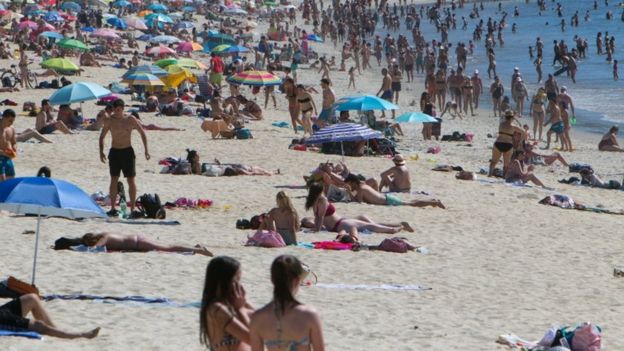
This beach at Vigo in northern Spain was crowded with tourists on Tuesday as Spain's economy began to reopen

Spain and Italy have seen the highest number of deaths in the EU during the coronavirus crisis and, along with Greece and Portugal are reliant on tourism for a large amount of their economic output.

According to Italian media, Mr Rutte discussed the fund with Prime Minister Giuseppe Conte on Tuesday.

Italian Economy Minister Roberto Gualtieri said he was expecting an "ambitious proposal" that Italy had fought for and which "initially saw us isolated and then saw the consensus of many countries".


5/25/2020

Factbox: EU recovery fund - the battle lines


Source: Reuters
May 25 2020


BRUSSELS (Reuters) - The European Commission will issue on Wednesday a new proposal for a long-term European Union budget and a coronavirus recovery fund to help economies in the bloc rebound from recession.

Both measures are controversial because they entail transfers of wealth across the 27-nation bloc, and views differ widely on how that should happen. The recovery package is also creating new faultlines because it entails financing through debt issued in the bloc’s name.

Below are key points of contention that the Commission will have to address and on which EU leaders must find a compromise.

SIZE

The recovery package is to be a mix of grants, loans and guarantees that together add up to 1-2 trillion euros over the next few years. Most likely only part of this will be real cash: the rest is likely to entail financial engineering such as leveraging.

THE MIX

A key sticking point is likely to be how much of the money comes in the form of grants and how much in loans. France and Germany want 500 billion euros in grants. The Netherlands, Austria, Sweden and Denmark want no grants, only loans. The Commission will propose a mix of both, but it is unclear in what proportion.

STRINGS ATTACHED

Access to the recovery money is to be linked to “sound economic policies and structural reforms”. This could become a friction point with Italy and Spain, worst-affected by the epidemic, which are wary of northern fiscal hawks dictating their policies.

HOW TO SPEND IT

The recovery money would have to be spent on what the EU sees as long-term priorities: making the bloc climate-neutral by 2050, digitalising the economy, investing in research and innovation.
WHERE WILL IT COME FROM?

The Commission would borrow money cheaply on the market thanks to its triple-A rating, using government guarantees for the joint EU long-term budget as security.
WHEN WILL IT BE AVAILABLE?

The funds will be front-loaded over the next two-three years when they are needed the most, but because of the complex legal process required it is not clear if any will be disbursed before 2021.

FINANCING THE RECOVERY

Loans from the recovery package will be repaid by the governments that take them. Grants don’t need to be paid back, but there’s a hitch: The EU would have to borrow the money for grants, and some doubt whether this is legal because EU law prohibits the EU budget from running a deficit.

One solution could be to allot future revenues from some new tax assigned to the EU in budgets after 2027 to repay the Commission’s borrowing now. This would be a milestone in further EU integration and a major step towards fiscal union, which is also why some governments will oppose it.


If there is no new tax, the Commission borrowing could also be repaid through higher national contributions of governments to the long-term budget in the future - also an unprecedented sign of EU solidarity.

LINK TO LONG-TERM BUDGET

The recovery fund will be linked to the EU’s 2021-2027 budget, which operates on the basis of grants and is itself a highly divisive issue. Governments and EU institutions are at odds over the overall size of the budget, which is around 1 trillion euros over seven years, and what to spend it on.


5/24/2020

Coronavirus: Study suggests COVID-19 immunity could last just six months


Source: sky news
May 24 2020
By Clare Sibthorpe


The results add to scientific doubt about the effectiveness of antibody tests, herd immunity and "immunity passports".

A person could be re-infected with coronavirus in six months, new research suggests, in a blow to the push for "immunity passports" as evidence of recovery from the illness.

The research was released after the government announced the supply of 10 million antibody tests to show if someone has had COVID-19 and potentially developed immunity to the virus.


Over 35 years, University of Amsterdam scientists regularly tested 10 men for four types of coronaviruses which cause the common cold.

Most participants - aged between 27 and 66 - caught the viruses again within three years, with the study concluding "coronavirus protective immunity is short-lasting".

"We saw frequent reinfection after 12 months post infection and substantial reduction in antibody levels as soon as six months post-infection," the study stated.


Between 1985 and 2020, the subjects were tested at either three month or six month intervals. Researchers found that high antibody levels "were never sustained at the next visit".


While acknowledging limitations to the study, its conclusion casts doubt on the reliability of so-called "immunity passports".


5/22/2020

Armed Conflict Has Forced 661,000 People to Flee Their Homes During the Coronavirus Pandemic


Source: Time
May 22 2020
By Suyin Haynes

Armed conflict has forced at least 661,000 people around the world to flee their homes during the last two months of the coronavirus pandemic, according to a new report, as experts say world leaders are failing to protect displaced communities and leaving them more exposed to the impact of the virus.

The Norwegian Refugee Council said Friday that between March 23 and May 15, armed conflict in 19 countries has displaced hundreds of thousands of people, despite a call from the United Nations’ Secretary-General Antonio Guterres for a global ceasefire. Chad and Niger, Afghanistan, Syria, and Myanmar were among the countries that saw more than 10,000 people displaced, according to the report. The highest number by far was in the Democratic Republic of Congo (DR Congo), where more than 480,000 people have been forced to leave their homes due to clashes between armed groups and the country’s military, accounting for 75% of the total number of people displaced worldwide.

While these countries are currently towards the lower end of the global rankings for coronavirus cases and deaths, experts are warning that outbreaks could have potentially catastrophic effects in already unstable states. In Bangladesh’s densely populated Cox’s Bazar, where around 1 million Rohingya refugees from Myanmar are currently living, aid organisations have warned that the coronavirus “could spread like wildfire” after the first positive case was confirmed on May 14.

So far, there have been less than 2,000 confirmed cases and 61 deaths due to COVID-19 in DR Congo. And although there are few official cases of the coronavirus outside of the capital Kinshasa, Maureen Philippon, Country Director for the Norwegian Refugee Council, says it’s difficult for people in DR Congo not to feel worried when faced with the double crisis of the pandemic and ongoing armed conflict. As several countries around the world have enacted quarantine, lockdown and social distancing measures, the logistics on the ground make in DR Congo have made it near impossible to implement due to lack of shelter, overcrowding and lack of clean water in displacement sites. “People say they are hit twice in a row: first by the conflict making them lose everything, and now by the living conditions that are increasing their risk to the virus,” Philippon tells TIME.

“One of the men we spoke to [in Ituri province] had to flee his village on May 11. He left with $11 in his pocket and nothing else,” Philippon says. Another woman told Philippon that she had left her house for fear of an attack on May 12, and was separated from her husband and two sons in their escape — she has not seen them since. “What she wants is peace. And we are hearing this from many people: they want peace, they want to be able to make a living on their own.”

DR Congo has been the site of ongoing multiple, complex conflicts and human rights abuses since the end of its civil war in 2003, with tensions rising in the central Kasai region since 2016. “Almost each small set of conflicts has its own dynamic, making it difficult to tackle,” says Philippon. The number of challenges, the expanse of Africa’s second largest country and its challenging geographical settings, and a state that struggles to impose its governance have all contributed to the situation today. Over the course of 2019, 1.7 million people in DR Congo were displaced, the second highest country figure behind Syria.

Congolese people are already dealing with multiple public health crises including malaria, cholera and the world’s worst measles epidemic. In April, 6 new cases of the Ebola virus were reported in the country, after an outbreak was declared in August 2018 which has resulted in 2,279 deaths. “The outlook is grim,” says Philippon, emphasizing that DR Congo is home to the second-largest hunger crisis in the world after Yemen.

Al-Swaidah displacement camp in Yemen, though there is nothing to mark it as such: no running water, no toilets, no electricity. It is home for around 500 displaced families from Marib and Nihm. 
Hassan Al-Homaidi—NRC

More broadly, the coronavirus pandemic has hit the humanitarian sector hard: on Wednesday, Oxfam announced that it would withdraw its operations in 18 countries and lay off nearly a third of staff due to financial pressures. The Norwegian Refugee Council says that the crisis has also reduced access for aid organizations to areas on the ground, making data collection more difficult and therefore the figure of 661,000 displaced people is likely to be an underestimate.

The organizations’s new report comes with an appeal to the United Nations Security Council for stronger leadership, and to issue a clear call to halt hostilities and conflict around the world in order to focus on the pandemic response. “While people are being displaced and killed, powerful members of the UN Security Council squabble like children in a sandbox,” NRC’s Secretary General Jan Egeland said in a statement. “World leaders must rise to the occasion and jointly push parties to cease their fire and unite in protecting all communities from COVID-19. Now is not the time for kindergarten politics.”


5/21/2020

Franco-German Recovery Fund will not Fix Eurozone


May 21 2020
By Pepijn Bergsen


The proposed fund to aid recovery from the coronavirus is a welcome sign of EU solidarity. But it does not do nearly enough to address the bloc’s underlying weaknesses, and is not a game changer for fiscal integration.

We don’t know yet exactly what Angela Merkel and Emmanuel Macron's proposed temporary fund of €500 billion will be spent on, but it will likely include investment in green infrastructure, research and support for the hardest-hit sectors.

Although the money will flow through the EU budget, it is likely to be spent early in the next budget period from 2021 to 2027. There are different options for dealing with the debt load created by the fund - it could be paid back over a long period, or continuously rolled over. The latter option is preferable given the likely high demand for these safe assets in financial markets.

As described by Merkel, the Franco-German proposal would mean that the debt servicing (the repayment of interest and principal) would be done through funds allocated to the EU through contributions from the member states, based on their share in the regular EU budget.

This would mean Italy would need to contribute around 15 per cent of these new liabilities. As a result, this technically increases the Italian state’s liabilities by around €75 billion, although accounting rules mean this will probably remain off the state’s balance sheet and thus not increase its headline debt to GDP ratio.

For those more in need?


To be net beneficiaries, countries must receive more from the fund than their share of liabilities. Therefore, if the EU spends more than €75 billion of the recovery fund in Italy, the country will be coming out ahead and it would constitute a transfer from those less in need to those more in need.

Given the relative severity of the coronavirus-related disruption, this is likely to be the case. However, given that other large countries, most notably Spain, have also been hit hard, there will be a limit to the upside for Italy. All member states, not just eurozone countries, will need to receive some of this money, with the political bargaining meaning it likely can’t be too far off from their share of the liability.

Assuming that spending from the fund in Italy is just over 50 per cent more than its share of the liabilities, at €115 billion or 6 per cent of Italy’s 2019 GDP it would constitute an increase in spending in Italy of around 2-3 per cent of GDP for the next couple of years. Some of this spending could have happened without the fund. But this would have come with higher debt servicing costs and it is thus safe to call this plan a significant fiscal boost for Italy, and other fiscally weaker economies.

A fiscal boost should not be confused with a revolution. Some have referred to this as a 'Hamiltonian' moment for the eurozone, referring to the American treasury secretary who bartered the compromise that led to the US federal government assuming the debts incurred by the states during the war of independence.

However, the recovery fund would, for now, remain a one-off and European countries will remain liable for their current debt loads, and for the increase in their debt stocks that will result from the coronacrisis anyway. The European Commission forecasts that the Italian debt stock will increase from 135 per cent of GDP last year to 153 per cent at the end of next year.

The size of the fiscal stimulus provided by the fund means it is likely to boost the growth potential for the Italian economy, particularly if accompanied by other reforms, as the plan suggests it should. However, it would require an unrealistically large boost to significantly improve Italian debt dynamics, especially given the disruption from the coronavirus crisis is going to be felt for a long time anyway.

The Italian state will continue to have to aim for large primary surpluses to finance interest expenditures significantly higher than that of its eurozone peers. If you believed that the Italian situation was economically and politically unsustainable over the long term before the crisis, even a larger version of this fund should not change your mind.

The recovery fund could turn out to be a template for future crisis responses and thereby represent a move towards a proper Hamiltonian moment. But as the fund is an EU instrument, instead of a eurozone instrument, this is harder. Furthermore, the next crisis is unlikely to be as symmetrical as the current one, meaning it will be even more difficult to get those member states already opposed to this plan to agree to a repetition or an expansion into something more like a fiscal union.

This does not mean the recovery fund is a bad idea. On the contrary, it should be welcomed as part of the EU’s response to the COVID-19 crisis. Ensuring the southern economies can recover is also in the interest of the fiscally stronger EU member states, who rely on their neighbours to buy many of their exports.

Furthermore, it would be something of a bargain for them, as it should only cost them their share of the interest costs and some of the fund will be spent in their economies. If that is too much to ask in solidarity, the EU has much bigger problems.


5/20/2020

Lancet : Donald Trump's letter to World Health Organisation is 'factually incorrect''


May 20 2020


World-leading medical journal The Lancet challenged a key claim in US President Donald Trump's four-page diatribe against the World Health Organisation (WHO), saying the US leader cited academic research that did not exist.

In his Monday letter to WHO chief Dr Tedros Adhanom Ghebreyesus threatening US withdrawal from the United Nations body, Trump said the WHO had ignored "credible reports of the virus spreading in Wuhan in early December 2019 or even earlier, including reports from The Lancet medical journal".

The Lancet's editor-in-chief, Richard Horton, took to Twitter on Tuesday morning to challenge the claim.

"Dear President Trump " You cite The Lancet in your attack on WHO," Horton wrote. "Please let me correct the record. The Lancet did not publish any report in early December, 2019, about a virus spreading in Wuhan. The first reports we published were from Chinese scientists on Jan 24, 2020."

Dear President Trump - You cite The Lancet in your attack on WHO. Please let me correct the record. The Lancet did not publish any report in early December, 2019, about a virus spreading in Wuhan. The first reports we published were from Chinese scientists on Jan 24, 2020. 

pic.twitter.com/Vx6mDpZJHx

" richard horton (@richardhorton1) May 19, 2020

The journal, headquartered in London, later issued a full statement challenging Trump's "factually incorrect" statement with details about the timing, authorship and substance of the first two papers it published on the outbreak in late January.

"It is essential that any review of the global response is based on a factually accurate account of what took place in December and January," the statement concluded.

The White House did not respond to a request for comment.

Pr Trump claims we published reports in Dec 2019 claiming a virus was spreading in Wuhan. Untrue. The first paper describing 41 patients with COVID-19 was published on Jan 24. That paper identified symptom onset of the first Wuhan patient as Dec 1. No cover up. Full transparency. pic.twitter.com/BISAgbp0sE

" richard horton (@richardhorton1) May 19, 2020

Not only did it challenge the veracity of claims made in Trump's letter to Tedros, The Lancet also said in its statement that the allegations levelled against the WHO were "serious and damaging to efforts to strengthen international cooperation to control this pandemic".

In that letter, Trump said that he would permanently cut US contributions to and consider withdrawal from the WHO, unless it committed to "substantive improvements within the next 30 days".

The threat came after weeks of accusations by both Trump and Republican allies in Congress that the WHO has acted deferentially to Beijing, with the US leader recently describing the body as "a puppet of China".

WHO officials have welcomed scrutiny of their response to the outbreak, but have called for such reviews to happen once the pandemic is brought under control.

The letter came as WHO members moved to approve a resolution calling for an investigation into both the origins of the coronavirus and the WHO's response. Echoing WHO officials, Beijing supported the motion and said that such a review should come at the "appropriate time".

Among its charges against the WHO, Trump's missive collated a list of what it called "grossly inaccurate or misleading" claims made by the agency, including remarks from Tedros on January 28 praising China's "transparency", despite reports that authorities had silenced doctors.

Yet those accusations refer to a time when even Trump himself was lauding similar praise on the Chinese government, tweeting on January 24 that Beijing had been "working very hard to contain the Coronavirus" and voicing US appreciation for its "efforts and transparency."

"In particular, on behalf of the American People, I want to thank President Xi!" Trump wrote.

" Donald J. Trump (@realDonaldTrump) January 24, 2020

And as recently as February 24, Trump spoke glowingly of the WHO's work, tweeting that the US Centres for Disease Control and Prevention and the WHO had been "working hard and very smart".

Horton has spoken out against Trump's position on the WHO before, using a recent opinion piece published in The Lancet to castigate the US leader for his mixed messaging and the decision in April to suspend funding to the agency while his administration reviewed its pandemic response.

"President Trump's decision to harm an agency whose sole purpose is to protect the health and well-being of the world's peoples is a crime against humanity," Horton wrote then. "It is a knowing and inhumane attack against the global civilian population."

Horton has served in a number of roles with the WHO, and is currently listed as chair or co-chair on at least two WHO expert panels, according to the agency's website. Last year he received a "Health Leaders" award from the WHO in recognition of his "outstanding leadership in global health".

Coronavirus: no ''mini-Schengens", warns EU chief


Source: euronews
May 20 2020


Amid the on-going coronavirus pandemic, in this episode of The Global Conversation, Euronews' Efi Koutsokosta speaks to European Commission Vice President Margaritis Schinas about the future of Europe's border-free travel Schengen zone after the unprecedented move by EU member-states in March to seal borders. They also cover the European Commission's plans for economic recovery post COVID-19, as well as the thorny issue of EU migration and asylum and so-called burden sharing.

"There is no way that returning to Schengen normality from the existing restrictions in our internal borders should be replaced by some sort of regional mini-Schengens that fragment our single market and discriminate against the non-participating member states."

Margaritis Schinas, European Commission Vice President

No "mini-Schengens"


Efi Koutsokosta, Euronews: "We see the member states are gradually opening borders and easing restrictive measures. We know that the EU Commission has made some precise recommendations but it’s up to the member states to decide how they will do it....so how safe is it to open economies, to open the borders in the Schengen area, and of course, during the tourist period?"

Margaritis Schinas, European Commission Vice President: “You are right in saying that we have not been, in our tourist and travel recommendations, over prescriptive. We do not think that this is the Commission's job to dictate from Brussels, one size fits all approach given a date that suits everybody. When it comes to opening up the tourism and travel and hospitality areas, there is no room for discrimination and every measure taken has to be based on our guidelines and has to be non-discriminatory in nature. Let me give you an example on borders, for example. There is no way that returning to Schengen normality from the existing restrictions in our internal borders should be replaced by some sort of regional mini-Schengens that fragment our single market and discriminate against the non-participating member states. This is not possible. On the contrary, it is possible, as recommended by the Commission, that regions and member states that have similar epidemiological records, can indeed use this intermediary phase of starting lifting internal border restrictions in an orderly and non-discriminatory way - and above all - a safe way, both for travellers and for tourists.”

The recovery plan: "It will have to be big"


Efi Koutsokosta, Euronews: "However the crisis hit the continent in an unequal way, which means that now when it comes to the Recovery Fund, we see that the richest countries of the north want to focus on loans, whereas the poorest countries of the south - the hardest-hit countries by the pandemic - want to focus on grants. But, if finally the rich countries insist on loans, what kind of solidarity are we talking about?"

Margaritis Schinas, European Commission Vice President: "We are now at a very crucial stage where the Commission in the next 10 days will finalise what we think is the best way to address this lack of equilibrium, which is the recovery initiative. And the recovery initiative would have certain characteristics designed precisely to address the issues, the shortcomings, that you mentioned. First, size. It will have to be big. Second, it has to be targeted to these member states and these sectors of the economy that suffered the most.

"It's not the right time to spray money around many objectives. And third, it has to have the right mixture of grants and loans, especially because it would be totally unfair for the countries of the south to be forced to increase their debt."

EU Pact for Migration and Asylum


Efi Koutsokosta, Euronews: "Let's move on to another big priority, at least previously, which is migration. And now it seems that it's not so much on top of the agenda, but we know that you are preparing a new migration pact. When should we expect this?"

Margaritis Schinas, European Commission Vice President: “I think that once we clear the table with all pandemic related initiatives like the recovery plan, then the next big issue would be the EU Pact for Migration and Asylum. At that time, that would allow the German presidency to start to work as early as possible."

Efi Koutsokosta, Euronews: "So, should we expect it in June before the German presidency?"

Margaritis Schinas, European Commission Vice President: “Yeah,,,,,,I think this is a reasonable expectation, because as you say, the German Presidency starts on the 1st July and I would very much like to have the German presidency find this proposal on their table at an early stage."

"We can call it the new Dublin."

Efi Koutsokosta, Euronews: "What will this proposal include?

Margaritis Schinas, European Commission Vice President: “Yeah, we imagine this pact as a three storey building, with a first floor being a very strong external dimension that would allow Europe to build robust relations with countries of origin and transit that are crucial in managing migratory flows. We have to create the conditions for these countries to offer opportunities to their citizens instead of — keeping them there — instead of forcing them to put their lives in the hands of the smugglers in the Mediterranean. The second floor of the building would be a common and robust management of our external borders, as we saw recently in Evros. There is the possibility for Europeans and Frontex to mobilise very quickly to help guard our external borders, especially in times of crisis. And we're hopeful that this will be a central feature of the pact. And the third, and probably the most important floor, would be of course, solidarity and burden sharing. We can call it the new Dublin."

"Europe cannot fail twice on such an important issue."


Efi Koutsokosta, Euronews: "But how can you oblige the member states that already refused receiving and sharing the burden of welcoming refugees? How can you convince them this time?"

Margaritis Schinas, European Commission Vice President: "Yeah. First of all, if you would allow me not to use oblige. I have been working many years in European politics and I always prefer the term convince rather than oblige. You are right. When this was tried in 2016, Europe was not successful. This time, I think probably we have a better chance because the first and the second floor of the building are more developed. You can claim for solidarity if you can convince that the responsibility element is there, so that you have a stronger external dimension that you can control your borders. So you are entitled to ask for solidarity. I have the feeling that in 2016, the first two floors have not been fully developed. So, Europe cannot fail twice on such an important issue.

"I think there is more ground for optimism this time."


Efi Koutsokosta, Euronews: "Are you going to use the EU budget or the cohesion funds in order to convince the member states that have so far refused to do it?"

Margaritis Schinas, European Commission Vice President: "Well, this is a separate discussion. By experience I do not think that this cross-fertilisation of difficult files helps. And again, I think that we are better prepared this time. It's not going to be easy, but I think there is more ground for optimism this time."


What would a second wave look like?


Source: CNBC
May 20 2020


Past pandemics have shown that multiple waves of infection are likely and tend to be more severe. Despite warnings from health experts and economists about against easing restrictions too soon — not only to protect lives but also the economy — there is growing opposition against the social distancing measures. CNBC’s Tom Chitty explains.