Showing posts with label UN. Show all posts

7/02/2021

Libya election plans in chaos as UN accused of breaching mandate

Abdul Hamid Dbeibah, Libya’s interim prime minister.


Source: The Guardian
By Patrick Wintour
July 2 2021

Efforts to set the terms for presidential and parliamentary elections in Libya on 24 December are mired in chaos, as UN officials are accused of breaching their mandate by facilitating efforts to prevent them going ahead.

The UN admitted it was facing difficult splits among the 75-strong body it set up last year to choose an interim government and agree the roadmap to the elections.

At a bitter and ill-tempered week-long meeting in Geneva, marred by allegations of bribery, some of the Libyan Political Dialogue Forum (LPDF) delegates managed to persuade UN officials to allow them to reopen the issue of whether presidential elections should be held, or whether there should first be a referendum on a constitution under which the president will operate.

But other delegates, convinced the existing political class is manoeuvring to stay in power without elections, said the issue of whether the election should go ahead had already been settled last year and subsequently endorsed by a UN security council resolution in April and then at a meeting of world powers in Berlin in June.

In a statement, 26 members of the forum condemned the UN after it proposed the LPDF vote on a range of options including keeping the current unelected government in power, and only holding an election for a new parliament. The current Government of National Unity, bringing the east and west of the country together, was set up in March 2021 and is led by the businessman Abdul Hamid Dbeibah. His government’s primary mandate was to prepare for the elections with a deadline of 1 July set to give officials time to prepare an electoral roll.

The week-long meeting outside Geneva has been described as chaotic, with delegates nearly coming to blows and claims of threatening WhatsApp messages and political bribery. Much of the bargaining is being held in secret away from the main conference site, and at one point exasperated UN officials admitted their inability to find a solution and suggested three elders be chosen from the group to mediate.

Some of the sessions are being screened live back to Libyans sweltering in a two-week heatwave and enduring lengthy power cuts.

The UN’s special envoy to Libya, Jan Kubis, has not been present due to having Covid, but over a shaky Zoom line he urged delegates on Thursday to end the “intolerable personal abuse”.

The idea of an election for a president, a new post in Libya, answerable to parliament was endorsed by the UN security council in April.

Elham Saudi, a member of the LPDF, told the Guardian from Geneva that the process for charting Libya’s political future was “wayward and out of control”.

She said: “What is happening right now is in total breach of the agreed roadmap, the Berlin peace process, and the relevant UN security council resolution. The UN’s leadership is entertaining proposals that would result in keeping the current government in place in clear breach of the roadmap.

“There is a significant risk with these deals being made off-site that women, civil society and minorities get sidelined, which is a breach of the UN security council mandate. When there is a lack of transparency, it is impossible to know the terms of any deal being struck.”

She added: “Foreign governments pay for UN officials and set their mandate, and they now need to intervene to bring these officials back under control.”

Tarek Megerisi, a Libya analyst at the European Council on Foreign Relations, said the Geneva meeting was “dangerously unravelling [and] charting a course that diverges from the Berlin process and the UN security council resolutions, which will cause division and spoil elections”.

He said LPDF participants that wanted a democratic government in Libya needed outside support and pressure on the UN to salvage the issue.

In a letter to Kubis, the leader of the Ihya Libya party, the former diplomat Aref Ali Nayed, said he feared for his country if the elections were not held, adding there was a repetition of the corruption that had disfigured the appointment of the previous government.

The opposition to the presidential election stems from a mix of interest groups, including those already in power, those that fear the rules will disqualify their candidate from standing and those concerned an election would be too divisive in a highly polarised society bereft of a unified security force. Political power in Libya has long been a source of patronage and enrichment.


9/27/2020

Russia, China blocking report into Libya conflict arms embargo violations


Source: euronews
By AP
Sept 27 2020


Russia and China blocked the official release of a report by U.N. experts on Libya that accused its warring parties and their international backers - including Russia - of violating a U.N. arms embargo on the conflict-wracked country, U.N. diplomats said Friday.

Germany’s deputy U.N. ambassador, Günter Sautter, said he brought the issue to the Security Council after the two countries blocked the report’s release by the committee monitoring sanctions on Libya, which Germany heads.


“Many delegations have asked for the publication of the panel of experts’ interim report,” he said. “This would create much-needed transparency. It would contribute to naming and shaming those who continue to blatantly violate the arms embargo in spite of agreements that have been made.”

But diplomats, speaking on condition of anonymity because Friday’s council consultations were closed, said Russia and close ally China again blocked the report’s publication.


Sautter said before the meeting, when asked what Germany could do if Russia and China blocked the report’s release again: “Let me assure you I will continue to use every tool at hand in order to make sure that we have the necessary transparency.”

The report, seen by The Associated Press earlier this month, said the arms embargo was being violated by Libya’s U.N.-supported government in the west, which is backed by Turkey and Qatar, and by rival east-based forces under commander Khalifa Hifter, backed by the United Arab Emirates, Russia and Jordan. The panel said the embargo remains “totally ineffective.”

The experts said 11 companies also violated the arms embargo, including the Wagner Group, a private Russian security company that the panel said in May provided between 800 and 1,200 mercenaries to Hifter.

In addition, the experts said the warring parties and their international backers, along with Egypt and Syria, failed to inspect aircraft or vessels if they have reasonable grounds to believe the cargo contains military weapons and ammunition, as required by a 2015 Security Council resolution.

Anwar Gargash, the United Arab Emirates’ minister of state for foreign affairs, told a group of reporters at a virtual briefing Friday that he wouldn’t comment on a report he hadn’t seen. But he said that “we categorically deny” many of the “wild allegations that we’ve been hearing in the press.”

In the years after the 2011 uprising that toppled longtime autocrat Moammar Gadhafi, Libya has sunk further into turmoil and is now divided between two rival administrations based in the country’s east and west, with an array of fighters and militias backed by various foreign powers allied with each side.

Tensions in oil-rich Libya escalated further when east-based forces Hifter launched an offensive in April 2019 trying to capture the capital, Tripoli. But Hifter’s campaign collapsed in June when militias backing the U.N.-supported government in Tripoli, with Turkish support, gained the upper hand, driving his forces from the outskirts of the capital and other western towns.

The Security Council adopted a resolution on Sept. 15 demanding that all countries enforce the widely violated U.N. arms embargo on Libya and withdraw all mercenaries from the North African nation. It also extended the U.N. political mission in Libya and called for political talks and a cease-fire in the war, which the U.N. has been pursuing.

One glaring gap for the U.N. has been the failure to replace its former top envoy, Ghassan Salame, who resigned in March, mainly as the result of a U.S. demand to split his job in two. The resolution adopted last week did split it, putting a special envoy in charge of the U.N. mission to focus on mediating with Libyan and international parties to end the conflict and providing for a coordinator to be in charge of day-to-day operations.

But finding a replacement acceptable to all Security Council diplomats has proven exceedingly difficult.

One possibility is the U.N.’s current top Mideast envoy, Nikolay Mladenov, a former Bulgarian foreign minister, U.N. diplomats said, speaking on condition of anonymity because discussions have been private. But the diplomats said the three African members of the council — South Arica, Niger and Tunisia — oppose him because they want an African in the job.

Germany's Sautter said the Security Council has agreed that there will be a special envoy “and we need an agreement urgently on who that is going to be."

5/21/2020

China voices concern over Israel’s West Bank annexation plan


May 21 2020
By Wendy Wu

  • Chinese ambassador to the UN says two-state solution the only way forward
  • The Palestinians can count on Beijing’s continued support to build independent state, envoy says
China has said it is “deeply concerned” about Israel’s plan to annex the West Bank, joining opposition to a move that could inflame the region.

“The two-state solution is the only viable way forward to solve the Palestinian question. We urge the relevant party to stop any unilateral action and refrain from escalating conflicts and tension,” Zhang Jun, China’s ambassador to the United Nations, said at a meeting at the UN Security Council on Wednesday.

“It’s also our firm opposition that no country should back such unilateral actions. China shares the view that the Security Council should discharge its mandate and do its part to prevent such a dangerous unilateral action.”

After the swearing-in of Israel’s new government on the weekend, Israeli Prime Minister Benjamin Netanyahu again repeated his intention to annex the West Bank.

“The time has come to apply sovereignty to the Jewish communities in Judea and Samaria,” he said, referring to the West Bank, where Palestinians have hopes of establishing a state.

In response, Palestinian Authority president Mahmoud Abbas declared that the authority would no longer abide by agreements with Israel and the United States, including those on security cooperation.

But Abbas did not set out a timetable or a mechanism for such a withdrawal.

US Secretary of State Mike Pompeo said he regretted Abbas’ decision and hoped Israel and the Palestinians would keep security agreements in place.

Zhang said the Palestinian question was at the root of the turbulence in the Middle East.

“The Palestinian people can also count on China’s continued support to their just cause to restore legitimate national rights,” Zhang said.

“We fully support Palestinians in building an independent and sovereign state on the basis of the 1967 borders, with East Jerusalem as its capital. We will work closely with the international community in the pursuit of comprehensive, just and lasting peace in the Middle East.”

The status of the West Bank has become increasingly sensitive since US President Donald Trump took office. On January 28, the US referred to Jerusalem as “Israel’s undivided capital” and backed Israel’s sovereignty over large parts of the West Bank.

The two-state solution refers to an independent state of Palestine alongside the state of Israel, west of the Jordan River.


5/16/2020

China calls on US to pay its debts to the United Nations


Source: CNA
May 16 2020


UNITED NATIONS, United States: China on Friday (May 15) issued a statement calling on all UN member states to "actively fulfill their financial obligations to the United Nations," stressing that Washington owes the organization more than US$2 billion.

"As of May 14, the total unpaid assessments under the UN regular budget and peacekeeping budget amount to 1.63 billion and 2.14 billion US dollars respectively," the Chinese statement said, citing a report from the UN Secretary-General's office and a meeting held on Thursday.

Including arrears that stretch back several years, "the United States is the largest debtor, owing 1.165 billion and 1.332 billion US dollars respectively", China added.

The US is the biggest contributor to the UN budget, paying 22 per cent of its annual running costs, a bill which adds up to around US$3 billion; and 25 per cent of its peacekeeping operations, which amount to some US$6 billion a year.

Officially, Washington is meant to pay 27.89 per cent of the peacekeeping budget, but a decision made by Congress and implemented by President Donald Trump in 2017 cut that payment to 25 per cent, meaning Washington runs up an annual shortfall of US$200 million.

The United States also has a fiscal year that runs from October to October, which can make it look like an even bigger debtor at certain times of the year.

Advertisement
The US mission to the UN dismissed the call, saying China is "eager to distract attention from its cover-up and mismanagement of the COVID-19 crisis, and this is yet another example".

It continued: "The United States recently made a payment of US$726 million toward its peacekeeping assessment, and per practice will pay the bulk of its assessment at the end of the calendar year."

It said the total peacekeeping arrears was US$888 million, adding: "Roughly two-thirds of this amount is the result of payment at the rate of 25 per cent from 2017 through the present."

The payment of contributions by member countries for peacekeeping operations has a direct impact on the reimbursements the UN pays to countries that contribute troops to the 15 or so missions around the world.

In a report on May 11, Secretary-General Antonio Guterres warned that "there may be significant delays towards the middle of the year, unless the cash position across missions improves significantly".

On Thursday, around 50 of the 193 member states, including China, paid their contributions in full, which Beijing - the second largest contributor, far behind the United States - noted in its statement.

China pays around 12 per cent of the UN's running costs and around 15 per cent of the peacekeeping budget.


5/14/2020

Libya: Tripoli hospital attacked by 'Haftar's missiles'


Source: Al Jazeera
May 14 2020

At least 14 people have been injured in attacks on a hospital and residential areas in the Libyan capital Tripoli, which the United Nations-recognised government blamed on rival eastern forces led by renegade military commander Khalifa Haftar.

Forces loyal to the Tripoli-based Government of National Accord (GNA) said the attack targeted the dermatology department at the Tripoli Central Hospital, and that a fire broke out at a citizen's house in the area caused by missiles launched by Haftar's forces.

Amin al-Hashemi, a health ministry spokesman, said some parts of the hospital building were damaged and added that children were among the injured.

Haftar's self-styled Libyan National Army (LNA) has been trying to capture Tripoli from the GNA since April 2019, resulting in more than 1,000 people's death.

The attack on the hospital came hours after seven UN organisations called on rival parties to halt their fighting to enable authorities and aid organisations to focus on stopping the spread of the novel coronavirus.

There were 64 confirmed cases of COVID-19, including three deaths, in different parts of the country, a UN agency said in a statement on Wednesday.

"This shows that local/community transmission is taking place. The risk of further escalation of the outbreak is very high," it added.

Violence between Haftar's forces and the GNA has been raging in recent weeks despite repeated international calls for a humanitarian truce in Libya to focus on the fight against the coronavirus.

Libya has been in turmoil since 2011, when a civil war toppled longtime leader Muammar Gaddafi, who was later killed.

Since 2015, the country has been split between rival administrations in the east and the west, each backed by armed groups supported by an array of foreign powers.

Haftar's offensive is supported by France and Russia, as well as Egypt, the United Arab Emirates (UAE) and other key Arab countries.

The government in Tripoli is backed by Turkey, which deployed troops and fighters to help defend the capital in January, as well as by Italy and Qatar.


U.S. envoy threatens to trigger return of U.N. sanctions on Iran


Brian Hook, U.S. Special Representative for Iran, attends a news conference in London, Britain June 28, 2019. 


Source: Reuters
May 14 2020


NEW YORK/WASHINGTON (Reuters) - The United States publicly threatened on Wednesday to trigger a return of all United Nations sanctions on Iran if the U.N. Security Council does not extend an arms embargo on Tehran that is due to expire in October under the Iran nuclear deal.

U.S. special envoy for Iran, Brian Hook, confirmed the strategy two weeks after a U.S. official, speaking on condition anonymity, said the United States had told Britain, France and Germany of its plan.

Hook wrote in the Wall Street Journal that “one way or another” Washington would ensure the arms embargo remains. He said the United States has drafted a Security Council resolution and “will press ahead with diplomacy and build support.”

A resolution needs nine yes votes and no vetoes by Russia, China, the United States, France or Britain to be adopted by the 15-member Security Council. Russia has already signaled it is opposed to extending the arms embargo.

“If American diplomacy is frustrated by a veto, however, the U.S. retains the right to renew the arms embargo by other means,” Hook wrote, citing the ability of a party to the Iran nuclear deal to trigger a so-called snapback of all U.N. sanctions on Iran, which includes the arms embargo.

Tehran was given sanctions relief under a 2015 deal with the United States, Russia, China, Germany, Britain and France that prevents Iran from developing nuclear weapons. The deal allowed for a return of sanctions if Iran violated the deal.

U.S. President Donald Trump quit the agreement in 2018, saying the accord from Barack Obama’s presidency as “the worst deal ever.” But Washington argues it can trigger a return of U.N. sanctions because a 2015 Security Council resolution enshrining the deal still names the U.S. as a participant.

“This is ridiculous,” Russia’s U.N. Ambassador Vassily Nebenzia told reporters on Tuesday. “They are not members, they have no right to trigger.”

Diplomats say the United States would likely face a tough, messy battle if it tries to spark a return of sanctions, though it was not immediately clear how or if a Security Council member could stop such a move.

Iran has breached several central limits of the deal, including on its stock of enriched uranium, in response to the U.S. withdrawal and Washington’s reimposition of sanctions that have slashed Iran’s oil exports. Britain, France and Germany are trying to save the deal, but have made little progress.


5/06/2020

Turkey accused of using Syrian mercenaries in Libya

Libyan National Army (LNA) members, commanded by Khalifa Haftar, head out of Benghazi to reinforce the troops advancing to Tripoli, in Benghazi, Libya April 7, 2019

Source: The Jerusalem Post
May 6 2020

Bands of Syrian mercenaries, paid by Turkey and Qatar, continue to be sent to fight in the Libyan civil war, media outlets and security experts say.

Turkey and Qatar reportedly have economic goals in sponsoring the fighters, in addition to their officially stated security and political concerns.

The United Nations said in January, without specifying which ones, that some countries supporting the warring factions in Libya had violated the international arms embargo.

French President Emmanuel Macron, however, accused his Turkish counterpart, Recep Tayyip Erdoğan, of breaking promises he had made at an international conference on Libya after Turkish warships and Syrian fighters arrived in the North African country.

Dr. Mansour El-Kikhia, a Libyan-American professor of political science and geography at the University of Texas at San Antonio, told The Media Line that Turkey had been shipping poor Syrians to fight for the Sarraj government. “It’s paying them $2,000 a month in cash and it’s paid to them in Turkey. Indeed, they are mercenaries, and they are being killed in the battle," he said.

More than 275 Syrian mercenaries have died in Libya thus far, after the Turkish government covered the cost of arming and transferring them there, he said. “Libya is divided between east and west. The west is controlled by Islamist militias [along with Fayez al-Sarraj’s ‘Government of National Accord’], while the east is controlled by the Libyan army, which is moving west to dislodge the militias. Now the militias are supported by Turkey and Qatar.”

El-Kikhia added that while Qatar provided the funding, Turkey, which had a huge military base in Qatar, supplied the fighters with arms. “It’s for influence [in Libya], and, believe it or not, access to oil in the Mediterranean Sea,” Mansour continued. “Turkey gains influence and Qatar is paying for the operation.”

Libya has been torn in two since 2014, when Khalifa Haftar, a renegade general who leads the insurgent Libyan National Army (LNA), rejected a power-sharing agreement and withdrew to the east, taking with him entire military units, including warplanes.

The LNA has been on the offensive since April, taking over oil fields and key cities, and laying siege to parts of Tripoli, the stronghold of the Government of National Accord (GNA) and the nation’s largest city. Haftar is supported by Egypt and the United Arab Emirates and, to a lesser degree, Russia, whereas the UN-backed Sarraj GNA government is backed by most of the West and Turkey, as well as Qatar.

El-Kikhia said that before the coronavirus crisis, some of these now mercenaries had boarded refugee boats and sought asylum in Italy. “Shame on Turkey for exploiting the poverty of these Syrians and on the internationally recognized Libyan government for putting these kids in harm’s way and being subservient to terrorists,” he said.

Ankara was playing a very dangerous game, he said, because its agreement over sea borders with Sarraj’s government, signed with an eye to expanding Turkey’s claims to oil and gas reserves in the Mediterranean, neglected to take into account one important thing, namely the island of Crete, which is only 200 nautical miles (just over 230 international miles) from Libya.

“Libya and Turkey don’t share a border,” El-Kikhia said.

El-Kikhia said that Turkey’s only safe passage into Libya was through the port city of Misrata, where the Turks had a base and advisors to help the Islamists. “It [Turkey] has injected itself in the conflict along with Qatar, the UAE, Egypt and Saudi Arabia. The last [is involved] because of their dispute with Qatar, which is supporting the Islamists in the region.”

Salah Qerata, a Madrid-based security analyst who until 2013 was a senior intelligence officer in the Syrian army, told The Media Line events in Libya were “unfortunate and terrifying,” as the Turkish and Russian governments were fighting for gains in Libya, “using the blood of Syrians, taking advantage of their situation of destitution, poverty and hunger.

“And the first party responsible, before the Russian and Turks, was Syrian President Bashar al-Assad, who put his people in a humiliating situation,” Qerata said. “The Syrians were let down by those who should have been taking care of and protecting them, so they live in humiliation.”

He said poverty stood behind the mercenaries’ involvement, as the “usurper family of Syria" (the Assads) had starved the people of Syria, “with the aim of subjugating them and making them kneel.”

On January 8, Erdoğan and Russian President Vladimir Putin proposed a cease-fire in Libya.

Previous efforts by Italy and France had failed.

Salem Abu Khazan, a political analyst and writer for the Fasana Libyan newspaper, told The Media Line that large numbers of Syrian fighters were transferred to Tripoli to fight for the Sarraj government, as the Turkish government had few options to implement its plans in Libya other than exploiting their poverty and difficult living conditions.

“The LNA is fighting against these Syrian fighters on Libyan soil, which makes it easier for the Libyans, who are familiar with their country’s geography, while the Syrians aren’t,” Abu Khazan elaborated. “As a consequence, they die and get killed in great numbers.”

The war was draining Libya’s resources and destroying its economy, he said. “Economics plays a big role in this proxy war. In the past Syrians used to always come and work normally in Libya; now they are viewed as the enemy because they fight against the Libyans, which creates a very dangerous issue.”

Abu Khazan pointed out that Libya and Syria had good relations until 2011 (when the regime of Muammar Gaddafi fell), and that the Sarraj government was coming under great criticism, “as Libyans aren’t happy about fighting against fellow Arabs in their homeland.”


4/28/2020

Iran, Russia Reject US ‘Delusional’ Plan for JCPOA

Iran, Russia Reject US 'Delusional' Plan for JCPOA

Source: IFPnews
April 28 2020

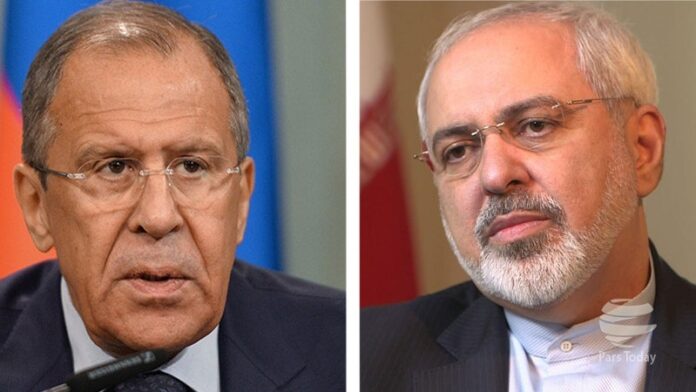
The foreign ministers of Iran and Russia have dismissed the “delusional” US plan for the 2015 nuclear deal, under which Washington seeks to remain a participant state in the JCPOA for the purposes of restoring the UN sanctions on Iran.

In a telephone conversation on Tuesday, Iranian Foreign Minister Mohammad Javad Zarif and his Russian counterpart Sergei Lavrov talked about the latest political developments in Afghanistan and the ongoing efforts to establish reconciliation and political consensus in that country.

The Iranian and Russian ministers also held consultations about the US’ new delusional plan for the JCPOA, and dismissed it as rejected and impractical.

The reaction from Iran and Russian came after US Secretary of State Mike Pompeo said he is preparing a legal argument that the US would remain a participant in the JCPOA –already renounced by the US president- as part of an intricate strategy to pressure the UN Security Council to extend an arms embargo on Tehran.

According to Pompeo’s plan, bound to be opposed by many of Washington’s European allies, the US would, in essence, claim it legally remains a “participant state” in the nuclear accord only for the purposes of invoking a “snapback” that would restore the UN sanctions on Iran that were in place before the nuclear deal.

Russia has already told American and European officials it is eager to resume conventional arms sales to Iran.


4/27/2020

Halt destruction of nature or suffer even worse pandemics, say world’s top scientists

A poultry butcher at a wet market in Kuala Lumpur.
 A poultry butcher at a wet market in Kuala Lumpur. 

Source: The Guardian
April 27 2020
By Damian Carrington

The coronavirus pandemic is likely to be followed by even more deadly and destructive disease outbreaks unless their root cause – the rampant destruction of the natural world – is rapidly halted, the world’s leading biodiversity experts have warned.

“There is a single species responsible for the Covid-19 pandemic – us,” they said. “Recent pandemics are a direct consequence of human activity, particularly our global financial and economic systems that prize economic growth at any cost. We have a small window of opportunity, in overcoming the challenges of the current crisis, to avoid sowing the seeds of future ones.”

Professors Josef Settele, Sandra Díaz and Eduardo Brondizio led the most comprehensive planetary health check ever undertaken, which was published in 2019 by the Intergovernmental Science-Policy Platform on Biodiversity and Ecosystem Services (IPBES). It concluded that human society was in jeopardy from the accelerating decline of the Earth’s natural life-support systems.

In an article published on Monday, with Dr Peter Daszak, who is preparing the next IPBES assessment, they write: “Rampant deforestation, uncontrolled expansion of agriculture, intensive farming, mining and infrastructure development, as well as the exploitation of wild species have created a ‘perfect storm’ for the spillover of diseases.”

These activities cause pandemics by bringing more people into contact and conflict with animals, from which 70% of emerging human diseases originate, they said. Combined with urbanisation and the explosive growth of global air travel, this enabled a harmless virus in Asian bats to bring “untold human suffering and halt economies and societies around the world. This is the human hand in pandemic emergence. Yet [Covid-19] may be only the beginning.”

“Future pandemics are likely to happen more frequently, spread more rapidly, have greater economic impact and kill more people if we are not extremely careful about the possible impacts of the choices we make today,” they said.

The scientists said the multitrillion-dollar economic recovery packages being rolled out by governments must be used to strengthen and enforce environmental protection: “It may be politically expedient to relax environmental standards and to prop up industries such as intensive agriculture, airlines, and fossil-fuel-dependent energy sectors, but doing so without requiring urgent and fundamental change essentially subsidises the emergence of future pandemics.”

A global “One Health” approach must also be expanded, they said. “The health of people is intimately connected to the health of wildlife, the health of livestock and the health of the environment. It’s actually one health,” said Daszak.

Furthermore, surveillance programmes and health services need to be properly funded in nations on the frontlines of pandemic risk, they said: “This is not simple altruism – it is vital investment in the interests of all to prevent future global outbreaks.”

Daszak said: “The programmes we’re talking about will cost tens of billions of dollars a year. But if you get one pandemic, even just one a century, that costs trillions, so you still come out with an incredibly good return on investment.

“Business as usual will not work. Business as usual right now for pandemics is waiting for them to emerge and hoping for a vaccine. That’s not a good strategy. We need to deal with the underlying drivers.”

In March, the UN’s environment chief, Inger Andersen, told the Guardian “nature is sending us a message” with the coronavirus pandemic and the ongoing climate crisis. She said failing to take care of the planet meant not taking care of ourselves.

Last week, the UN secretary general, António Guterres, said governments must seize the opportunity to “build back better” after the pandemic by creating more sustainable and resilient societies.

Prof Thomas Lovejoy, at the United Nations Foundation and George Mason University in the US, who coined the term “biological diversity” in 1980, said on Saturday: “[The pandemic] is not nature’s revenge; we did it to ourselves.”

“It is the consequence of our persistent and excessive intrusion in nature and the vast illegal wildlife trade, and in particular the wildlife markets, the wet markets, of south Asia and bush meat markets of Africa,” he said. Earlier in April, a major study found that the human impact on wildlife was to blame for the spread of viruses.

In the new article, the biodiversity experts said: “We can emerge from the current crisis stronger and more resilient than ever, [by] choosing actions that protect nature, so that nature can help to protect us.”


4/22/2020

UN rejects 2 COVID-19 resolutions from Russia, Saudi Arabia


Source: AP
22 April 2020
By Edith Lederer

UNITED NATIONS (AP) — U.N. officials said the General Assembly rejected two resolutions on the coronavirus pandemic Wednesday, one from Russia and one from Saudi Arabia. It was the second defeat for a Russian resolution on COVID-19 by the 193-member world body.

Under voting rules instituted because the assembly isn’t holding meetings during the pandemic, a draft resolution is circulated to member nations. If a single country objects before the deadline — in this case noon EDT Wednesday — the resolution is defeated. Normally, assembly resolutions are adopted by majority votes or by consensus.

The original Russian resolution, which failed April 2, called for abandoning trade wars and protectionist measures and said no unilateral sanctions should be applied without approval from the U.N. Security Council. Diplomats said the European Union, United Kingdom, United States and Ukraine objected to it.

The revised resolution defeated Wednesday kept the reference to ending protectionist practices and dropped the reference to unilateral sanctions. But it welcomed an April 3 statement on COVID-19 by the Group of 77 and China — the main group of developing countries at the United Nations that now has 134 member states. The G77 statement included a call for the international community to adopt "measures to eliminate the use of unilateral coercive economic measures against developing countries.”

Diplomats said the European Union, United Kingdom, United States, Canada, Japan and South Korean objected to the new text.

Saudi Arabia, the current chair of the Group of 20 major global economies, proposed a resolution welcoming the March 26 G-20 summit statement on injecting $5 trillion into the global economy "to counteract the social, economic and financial impacts of the pandemic.”

The Saudi draft also stressed “the necessity of urgent short-term actions” to expand manufacturing capacity and swiftly deliver medical supplies and increase funding for research and development of vaccines and medicines.

Syria and Iran objected to the Saudi draft, said diplomats, who spoke on condition of anonymity because the voting process was closed.

The General Assembly previously approved two resolutions on COVID-19. A resolution adopted April 2 recognizes “the unprecedented effects” of the pandemic and calls for “intensified international cooperation to contain, mitigate and defeat” the new coronavirus. A Mexico-sponsored resolution approved Monday night urges global action to rapidly scale up development, manufacturing and access to medicine, vaccines and medical equipment to confront the pandemic.

The latter resolution also reaffirms the U.N. role in coordinating the global response to control and contain the spread of COVID-19 and "acknowledges the crucial leading role played by the World Health Organization.”

U.S. President Donald Trump suspended funding to the WHO earlier this month, accusing the U.N. agency of failing to stop the virus from spreading when it first surfaced in China. The United States did not block adoption of the resolution.

General Assembly resolutions reflect the opinion of governments around the world but are not legally binding. Security Council resolutions are legally binding but the 15-member body has not adopted a resolution since the pandemic, though it is now considering one.


4/04/2020

United Nations Wants 10 Percent of World’s Income to Fight COVID-19


March 2020
Source: United Nations

United Nations Secretary General António Guterres has announced the creation of a global fund meant to address the coronavirus pandemic. He is asking for all nations to contribute the equivalent of 10 percent of all global GDP to fund a gigantic “human-centered, innovative and coordinated stimulus package,” which would be administered by a global authority, presumably the UN itself.


3/26/2018

3/03/2018

Facebook users lambaste UN Mission in Libya after recognizing warlord Haftar as “Libyan National Army commander”

https://www.libyaobserver.ly/news/facebook-users-lambaste-un-mission-libya-after-recognizing-warlord-haftar-%E2%80%9Clibyan-national-army

2/28/2018

Turkey rejects U.S., French calls for Afrin ceasefire in Syria

https://uk.reuters.com/article/uk-mideast-crisis-syria-turkey-afrin/turkey-rejects-u-s-french-calls-for-afrin-ceasefire-in-syria-idUKKCN1GC1JR?rpc=401&

2/27/2018

U.S. threatens action against Iran after Russia U.N. veto

https://www.reuters.com/article/us-yemen-security-un/russia-vetoes-western-effort-to-call-out-iran-over-yemen-at-u-n-idUSKCN1GA2QT

2/26/2018

Macron Tells Erdoğan UN Ceasefire Includes Afrin

http://www.basnews.com/index.php/en/news/middle-east/418412

Veteran commander vies for power in Libya's shifting sands

https://www.reuters.com/article/us-libya-security-haftar/veteran-commander-vies-for-power-in-libyas-shifting-sands-idUSKCN1GA0Z0

12/06/2015

Warplanes in Libyan skies may signal next major battle in fight to contain Islamic State


Πηγή: The Guardian
By Chris Stephen
Dec 6 2015

Jihadis in Libya are seizing control of greater chunks of the fractured nation’s territory and imposing a rule of terror. As another strategic city, Ajdabiya, comes under Isis attack, military planners across Europe are preparing the way for Nato forces to intervene.

Libyans have become expert sky watchers. On many days, social media fills with pictures of the latest American drone or spy plane making low passes over Sirte, the local headquarters of Islamic State. There are grainy snaps of the squat, white Lockheed P-3 Orions, and hazier captures of dark drones, while discussion over a twin-engined aircraft that makes figure-of-eight passes could fill a chatroom. With the intensification of bombing of the terror group in Syria, Libya’s sky watchers think airstrikes are imminent.

Speculation about airstrikes heightened last week when the UN reported what intelligence agencies have been saying for months – that Libya has become Isis’s fallback position. More than 800 fighters sent from Libya to battle in Syria and Iraq have now made the journey the other way, as Isis expands its Libyan caliphate.

Last week France flew its first reconnaissance missions over Sirte, joining the drones and spy planes of the United States. This small town on Libya’s central coast was the birthplace of former dictator Muammar Gaddafi – and the scene of his brutal execution. During his tyrannical rule, Gaddafi turned what was a sleepy coastal village into a town of garish concrete, hoping to fulfill a megalomaniac dream to make it the capital of a United States of Africa.

Now the town’s giant concrete Ouagadougou conference centre is bedecked with black flags. The grounds outside are bloody execution sites for the terrorists who have brought Raqqa-style horror to north Africa. Recent escapees tell of a litany of horrific acts, including crucifixions and townsfolk hanged from mechanical diggers and lampposts, some accused of being apostates, some of being spies.

Barbers are banned from shaving off beards and women are forced to wear dark robes, while zealots ensure that music is banned from radio stations. “People live for one thing, which is to get out,” said one resident, newly arrived in Tripoli, the capital far to the west.

Sirte’s airbase, the biggest in Libya, is being readied by Isis to take suicide planes, while 85 of the town’s children have been paraded as “suicide cubs”, ready to detonate themselves for the cause.


FacebookTwitterPinterest An image from Twitter purporting to show an Isis ‘child radicalisation program’ in Sirte, Libya. Photograph: Twitter

Jihadism has a long history in Libya. Members of the Libyan Islamic Fighting Group staged an unsuccessful guerrilla rebellion against Gaddafi in the 1990s. That uprising was crushed, and its members fled to Afghanistan and Iraq. With the removal of Gaddafi in the bloody 2011 Arab Spring revolution, the jihadis came home.

The first sign of this was Ansar al-Sharia, or Partizans of Islam, which followed up attacks on British and French diplomats with the killing in September 2012 of the US ambassador Chris Stevens in the American consulate in Benghazi.

Then came Isis, seizing its opportunity in the summer of last year when elections were followed by civil war after Libya Dawn, a coalition of Islamist and Misratan forces, seized Tripoli. The elected government fled to the eastern city of Tobruk and fighting has since raged across the country.

Taking advantage of the chaos, Isis quickly established a foothold in the eastern coastal town of Derna, spearheaded by 300 militants of the al-Battar Brigade, battle hardened in Syria.

But Sirte was the true prize, offering an airport, seaport and something Isis wanted more than anything else: oil. South of the town is the massive Sirte Basin, the centre of Libya’s oil industry. In a few months its units conquered the town and pushed south into the Sirte Basin, taking a 100-mile stretch of coastline. In January, it killed 22 Christians, 21 of them Egyptians, on the Sirte shore, triggering Egyptian airstrikes.

Many Ansar al-Sharia units defected to Isis, gifting it a base at Sabratha, 60 miles east of Tunisia’s border. Tunisia says Seifeddine Rezgui Yacoubi, the gunman who killed 38 tourists, 30 of them British, at Sousse, was trained at Sabratha, as were the gunmen who attacked tourists in the capital’s Bardo museum last March.

Isis in Libya has had reverses. In June, Derna youths, backed by a militia loyal toal-Qaida, rose up, pushing its units out of the town into the Green Mountain to the south. But a similar uprising in Sirte in August was brutally put down. After Isis regained control of the rebel district, survivors said, gunmen set fire to the local hospital, burning 22 patients alive. Last week, Isis launched its most audacious attack so far, striking at Ajdabiya, 70 miles east of Sirte, and threatening Libya’s four key oil ports. “Another assassination on Ajdabiya tonight, IS expansion,” one desperate Libyan tweeted 
last Friday night. “Wake up Libyans!”

FacebookTwitterPinterest The main square of Ajdabiya, at the time of the uprising against Gaddafi in 2011. Photograph: Gianluigi Guercia/AFP/Getty Images

Fears are building among Libya’s neighbours. Tunisia, reeling from the slaughter last month of 12 presidential guards by a Libyan-trained bomber, has closed its border with Libya and on Friday banned Libyan planes from the capital, fearing suicide attacks.
Advertisement

In fact, alarm bells about Isis expansion in Libya have been ringing all year. In the summer, the European Union high representative, Federica Mogherini, warned: “In Libya, there is the perfect mix ready to explode and in case it explodes, it will explode just at the gates of Europe.”

In October, Wolfgang Pusztai, Austria’s former Libya defence attaché, told the British parliament’s foreign affairs committee: “The more Islamic State is put under pressure in the Middle East, the more active it will be in Libya.”

Loudest of all has been France’s defence minister, Jean-Yves Le Drian, issuing periodic warnings that Libya has become the “hub” for Isis to supply terrorists and weapons to affiliated groups in Algeria and Mali and to Boko Haram in Nigeria.

Sources in Paris say Le Drian agreed to “go quiet” in the summer, as Europe put its faith in a UN mediation process, hoping that a newly united Libyan government could turn its guns on Isis. But those talks collapsed amid acrimony in October, the UN discredited and, even before the Paris attacks, talk in foreign capitals had turned to direct action.

Last week, the minister again sounded the alarm, telling a French magazine: “We see foreign jihadis arriving in the region of Sirte who, if our operations in Syria and Iraq succeed in reducing the territorial reach of Isis, could tomorrow be more numerous.”

The US has already struck. In June, two F-15s bombed what it said was an al-Qaida gathering at Ajdabiya. In November, the jets struck again, hitting Derna, with the Pentagon claiming to have killed a prominent Isis leader.

But pinpoint strikes have failed to slow the group’s expansion, and the possible loss of Ajdabiya will be a disaster for Libya, cutting off oil ports and the gas fields that generate electricity, a move that the London-based oil expert John Hamilton says would mean “game over” for the economy.

Officials from the American military’s African Command, Africom, based in Stuttgart, have been visiting the region and, should the political decision be made, western forces are already deployed in strength around Libya’s borders. Along with drones and spy planes, the US has bombers and Marine helicopter-borne units stationed in Spain and Italy. More US drones operate from two bases in Niger, guiding a 3,000-strong force of French paratroopers, Operation Barkhane, on the southern Libyan border against jihadi convoys passing out of the country.

RAF Tornados and Typhoons, newly arrived in Cyprus, are within strike range of Libya, as are jets on the French aircraft carrier Charles de Gaulle. And a dozen European warships are off the Libyan coast, currently tasked with an ineffective mission to intercept the country’s people smugglers.

But the military option comes with risks. Isis bases at Derna, Sirte and Sabratha would be obvious targets but, as in Syria, Isis units in Libya can melt into the civilian population. Hours after the US Derna strike last month, Sirte residents reported Isis gunmen forcing their way into civilian homes, calculating that US jets would not bomb them for fear of civilian casualties.

One crumb of comfort for western planners is that Isis has yet to become a mass movement in Libya. In what is a tribal-based society, the population is largely immune to calls to join a worldwide caliphate. Set against that are the continuing arrival of foreign volunteers from Tunisia, Sudan and Yemen.

As in Syria, only ground forces are likely to decisively crush Isis. Western diplomats, working out of Tunis, with Tripoli too dangerous, are continuing to try to persuade Libyans to unite against the terrorist threat. But the French jets and the US drones in the skies over Sirte are vivid proof that another narrative is taking shape.


8/26/2014

Arab Nations Strike in Libya, Surprising U.S.

Islamist fighters in the Libya Dawn coalition guarded the main airport in Tripoli, Libya, after its capture on Sunday. 
Πηγή: New York Times
By DAVID D. KIRKPATRICK and ERIC SCHMITT
Aug 25 2014

CAIRO — Twice in the last seven days, Egypt and the United Arab Emirates have secretly launched airstrikes against Islamist-allied militias battling for control of Tripoli, Libya, four senior American officials said, in a major escalation of a regional power struggle set off by Arab Spring revolts.

The United States, the officials said, was caught by surprise: Egypt and the Emirates, both close allies and military partners, acted without informing Washington, leaving the Obama administration on the sidelines. Egyptian officials explicitly denied to American diplomats that their military played any role in the operation, the officials said, in what appeared a new blow to already strained relations between Washington and 
The strikes in Tripoli are another salvo in a power struggle defined by Arab autocrats battling Islamist movements seeking to overturn the old order. Since the military ouster of the Islamist president in Egypt last year, the new government and its backers in Saudi Arabia and the United Arab Emirates have launched a campaign across the region — in the news media, in politics and diplomacy, and by arming local proxies — to roll back what they see as an existential threat to their authority posed by Islamist groups like the Muslim

Arrayed against them and backing the Islamists are the rival states of Turkey and Qatar.

American officials said the Egyptians and the Emiratis had teamed up against an Islamist target inside Libya at least once before. In recent months, the officials said, teams of “special forces” operating out of Egypt but possibly composed primarily of Emiratis had also successfully destroyed an Islamist camp near the eastern Libyan city of Derna, an extremist stronghold.

Several officials said in recent days that United States diplomats were fuming about the airstrikes, believing the intervention could further inflame the Libyan conflict as the United Nations and Western powers are seeking to broker a peaceful resolution. Officials said the government of Qatar has already provided weapons and support to the Islamist-aligned forces inside Libya, so the new strikes represent a shift from a battle of proxies to direct involvement. It could also set off an arms race.

“We don’t see this as constructive at all,” said one senior American official.

The strikes have also, so far, proved counterproductive. Islamist-aligned militias fighting for control of Tripoli successfully seized its main airport just hours after they were hit with the second round of strikes.

“In every arena — in Syria, Iraq, Gaza, Libya, even what happened in Egypt — this regional polarization, with Saudi Arabia and the United Arab Emirates, or U.A.E., on one side and Qatar and Turkey on the other, has proved to be a gigantic impediment to international efforts to resolve any of these crisis,” said Michele Dunne, a senior associate at the Carnegie Endowment for International Peace and a former Middle East specialist at the State Department.
Continue reading the main story

Egypt’s role, the American officials said, was to provide bases for the launch of the strikes. The Egyptian president, Abdel-Fattah el-Sisi, and other officials have issued vigorous-sounding but carefully worded public statements denying any direct action by Egyptian forces in Libya.
While isolationism is a fool's errand, so is the perpetual U.S. Cavalry riding to rescue those who so far have lifted nothing heavier than money.

“There are no Egyptian aircraft or forces in Libya, and no Egyptian aircraft participated in military action inside Libya,” Mr. Sisi said on Sunday, the state news agency reported.

In private, the officials said, the Egyptian denials had been more sweeping.

The officials said the U.A.E. — which boasts one of the most effective air forces in the Arab world, thanks to American equipment and training — provided the pilots, warplanes and aerial refueling planes necessary for the fighters to bomb Tripoli out of bases in Egypt. It was unclear if the planes or munitions were American-made.

The U.A.E. has not commented directly on the strikes but came close to denying a role. On Monday, an Emirati state newspaper printed a statement from Anwar Gargash, minister of state for foreign affairs, calling any claims about an Emirati role in the attacks “a diversion” from the Libyans’ desire for “stability” and rejection of the Islamists. The allegations, he said, came from a group that “wanted to use the cloak of religion to achieve its political objectives” and “the people discovered its lies and failures.”

The U.A.E. was once considered a sidekick to Saudi Arabia, a regional heavyweight and the dominant power among the Arab monarchies of the Persian Gulf. The Saudi rulers, who draw their own legitimacy from a puritanical understanding of Islam, have long feared the threat of other religious political movements, especially the well-organized and widespread Muslim Brotherhood.Continue reading the main story

Sites controlled by Islamist-allied militias in Tripoli were hit.

But Western diplomats in the region say the U.A.E. is now far more assertive and aggressive than even the Saudis about the need to eradicate Islamist movements around the region, perhaps because the Emirati rulers perceive a greater domestic threat.

The issue has caused a rare schism among the Arab monarchies of the gulf because Qatar has taken the opposite tack. In contrast to its neighbors, it has welcomed Islamist expatriates to its capital, Doha, and supported their factions around the region, including in Libya.

During the uprising against Col. Muammar el-Qaddafi in Libya three years ago, Qatar and the U.A.E. both played active roles, but each favored different clients among the rebels. While Qatar backed certain Islamists, the U.A.E. favored certain tribal or regional militias, including the militias from the Western mountain town of Zintan, said Frederic Wehrey, another associate at the Carnegie Endowment who specializes in Libya and the Persian Gulf.

The “proxy competition” between the two gulf states in Libya, he said, goes back to 2011.

Now it has extended to backing different sides in what threatens to become a civil war between rival coalitions of Libyan cities, tribes and militias. Although the ideological lines are blurry, the U.A.E. has backed its Zintani clients in what they describe as a battle against Islamist extremists. Qatar, its Islamist clients and loosely allied regional or tribal groups from the coastal city of Misurata have squared off from the other side; most insist that their fight has nothing to do with political Islam and seek to prevent an Egyptian-style “counterrevolution.”

The first strikes occurred before dawn a week ago, hitting positions in Tripoli controlled by militias on the side of the Islamists. The bombs blew up a small weapons depot, among other targets, and local authorities said they killed six people.

A second set of airstrikes took place south of Tripoli in the early hours on Saturday. The Islamist-allied militias were posed to capture the airport from Zintani militias allied with the U.A.E. who had controlled it since 2011, and the strikes may have been intended to slow the advance.

Striking again before dawn, jets bombed rocket launchers, military vehicles and a warehouse all controlled by Islamist-allied militia. At least a dozen people were killed, local authorities said. But within hours the Islamist-aligned forces had nonetheless taken the airport.

Responsibility for the airstrikes was initially a mystery. In both cases, anti-Islamist forces based in eastern Libya under a renegade former general, Khalifa Heftir, sought to claim responsibility. But the strikes, at night and from a long distance, were beyond the known capabilities of General Heftir’s forces.

The Islamist-allied militias, allied under the banner Libya Dawn, were quick to suspect Egypt and the U.A.E. But they offered no evidence or details.

American officials said after the first strike that signs pointed to the Emiratis. But some American officials found it hard to believe that the U.A.E. would risk a regional backlash. It was unclear how U.A.E. fighters could reach Tripoli without a base in the region, and Egypt denied any role.

On Monday, however, American officials said the second set of strikes over the weekend had provided enough evidence to conclude that the Emirates had carried out the strikes and even supplied the refueling ships necessary for fighters to reach Tripoli from Egypt.

Asked about an earlier version of this report posted on The New York Times website, a State Department spokesman declined to comment. “I’m not in a position to provide any additional information on these strikes,” the spokeswoman, Jen Psaki, told reporters at a State Department briefing.

8/23/2014

Tawergha - 'a scar on Libya's revolution'

Children from Tawergha play in one of the refugee camps throughout Libya 
Πηγή: Middle East Eye
By Mary Atkinson
Aug 21 2014

As Libya spirals into chaos, refugees expelled from their hometown in 2011 see a glimmer of hope.

The children born in refugee camps haven’t harmed anyone.”

The children born in the seven days after the “Liberation of Tawergha,” during Libya’s 2011 revolution celebrated their third birthdays last week.

But for most of them, the date will have been marked not with candles and cake, but with another instalment in the daily struggle for clean drinking water and basic rights. These children have lived their whole lives in squalid refugee camps dotted throughout Libyan cities - they have never seen their hometown of Tawergha, the “green island” of Berber tradition.

Now, three years on from the forced evacuation of around 40,000 of the city’s residents, Libyan authorities and the United Nations are coming under increasing pressure to find a lasting solution for displaced Tawerghans.

‘A scar on the face of Libya’s revolution’

The city of Tawergha effectively became a ghost town on 11 August 2011, as rebels from nearby Misrata launched an all-out offensive.

The violence of 11 August didn’t come out of nowhere, though. There had been tension between Tawergha and Misrata for years; there were widespread allegations of killings and violence against women committed by men from Tawergha against Misratans, according to Sam al-Sharksy, a British-Libyan activist based in the UK.

When the 2011 uprising rolled around, the guns and rockets of war ignited long-running tensions between the towns. Tawergha was used as a base for Muammar Gaddafi’s forces, who between early March and mid-May subjected the neighbouring town of Misrata to a punishing three-month siege. Later, as rebels began to gain the upper hand, Tawerghans accused of complicity in the blockade of Misrata became a prime target. In its annual report published on Thursday, the Libyan Victims’ Organisation for Human Rights (VOHR) documents the arbitrary arrest of thousands, the abuse and torture of civilians and ultimately the wholesale expulsion of the city’s population, in what Human Rights Watch calls an act of “ethnic cleansing.” VOHR calls what has happened to the Tawerghans since then “a scar of the face of Libya’s revolution.”

‘Mass detention centres’

Three years on, and Tawerghans have made little progress towards returning to their homes in what is now a ghost town. Most live in cramped refugee camps on the outskirts of major Libyan towns.

“The camps are inhumane - there is no clean running water, no toilets, no security. Those who visit usually come out crying,” according to Sharksy, who has started a Twitter campaign to draw attention to the issue.

VOHR has also documented numerous attacks on the settlements, which are “closer to mass detention centres” than refugee camps. In the most recent, a July 2013 attack on al-Fallah camp in central Tripoli, a refugee was killed and several injured when militias walked in and opened fire. Such assaults and killings have, according to the VOHR, been met with stony silence by the Libyan authorities.

Government and UN failures

The years since the “Liberation of Tawergha” have been characterised by silence from the government - but many also criticise the inaction of the United Nations.

“For the Libyan government, it is very difficult to get Tawerghan problems on the agenda,” according to Andrew Allen, charge d’affaires for the British embassy in Libya. “In the past year, there has only been one high-level meeting on the issue.”

The government has put forward one suggestion for a lasting solution - that Tawerghans relocate to the town of al-Jufra. Over 350 kilometres south of Tawergha in Libya’s scorching desert, the refugees recently rejected it as a possible site for their new home. No new solution has been put forward to date – “despite all the international laws and procedures, the Libyan government has not made any earnest efforts to return the city’s residents to their homes,” reports VOHR.

Activists also complain about the role the UN has played in the protracted dispute. Jeroen Spaander, a Dutch businessman who runs the campaign group, Tawergha Foundation, told MEE that there are just three UN staff working on the ground with Libya’s over 50,000 internally displaced people. “The UN can’t do very much. They need approval from the people in charge - but the people in charge are actually militia groups.”

Andrew Allen told MEE that, though the UN in Libya have had some success, including in their work with Tawerghans, "they have some difficulties. I don't want to give them marks out of 10."

According to Mohammed el-Jarh, a Libya analyst and non-resident fellow at the Atlantic Centre's Rafik Hariri Centre for the Middle East, the UN should have stepped in long ago to halt “crimes against humanity and violations of international law.”

“The UN failed to address issues very early on that emboldened those who claim revolutionary legitimacy. Had they tried to reign in Misrata and play an assertive role, this would not have happened.”

Neither Libyan government officials nor the United Nations had responded to MEE’s requests for comment at the time of publication.

In the absence of action from the Libyan government and the UN, Tawerghans are self-organising. They have formed councils to debate proposed solutions; in July 2013, they launched an attempt, shut down by the government, to unilaterally return to Tawergha.

Help is also coming from an unlikely source - Misratans. “A small number of businessmen in Misrata have been helping, giving away food and furniture. But they have to do so in secret; if they helped Tawerghans openly, they would face huge problems in their own community.”

Hope amidst the chaos

Tawerghan attempts to put their struggle on the political agenda have been thwarted by their political disenfranchisement and, increasingly, the chaos that is gripping Libya as a whole. As rival militia groups battle it out for control of the capital, and thousands of families flee the violence, the prospect of a solution seems bleak. However, Mohammed el-Jarh explained that for Tawerghans, the destabilised situation in Libya is not necessarily a bad thing.

“A number of Tawerghans in Tobruk told me that the fact that things are getting worse in Libya is actually positive for them. Now that things are being shaken up, they feel there will be a chance to put their issue back on the agenda in the future.”