
Showing posts with label Albania. Show all posts

4/27/2020

Greeks in danger

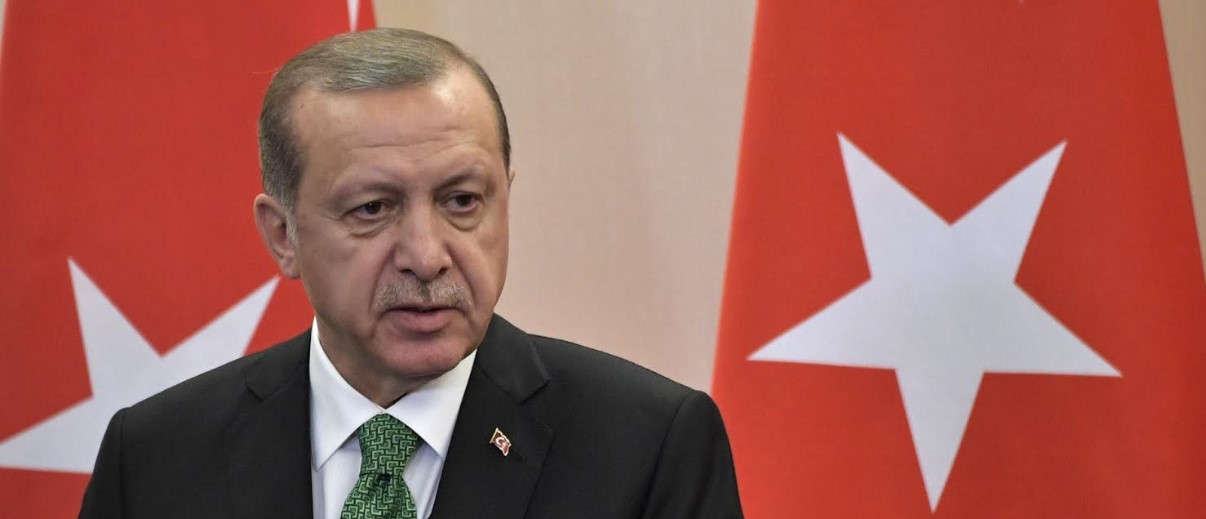
Turkish president Recep Tayyip Erdogan: Will he send illegal migrants to Albania? Photo: The Russian Presidential Press and Information Office
April 26 2020

Albania and Turkey have signed a military cooperation plan, but this document has attracted increased media attention because it is shrouded in secrecy. Albanian media are confident that the leaders of the two countries have agreed to relocate 30 000 Syrian refugees to southern Albania. This news alarmed Greece, since around 120 000 ethnic Greeks live the region known as Northern Epirus.

Athens fears that Ankara and Tirana agreed on such a plan in order to “dilute the national minority in this Albanian region”.

On February 27, 2020, the defense ministers of Albania and Turkey signed a plan for military cooperation but details of the document were not disclosed. It is only known that part of the agreement “includes actions which the ministries of defense of the two countries undertake to carry out in 2020 in order to strengthen and intensify cooperation in the field of security and defense”.

The Albanian, and subsequently the Greek media have claimed that Ankara and Tirana are talking about their intention to accommodate 30 000 “refugees” and illegal migrants in Albania, who are now in Turkey.

News agencies citing sources, claim that the Prime Minister of Albania Edi Rama and Turkish President Recep Tayyip Erdogan agreed on this earlier. At the same time, the area where migrants will be relocated to has also been determined – in Northern Epirus, located on the border of Albania and Greece.

Greece liberated this area during the First Balkan War in 1912–1913, but the international powers decided to give it to Albania, with the same scenario being repeated after the World War II. The region thus remained in Albania.

Greek newspapers reported that Orthodox Greeks in the area “were constantly harassed by Muslims”.

Tensions intensified in the 1990s. Today, there are even fewer Greek schools in the region, “the shops of Greeks are attacked, property is sometimes confiscated by means of a far-fetched pretext, and they are not allowed to conduct religious rites”. In addition, Greeks are discriminated against on a national basis. For example, Greeks can neither serve in the police, the army, nor occupy high positions of state, etc.

Albanian media reported in early March that the construction of six refugee reception centers were being planned on the border with Greece, able to accommodate 30 000 people, as well as first aid centers. It was noted that construction was necessary if ever “Albania faces an influx of Syrian refugees from Greece”.

More information has been leaked since: that “work is being carried out to provide the resettlement of refugees either in rural houses or in new special settlements in the area”. At the same time, the media has been drawing attention to the fact that Tirana has no money for the construction of the corresponding infrastructure.

Albania is still struggling to recover from the earthquake that happened on November 26, 2019.

Additional indirect confirmation of cooperation between Tirana and Ankara, is the fact that, in the background of the Coronavirus pandemic, Albania has banned all international flights to the capital, except flights to and from Istanbul.


Igoumenitsa is the main port in Epirus, and links the Greek region to Italy. Wikipedia

There is no official evidence that Turkey and Albania have entered into a secret agreement. However, the Greek community in Northern Epirus is very concerned about this prospect.

Thodoris Goumas, the editor of the news portal Himara.gr, which is located in one of the biggest Greek towns of Northern Epirus Himara, gave an interview to the Greek newspaper Protothema. He expressed the huge misgivings that both native Greeks and their brethren in Northern Epirus have about the deal between Ankara and Tirana.

“The activities of the Albanian Prime Minister are rather suspicious, rumors do not come out of nowhere. The choice of the Northern Epirus region for resettlement of Muslim refugees means a deliberate provocation against Greece,” Goumas concluded.

Vladimir Avatkov, associate professor at the Diplomatic Academy of the Russian Ministry for Foreign Affairs, noted the existence of rather close ties between Ankara and Tirana and believes that agreements regarding the resettlement of refugees to Albania quite likely exist:

“Turkey is an extremely active player in the Balkans, it proceeds from the fact that Albania, like many other states on this peninsula, is within Turkey’s sphere of influence. Ankara supported Tirana’s entry into NATO. It is through Albania, as well as through some other states of the Balkan peninsula, that Turkey pursues its active policy of influencing Europe.

“Albania is also important from the point of view of the refugee transfer, and for blackmailing Europe with the migration crisis. Turkey proceeds from the fact that it is a world power and is capable of exerting pressure on a number of states, including the developed countries of Europe.

“In addition, despite the fact that some states of the Balkan peninsula have a negative historical perception of Turkey due to the fact that it occupied these lands a while back, some states have close ties with Ankara and carry out functions of a conductor for Turkey.”

Currently, there are 3,6 million refugees in Turkey. In March 2016, Ankara entered into an agreement with Brussels, according to which Turkey agreed to keep migrants out of European countries. In exchange, the EU promised Turkey assistance in supporting refugees, a visa-free regime and a launch of negotiations on accession to the European Union.

However, Erdogan had repeatedly complained that the funds allocated by the European Union are insufficient and, moreover, Brussels does not comply with other conditions of the agreement.

Turkey has repeatedly stated that it is becoming increasingly difficult for the country to cope with the placement of refugees. At the end of February this year, the Turkish authorities announced that they were not going to interfere with the free movement of refugees to Europe. This caused consternation in Greece, which has already suffered a lot due to the migration crisis.


2/12/2016

Albania Parties Split Over New FBI-Style Agency

Prime Minister Edi Rama speaking in the Parliament

Πηγή: BI
By Fatjona Mejdini
12 Feb 2016

Albania's parliament was split on Thursday over the planned formation of a new body to fight corruption, modelled on the FBI, called the National Bureau of Investigation, BKH.

The new structure will be considered part of the police although it will closely collaborate with the General Prosecutor's office as well.

One or more representatives from the prosecutor's office will be permanent members of the bureau whose head will be appointed by the Interior Minister with the approval of the General Prosecutor.

Opposition parties previously supported the initiative - but on Thursday their MPs complained that the draft was inappropriate because the model does not leave the structure in the hands of state prosecutor.

"This institution should be 100 per cent under the authority of Prosecutor, as was... supported by the Venice Commission and agreed with our American partners," the head of Democratic Party, Lulzim Basha said.

Under the government draft, this new body will have an independent assessment commission within which experts from international missions will be represented.

"The Independent Commission of Review will be made up of experts in criminal justice, appointed by the European Union mission and the government of the US," the government draft reads.

The initiative has enjoyed strong support from the international community in Albania, who want to see a tougher fight against corruption at high level alongside judicial reform.

FBI officials visisted Tirana in April 2015 to help the Albanian government launch the new anti-corruption agency.

Speaking in parliament on Thursday, Socialist Prime Minister Edi Rama accused the opposition of agreeing to the model before - and now changing its mind.

"The draft that government has passed and brought into parliament is the draft that you [opposition] agreed to, 100 per cent. Now you are telling a big lie," Rama told opposition MPs.

While the government draft can pass in parliament with only the votes of ruling party MPs, cross-party consensus over the creation of the bureau is seen by the international community as an essential guarantee that the initiative will function in future.


4/14/2015

TAP Awards First Major Contract | For Construction of Access Roads and Bridges in Albania


Πηγή: TAP
April 14 2015

Tirana, Albania. Trans Adriatic Pipeline AG (TAP) has selected a joint venture formed by Gener 2 Sh.p.K and Sicilsaldo S.p.A. for the construction and rehabilitation of access roads and bridges in Albania. The decision concludes TAP’s pre-qualification process (launched in April 2014), followed by bid assessments from the shortlisted companies that met TAP’s rigorous pre-qualification criteria. The building of Albanian access roads and bridges is a crucial step in TAP’s preparations for pipeline construction, to begin in 2016.

The scope of work for the contract covers:
Construction and rehabilitation of over 100 kilometres of road along the pipeline’s route: in Vishocice, Trestenik, Vithkuq and Shtyllas in the Korca region, Corovode, Kakruke as well as in the surroundings of Potom in the Berati region and Seman and Topoje in the Fier region.
Construction of two new bridges and rehabilitation of approximately 50 existing bridges in the regions of Korce, Berat and Fier.

Works are expected to begin in the second quarter of 2015.

Leading the joint venture is Gener 2 Sh.p.K, an Albanian construction and development company with almost 20 years of relevant experience. The company has executed numerous projects, including engineering and design, management, coordination, and supervision of various privately owned and government funded construction and development activities.

Sicilsaldo S.p.A. is an Italian company specialised in engineering, procurement and construction services in the oil and gas as well as in the power sector. The services they provide range from design and construction to maintenance of plant and pipelines.

Ian Bradshaw, Managing Director of TAP, commented: “Today’s announcement is an important step for TAP’s execution phase, as it will allow for pipe-laying to begin in 2016. I want to express our gratitude to all those who participated in this process and congratulate the winning joint venture company on their success.”

Bradshaw added that “I would also like to reinforce that TAP remains committed to acting as a responsible corporate citizen. In addition to our community investment programme in Albania, the access roads and bridges will be left behind for the benefit of the local communities for decades to come."

For further information on TAP’s procurement process and the contracts that it plans to award, please go to: http://www.tap-ag.com/project-opportunities/for-companies

If you are a subcontractor and are interested in working for one of the companies that TAP selects for its contracts, please go to http://www.tap-ag.com/project-opportunities/for-companies/interested-in-working-as-subcontractor to register your details, which will be passed on to companies invited to tender in TAP’s procurement process.

About the Trans Adriatic Pipeline (TAP)

TAP will transport natural gas from the giant Shah Deniz II field in Azerbaijan to Europe. The approximately 870 km long pipeline will connect with the Trans Anatolian Pipeline (TANAP) at the Turkish-Greek border at Kipoi, cross Greece and Albania and the Adriatic Sea, before coming ashore in Southern Italy.

TAP’s routing can facilitate gas supply to several South Eastern European countries, including Bulgaria, Albania, Bosnia and Herzegovina, Montenegro, Croatia and others. TAP’s landfall in Italy provides multiple opportunities for further transport of Caspian natural gas to some of the largest European markets such as Germany, France, the UK, Switzerland and Austria.

TAP will promote the economic development and job creation along the pipeline route; it will be a major source of foreign direct investment and it is not dependent on grants or subsidies. With first gas sales to Georgia and Turkey targeted for late 2018, first deliveries to Europe will follow approximately a year later.

TAP’s shareholding is comprised of BP (20%), SOCAR (20%), Statoil (20%), Fluxys (19%), Enagás (16%) and Axpo (5%).


TAP English 070414 from Trans Adriatic Pipeline on Vimeo.


3/14/2013

Crisis-Hit Greece Cuts Lifeline to Minority in Albania

81-year-old Vasili worries about making ends meet after loosing his pension

Πηγή: Balkan Insight
March 13 2013

Athens’ decision to scrap pensions for the Greek minority in Albania has left the community worried about its future wellbeing. 

For more than a decade, financial allowances paid by Greece to older members of the Greek minority in the Dropull region of southern Albania have provided an important economic boost.

Nearly 18,000 members of the Greek minority in Albania received a €330 per month pension from Athens, costing Greece €71.2 million a year.

In an area that has seen massive outward migration over the past two decades, pensions several times higher than those paid by the Albanian state helped rebuild houses and boost consumption in the local economy.

However, with its finances in tatters, Athens has been forced to cut the pensions as part of the IMF- and EU-imposed austerity drive.

The move has left many elderly people without an important economic prop.

According to last year’s census, the Greek minority accounts for 0.87 per cent of Albania’s population of 2.8 million, mainly concentrated in the region of Gjirokastra, Saranda and Himara.

While Greek minority politicians remain hopeful that the aid will be restored, albeit at a lower rate, locals are concerned about what the future holds.

Marianki, a 76-year-old grandmother from Dervican, in the upper Dropulli area, says she has not received her pension from last month and is already thinking of the difficult choices she will have to make.

“What should I do first, go to the doctor or spend money for food?” she asked. “It’s very difficult to live on the pension I get from the Albanian state, which is only €60.”

Vasili, an 81-year-old, says that he also has not received last month’s Greek state pension.

“The pensions have been a great help for us old folk living here, and for those who moved across the border with their children,” he said.

“I understand the economic crisis that Greece is suffering, but it is hard to make ends meet on the €100 I receive from the Albanian state,” Vasili added.

 
Jorgo Militi | Photo by : Telnis Skuqi
Jorgo Militi, a former journalist for the now defunct Greek minority newspaper, Lajko Vima, says the Greek pensions were vital for the local economy.

“A lot of houses in Dervican were revamped through the pensions, people spent more, and the whole region’s economy benefited from them,” he said.

Acknowledging that the cuts will be painful, Militi says most people understand the crisis that Greece is facing, and hold no resentment toward Athens.

“If Greece overcomes the crisis, I believe it will open its hand again,” he said. “No matter how we sometime see it from afar, Greece is a generous state and nation,” he added.

Dhimitri Maluqi, head of the commune of Upper Dropull, says that the local economy will feel the burden of the pension cuts.

“This is revenue that will now disappear from every Greek minority family and the impact will be undeniable,” he said.

Mayor Maluqi, who is also the head of the Greek minority organization Omonia for the Gjirokastra area, however, remains hopeful that something may change.

“We have had contacts with the Greek government and we believe that something will be done,” he said.

“However, Greece is suffering a severe economic crisis, so that even if the pensions are restored, they will surely be smaller,” he added.

Despite their positive impact on the local economy, the Greek state pensions have always been controversial in Albania.

For decades, Greece maintained a territorial claim to southern Albania, which it calls Northern Epirus.

As a result, Greek moves to foster economic and cultural connections to the region have always been eyed with suspicion in Albania.

Many Albanians see the pensions as forming part of a wider agenda, aimed at building up a large community in southern Albania that identifies primarily with Greece.

Albania's Minister of Labor, Spiro Ksera
They also believe that many people only declared themselves of Greek nationality in order to benefit from Athens’ generosity.

However, Spiro Ksera, Albania’s Minister of Labor and Equal Opportunities and an MP for the Dervican area, says the pensions should be viewed like the remittances that Albanian emigrants send home to their families.

“The MPs from the Epirus area in the Greek parliament are drafting a new law, and are looking at all the possibilities under the conditions that Greece is now in, to restore the subsidies,” he noted.

“Through this aid the Greek minority has invested more money [in Albania], which has ultimately helped their integration into the wider community,” he added.

Ksera said misconceptions in Albania about the pensions from Greece stemmed from a lack of knowledge about the community and its values.

“People should come here and see their hospitality, and realize the positive contribution that the Greek minority has made in strengthening the Albanian state,” he continued.

“Nationalist who cry foul for reasons of political expedience cannot break the bond created between the two communities.”

Militi, the journalist, agrees, arguing that the minority has served to act as an important bridge between Albania and Greece.

“Like every bridge, the stronger it is, the better the bond between the two nations,” he concluded.


10/04/2012

Greece looks out to sea for gas wealth salvation


Πηγή: Reuters
By Oleg Vukmanovic and Stephen Jewkes
Oct 3 2012

Offshore natural gas could dramatically change Greece's fortunes, should early estimates of $600 billion worth of reserves be confirmed, according to a study presented to Prime Minister Antonis Samaras in June and seen by Reuters.

The study, collating existing scientific data, says that geological similarities indicate that reserves offshore Crete may match the prolific Levantine Basin where recent Israeli and Cypriot discoveries are clustered.

It points to strategically significant reserves in Greek waters south of Crete in the range of 3.5 trillion cubic meters (Tcm), enough to cover over six years of EU gas demand, and the equivalent of about 1.5 billion barrels of oil.

While it will take years to explore and develop any offshore gas sector,Greece has launched a licensing round and has commissioned a seismic survey company to pin down the extent of hydrocarbon deposits. The results are expected in mid-2013.

Presenting their findings, study authors Antonis Foscolos, Elias Konofagos and Nikos Lygeros said they expected the reserves to generate $599 billion in state earnings over 25 years.

"We feel this is a very conservative figure," Konofagos, whose Athens-based company Flow Energy informally advises the government on energy strategy, told Reuters.

Foscolos, professor emeritus at the Technical University of Crete and the Canadian Geological Survey, said that subsea methane emissions and the presence of gas hydrate mounds on the seabed indicate the presence of large reservoirs.

Another study published in the Journal of Environmental Science and Engineering in June estimated that Greece had 4 Tcm of gas and a further 3 billion barrels of crude oil.

Taking into account savings from fuel imports - Greece spends five percent of GDP on energy imports - discoveries on the scale envisaged could clear the country's debt and bring billions in annual cost savings.

LITTLE-EXPLORED REGION

Geologists say that the little-explored region, riven by converging tectonic plates that form folds or petroleum traps, displays promising geology that now requires surveying to confirm any actual deposits.

One of the world's biggest seismic surveyors, Petroleum Geo-Physical (PGS), which recently won a tender to scan Greek waters, told the country's Department of Energy and Climate Change during a sales pitch in July 2011 that waters south of Crete had significant hydrocarbon potential.

"Hydrocarbon analyses of mud from ODP (Ocean Drilling Program) cores suggests the presence of an active hydrocarbon system at depth," according to a presentation seen by Reuters.

PGS goes on to say that there are also potential analogues to proven hydrocarbon provinces in the Mediterranean, including Libya.

"Hydrocarbon systems don't recognize international boundaries, proven extensions of the Greek hydrocarbon systems exist in Albania, Turkey and Libya," it said.

PGS suggests that the Mediterranean Ridge near to Crete is a productive accretionary prism.

"So a good hydrocarbon kitchen, the proof of which is that some of the many mud volcanoes along it are emitting gas of thermogenic (deep, cooked) origin," geologist Daniel Praeg from Italy's Institute of Oceanography and Experimental Geophysics said in an email.

Exploration successes in Albania could also be replicated in waters to the west of Greece, PGS adds, a licensing area that was recently opened to bidding by the government.

With its potential wealth, Greece could also become a transit hub for gas to Europe if it establishes an exclusive economic zone allowing it to legally extract hydrocarbons, which it currently lacks south of Crete and in other areas.

Finds off Israel, Cyprus and Lebanon have spurred a broader prospecting frenzy across the region, and there are now plans to combine exports via a pipeline to Europe.

The head of the ITGI pipeline, which lost out in the race to carry Caspian supplies to Europe, hopes to convert his project into a conduit linking East Mediterranean discoveries with the gas-thirsty continent.

Despite high hopes, geologists caution that estimates alone mean nothing, and that only drilling can determine the facts.

Poland, which slashed its wildly optimistic estimates of shale gas reserves this summer, saw its hopes of achieving energy self-sufficiency in tatters.

Comparisons between the East Mediterranean and the North Sea may be vindicated if reserve estimates turn out to be accurate, petroleum geologist David Peace said.

Total gas volumes in the East Mediterranean Sea are estimated at over 10 trillion cubic meters, according to U.S. Geological Survey estimates but excluding south of Crete, enough to meet Europe's gas demand for more than 15 years.

That could breathe new life into Mediterranean Europe's flagging, mostly onshore, oil and gas industries as harsh economic realities rekindle interest in domestic exploration long neglected by policymakers.

Prospects in the West Mediterranean Sea, which the U.S. Geological Survey says holds 1.4 Tcm of gas, also look brighter after Italy relaxed a two-year drilling ban and promised to reduce red-tape.

"If you look at the offshore license map of Italy, about two-thirds of it is open...Italy is one area that has been overlooked, especially the south," Peace said.

Spanish policymakers, desperate to plug an energy sector deficit of $31 billion, are repositioning towards developing their natural resources sectors with a view to offshore exploration.

As well as bolstering local economies, the burgeoning gas province gives Europe ammunition against Russian gas giant Gazprom (GAZP.MM), now the subject of an EU antitrust case, with an opportunity to diversify supplies.


9/29/2012

ITALY, GREECE, ALBANIA CONFIRM POLITICAL SUPPORT FOR TAP WITH SIGNING OF MOU


Πηγή: TAP
Sept 28 2012

New York, USA. The governments of Italy, Greece and Albania confirmed their political support for the Trans Adriatic Pipeline (TAP) project with the signing of a Memorandum of Understanding (MoU) yesterday evening.

Concluded on the margins of the United Nations General Assembly meeting in New York, and in the presence of representatives from the US government, the MoU provides TAP with the necessary political support to continue its commercial activities in Italy. Next steps will be to complete regulatory approvals.

Kjetil Tungland, TAP’s Managing Director, said: “We would like to thank the Italian, Greek and Albanian governments for this very clear demonstration of political support for TAP. This is another great step forward for the project and is testament to TAP’s commercial and technical strengths and the significant benefits that it will bring to these countries.

“Today’s signing follows a number of major milestones that TAP has achieved this year, including being the first pipeline to be selected by the Shah Deniz Consortium in February, a Cooperation Agreement with the Consortium in June and the Funding Agreement with BP, SOCAR and Total that was signed in August. We are working to further progress the project in the coming months.”

TAP will take natural gas from the giant Shah Deniz II development in Azerbaijan, via Greece and Albania, across the Adriatic Sea to southern Italy, allowing further transport into Western Europe. Designed to expand the transportation capacity from 10 to 20 bcm per year, TAP will open up the so-called Southern Gas Corridor, which will enhance Europe’s energy security by contributing to the diversification of the region’s gas supplies.

Commissioner Oettinger welcomes the signature of the political agreement on TAP >>
EU Energy Commissioner Oettinger said: "This is another important step towards our aim to get gas directly from the Caspian Region."

###

About the Trans Adriatic Pipeline (TAP)

The Trans Adriatic Pipeline (TAP) is a natural gas pipeline project that will transport gas from the Caspian region via Greece and Albania and across the Adriatic Sea to Southern Italy and further into Western Europe. The project is aimed at enhancing security of supply as well as diversification of gas supplies for the European markets. TAP will open a new so-called Southern Gas Corridor to Europe and establish a new market outlet for natural gas from the Caspian Sea and beyond.

The project is designed to expand transportation capacity from 10 to 20 bcm per year. TAP also envisages physical reverse flow of up to 80 per cent and the option to develop natural gas storage facilities in Albania to further ensure security of supply.

TAP’s transportation solution will be approximately 800 kilometres in length (Approx.: Greece 478 km; Albania 204 km; offshore Adriatic Sea 105 km; Italy 5 km). Transport will begin near the Greek-Turkish border (Komotini), cross Albania and the Adriatic Sea, and connect with the Italian natural gas distribution system near San Foca in Italy.

TAP’s shareholders are EGL of Switzerland (42.5%), Norway’s Statoil (42.5%) and E.ON Ruhrgas of Germany (15%).