Showing posts with label immigrants. Show all posts

5/15/2020

Europol Says EU Faces Second Migrant Wave as Coronavirus Crisis Takes Hold


Source: Sputnik
May 15 2020


MOSCOW (Sputnik) - The European Union faces a repeat of the migrant crisis as the global coronavirus shutdown continues to weigh on African economies, the EU police agency said in a report on Friday.

"Prolonged economic instability and the sustained lack of opportunities in some African economies may trigger another wave of irregular migration towards the EU in the mid-term," Europol said.

While the economic impact of the pandemic in Europe is expected to be significant, the damage to economies in developing countries is likely to be even more profound, it predicted.

Demand for cheap labour, particularly in the agricultural sector, is predicted to drive human trafficking, while prolonged closure of establishments offering legal sex work may increase sexual exploitation of trafficked women from Nigeria and eastern Europe.

Depending on the duration of air travel restrictions, people smugglers are predicted to shift their activities to land and sea routes.
"This will most likely have implications on the Western and the Eastern Mediterranean routes. Some migrants might also alternatively opt for the long and risky crossing from Senegal, Mauritania or Western Sahara to the Canary Islands," the report read.


Migrant smuggling and human trafficking are expected to become more clandestine, with people likely to be moved in smaller groups. Europol said Turkey is also expected to get more subtle about its attempts to push migrants over the Greek border.


5/13/2020

Turkish FM announces borders are open for illegal migrants to go to Greece


May 13 2020
By  Paul Antonopoulos


After begging for the European Union to fix relations with Turkey, Turkish Foreign Minister Mevlüt Çavuşoğlu has now said the borders are open for illegal immigrants.

In a televised interview with Akit TV, he said that nothing has changed for Ankara on the issue of illegal immigrants.

“Anyone who wants to can go to Europe, we do not prevent it,” he said.

By Europe, he of course means Greece as Turkish President Recep Tayyip Erdoğan already assured Bulgaria, the only other European country that borders Turkey, that Ankara would honour its commitment and not allow migration pressure on Bulgaria.

The Turkish Foreign Minister did not miss the opportunity to blame Greece and the EU and said that “the West’s non-reaction to Greece’s inhumane behaviour at the border is an unacceptable situation.”

In the same interview he said that thanks to a March deal between Turkey and Russia, a great humanitarian tragedy in the northwestern Syrian province of Idlib, that Turkey is aiming to invade and occupy, was prevented.

“Over 100,000 displaced people returned to their homes,” he said.

This March, Ankara and Moscow agreed on a protocol urging parties to “cease all military actions along the line of contact in the Idlib de-escalation area.”

When speaking of Libya, Çavuşoğlu said “We believe the best and only solution is a political one. A military solution cannot amount to anything.” he added.

However, despite international condemnation, Turkey is still funding and arming Muslim Brotherhood and other jihadist forces operating against the Libyan National Army.

Field Marshal Khalifa Belqasim Haftar, the leader of the Libyan National Army, has intensified attacks on Turkish-backed jihadist forces operating in his country.

Despite Turkey being an isolated country in the Eastern Mediterranean, having bad hostile relations with Syria, Greece, Cyprus, Egypt and Libya, rather than attempting to improve relations, is only increasing its isolation by openly announcing against that illegal immigrants can flood into Greece.

The pressure is mounting on Turkey as within the space of a week Greece and Cyprus have reopened their diplomatic relations with Syria, as reported by Greek City Times.


4/01/2016

800,000 Migrants Lie In Wait In Libya, Ready To Break For Europe


Πηγή: Breitbart News
By CHRIS TOMLINSON
March 31 2016

A report from Libya claims there are at least 800,000 migrants on the coast waiting for the right moment to cross the sea to Italy, and the European Union (EU) plans a new summit to prepare for the next potential great wave of migrants.


Austrian paper Kronen Zeitung reports that French Interior minister Jean-Yves Le Drian claimed the number of migrants in North Africa waiting to cross the Mediterranean sea numbered in the “hundreds of thousands.” European Union foreign policy chief Federica Moghoerini confirmed the fears of the French official saying that the EU estimated at least 500,000 displaced people were waiting to flee to Italy. Ms. Mogherini was slammed by critics last week after she cried during a press conference following the Brussels attacks, with Members of the European Parliament calling for her resignation over the incident.

Libya has been a more or less failed state since the fall of Muammar Gaddafi in 2011, and has seen rebel fighters and Islamic State militants battle for control of the country. For months Libyan government forces have struggled to combat the two groups who use the migrant crisis to extort money from African migrants who want to come to Europe.

Mr. Le Drian said their is an urgent need for sides to come together and form a national unity government to control the borders or Europe risks hundreds of thousands of African migrants arriving when the weather on the sea improves.

He noted that the European mission to combat people smuggling from North Africa, code named Operation Sophia, has only a limited effectiveness.

The ships that track migrant vessels only have the ability to do so in international waters and not in Libyan territory. Mr. Le Drian says that a working government would benefit greatly by allowing EU ships to cooperate with Libyan officials to stop smuggling at the source rather than hope to find them miles out at sea.

In the past year around 200,000 people have crossed the sea from Libya into Italy. Around 3,700 of them were killed in accidents where makeshift rafts capsized, resulting in drownings. Some migrants, later identified as Christians, did not survive the trip for different reasons, as they were thrown off boats by Muslims before they could make it to shore. At least 15 Muslim migrants were arrested in one particular incident according to Italian police.

European leaders have convened a new summit for April 18th to discuss the situation in Libya. The topic of the summit will be how to potentially handle the 800,000 migrants who may attempt to cross into Europe this summer.

An unnamed spokesperson for the EU Foreign Affairs Council told Belgian site EurActiv: “…the discussion will focus on the EU support of an inclusive agreement in all sectors, from humanitarian to migratory… including security related aspects. the discussion will take place on April 18th following the regular Foreign Affairs Council meeting and ahead of Foreign Affairs Council Defence on April 19th, in Luxembourg.” The spokesman also said, “the objective will be to bring together foreign affairs ministers with their counterparts in defence in order to effectively address the new challenging situation.”

Breitbart London previously reported that the EU border agency Frontex has said that stated Africa will be the next great challenge for illegal migration into Europe. Millions of Africans face poverty, war, and disease, and due to a weak regime in Libya, combined with a growing cottage industry of people smuggling, the threat of 800,000 migrants may only be the beginning.


Greece punished for its border while Turkey plays cynical game


Πηγή: The Irish Times
By Richard Pine
April 1 2016

In 1922 the Greek army invaded western Turkey (the area known as Anatolia) and was humiliated in defeat. The aftermath was an exchange of populations: 1.5 million Greeks living in Anatolia were sent to Greece – a country most of them had never seen – and 500,000 Turkish Muslims living in northeast Greece were sent to Turkey. The lesson of this story is that the exchange has reverberated down to the present day.

This month’s tentative agreement that Syrian and other refugees in Greece are to be sent back to Turkey (where they never wanted to be in the first place) postpones the possibility of any solution to the overall crisis while maintaining the sense of displacement. Where are they supposed to go? And how will they get there?

However, behind the human trauma and tragedy of disorientation lurk some brutal facts of realpolitik.

There are five major Greek islands within spitting distance of the Turkish coast: Lesbos, Chios, Symi, Tilos and Kos (as well as the much smaller island of Kastellorizo). They have been claimed for many years by Turkey as part of its continental shelf for one reason only: they sit on huge mineral deposits of gas and oil.

Kastellorizo is so small that it seldom appears on maps of the eastern Mediterranean, yet at present its population of 200 is swelled by 700 migrants.

The islands cannot cope, but they are strategically important not only for their oil and gas but because they straddle the route through to the Middle East. On a clear day you can see the ayatollah.

Turkey’s claim for €6 billion to accommodate the transitive refugees was underpinned by an attempt to accelerate its eligibility to join the EU, which has been resisted, on many grounds, by its centuries-old enemy, Greece. Behind that is another aim: to have its continental shelf recognised in international law so that it can exploit the mineral deposits.
Lucrative trafficking

A brutal fact: it does not matter how many Greek coastguards or Nato vessels patrol the Aegean, they cannot stop the illegal lucrative trafficking by Turkish-based smugglers which has already exacted an appalling death toll.

Another brutal fact: Greece has porous borders which are also Europe’s borders, but the EU puts the onus on Greece to protect them.

Imagine if, in the course of one year, a million people appeared on Inishbofin. The county council couldn’t cope. The Dublin government would appeal for international aid. And because Ireland is the good boy of the EU economy, it would probably get it.

Brutal fact number three: the EU has told Greece that its continuing economic bailout is dependent on setting up refugee centres (“migrant warehouses”, as they have been called) with minimal help from international agencies. In effect, the migrants are being used as a stick with which to beat Greece.

The European integration so dearly espoused by the central states enables freedom of movement across internal borders through the Schengen agreement, which is obviously threatened by the presence within the EU of migrants who in many cases have no papers at all, let alone a Schengen visa.

Therefore the EU uses yet another stick: if Greece does not solve this crisis unilaterally by May, Greeks may not be able to avail of Schengen mobility.
Crisis meeting

Greece was not invited to a crisis meeting of west Balkan states on March 2nd on the grounds (stated by the Austrian foreign minister) that “Greece has expressed no interest in reducing the influx and wants to continue waving them through”. This ignored the fact that it was Greece alone that had to cope with the numbers. It is being punished for having too many islands in the wrong place.

In 2010, when only 45,000 people illegally crossed the Greek-Turkish land border, it was already acknowledged by the UN that Greece was incapable of handling the situation without EU support.

During the 1990s the then president of Turkey Turgut, Özal, provocatively boasted: “We do not need to make war with Greece. We just need to send them a few million immigrants and finish with them.”

So it was no surprise that cynics saw the Turkish U-turn as coming at a price: a speeded-up Turkish admission to the EU, which the Greeks have consistently opposed.

“Over my dead body” may come horribly true.

11/23/2012

Greece Battles Malaria Comeback Four Decades After Elimination


Πηγή: Bloomberg
By Simeon Bennett
Nov 23 2012

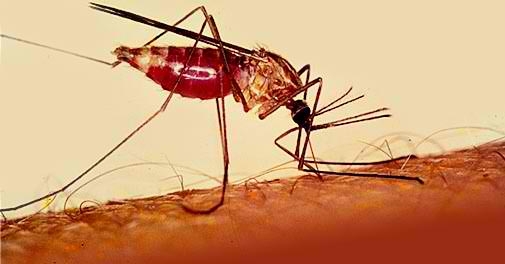
Greece, declared free of malaria almost 40 years ago, is battling to prevent the mosquito-borne disease from making a comeback as local transmission has resurfaced in the past two years.

Outbreaks of locally transmitted malaria since 2011 in the regions of Laconia and East Attica are making it urgent to increase surveillance and take mosquito control measures to eliminate the risk of the disease becoming re-established, researchers from the Hellenic Center for Diseases Control and Prevention wrote in the journal Eurosurveillance yesterday.

Once entrenched in Greece, malaria was officially eliminated in 1974. Immigrants from countries where malaria is widespread have brought the disease with them, raising the risk that malaria could again gain a foothold in Greece, according to the report.

“It is becoming urgent to strengthen surveillance and perform integrated mosquito control that will help eliminate the potential risk of malaria reintroduction and reestablishment,” the researchers wrote.

This year 16 cases of locally-transmitted malaria have been reported in Greece as of Oct. 26, after 27 cases were reported last year, according to the European Centre for Disease Prevention and Control.

Greek health authorities are working with the European Centre for Disease Prevention and Control and the World Health Organization to combat malaria, according to the report.


6/14/2012

In Syria, we will be killed by guns, in Greece, we will be killed by the economy: Kurdish refugee

Immigrant families and homeless people receive food from members of a humanitarian group at a housing complex in Athens, Greece.

Πηγή: Kurdnet
By Lizzy Davies (The Guardian)
June 14 2012

ATHENS, Greece,— As the volunteers unpack their shopping bags of rice, milk and cooking oil, Goman Badder retreats to the room he lives in with his wife and their one-year-old son. For the 28-year-old Syrian Kurd, the deliveries are a mixed blessing: he is relieved that his family will not go hungry, but humiliated that it has come to this. He had hoped for better things for his son, asleep on the neatly made bed.

"When I left Syria, I felt I didn't want him to be like me," he says. "But I never thought for him it would be like this: people bringing him Pampers and milk. If I'd known it would be like this I would never have brought him to this world."

His friend Salah Muhamed, a Kurdish teacher who fled the "hell" of Syria six months ago, did not mince his words. "In Syria, we will be killed by guns," he says. "Here, we will be killed by the economy."

For the past six months, this state-funded centre for asylum seekers has received no funding from the state. Its 25 staff members have not been paid since January. Due to its debts,www.ekurd.net the centre has "huge problems" with suppliers and the usual food deliveries stopped two weeks ago.

Some of the 225 residents thought the staff had gone on strike over pay but, as director Vasilis Lyritzis explains, they could simply not go on: "We just stopped cooking because we didn't have anything to cook. The moment that we have food, we cook again."

Even now, the inhabitants of the Lavrio centre, about 40 miles from Athens, are among the most fortunate of Greece's tens of thousands of asylum seekers, most of whom receive no support from the state and sleep rough in large, unsanitary slums in cities such as Athens.

But, as the debt crisis takes its toll on state services and the unpaid bills to suppliers mount up, Badder and Muhamed are being pushed to the extremes. And they are not the only ones. Across the country, some of Greece's most marginalised and vulnerable people who rely directly or indirectly on the state to feed them are now facing the possibility of having to turn to their neighbours for help.

On the island of Leros in the Dodeccanese, the governor of a psychiatric hospital has, in the past two weeks, like Lyritzis, found himself having to plead with suppliers to keep bringing food, despite an almost complete inability to pay them. Yiannis Antartis's suppliers stopped for a week, after which he found enough money to pay them each €15,000 (£12,000) – enough to encourage them to restart but far from enough to cover the hospital's total debts to them of €1.25m.

Antartis believes he has about a month to find money to pay the debts and protect the 400 patients, who have a range of mental illnesses, from depression to dementia and schizophrenia. Owed about €13m by its debt-ridden health insurance funds, the hospital, which is already sending samples to private labs for want of sufficient facilities, will soon be struggling for the basics, he said.

"If we don't receive money within three to five weeks we're going to have a real problem – for food, for medicines, for hospital supplies, bandages, even the basics," he says. "All levels of the hospital are going to start breaking down.

"My primary concern is to receive enough money to pay some outstanding bills in order to keep the hospital going, from the insurance funds, from the state, from wherever, just to be able to keep the hospital going. I am really worried about the fact that the hospital will not be able to function normally if we don't receive payment."

His position will be met with sympathy by the director of a state hospice in the Kypseli neighbourhood of Athens, who said last week that, as well as medicine shortages and an inability to pay energy bills, the institution had had no meat or chicken since 1 June.

Antartis has been the hospital's governor on and off since the 1980s, when it was revealed to be keeping patients naked and chained to their beds. He is adamant the institution bears no semblance to its former self. In 1988, he says, 1,600 patients were "piled up" in wards and looked after by fewer staff than today. Now, 120 of the 400 patients live relatively normal lives outside the hospital.

But, last week, Antartis was so concerned about supplies that he wrote to the health ministry and major political parties warning that patients were being poorly fed. Since then, he has managed to get the supplies coming in again and has met Greece's caretaker health minister, who, he says, showed understanding and promised a €150,000 payment by the end of June.

"But he [the minister] emphasised that the insurance funds do not have any money and that the hospitals have to keep every penny in order to keep going," Antartis says. Given the size of the debts and the interest rates on them, €150,000 "doesn't cover anything".

The inability of health insurance funds to pay their debts has caused chaos in the healthcare system, contributing to a shortage of medicines and the closure of dozens of commercial pharmacies.

Antartis is relieved the hospital managed to resolve – albeit temporarily – the problem with food supplies without the patients realising anything was wrong. But he remains concerned, particularly about medical supplies, as that is one area in which Leros's community, as active and kind as it is, will not be able to help. "I think the local people will help with food," he says. "But even that is going to be a problem at some point because for how long are they going to be able to help?"

One place where Greeks have reportedly already stepped in to fill the gap left by the state is Corinth, where the prison has had food shortages and people have started collecting goods for the inmates. Another is Lavrio, where donations have been keeping food on the table for the asylum seekers and refugees, among whom Lyritzis estimates there are 75-80 children. Some of the volunteers are hardly well-off themselves: Nadia, one of the members of a people's assembly from Athens which dropped off food at the weekend, is on Greece's new unemployment benefit of €360 a month and has had to go back to live with her mother.

"€40 or €50 just means I won't go out for a couple of days," she shrugs, loading bags of groceries into a waiting car.

Lyritzis, an employee of the Hellenic Red Cross which runs the centre, says the finance ministry has been unable to tell him when, or if, its funding might come. He says the centre had an estimated five days of food supplies left and he is in a very bad psychological state.

For Badder, who came to Greece in 2010 after alleged persecution due to his Kurdish ethnicity, that would be good news.

But if the situation is not alleviated, he would like to see the responsibility for his centre fall to a power outside Greece. He says: "The Greek people are very, very good. They look after us. But the Greeks have no money. Why must the Greeks bring us food? We are in Europe, not just Greece."

As the volunteers busied themselves in the courtyard, unpacking tins, toiletries and cartons of milk, he says: "The people here are so nice. We can't tell them: 'Don't bring food because we are ashamed'. We must say 'Thank you'. But we feel bad."



4/14/2012

Greece’s Right-Wing Fringe


Πηγή: New York Times
Produced by Nikolia Apostolou
April 13 2012

As Greece reels from deep austerity cuts and prepares for elections, some ultranationalist groups with extreme ideologies are appealing to increasingly insecure voters.


2/15/2012

Greece's crisis fails to stem immigrant flow


Πηγή: Aljazeera
By Barnaby Phillips
Feb 15 2012

EU says 55,000 people were caught entering from Turkey in 2011 as the country is still an entry point into Europe.


Greece's economic crisis has done little to stem the flow of illegal immigrants, for whom the country is still an entry point into the European Union.

The EU says that 55,000 people were caught entering Greece from Turkey in 2011, an estimated 17 per cent increase from 2010.

Of all the EU countries, Greece is probably the one least able to cope with the influx.


1/24/2012

Ethnic tensions could destroy Russia, warns Putin


Πηγή: Deccan Herald
By RIA Novosti
Jan 24 2012

Russian Prime Minister Vladimir Putin warned rising nationalism posed a threat to the country's future and called for a clampdown on "disrespectful" internal migrants.

"Attempts to advocate the idea of the creation of a mono-ethnic, national Russian state contradict our millennium-old history," Putin wrote in an article on his official website.

"This is the shortest path to both the destruction of the Russian people and Russia's sovereignty," he wrote. Putin proposed the creation of a new state agency on national development and inter-ethnic accord.

Russia has seen a dramatic rise in ultra-nationalist sentiments since the break-up of the Soviet Union, with far-right movements prominent at recent mass protests against alleged vote fraud in favour of Putin's ruling United Russia party.

Around 5,000 nationalists rioted near Red Square in December 2010 after the murder of a Spartak Moscow football fan by a youth from the volatile Muslim North Caucasus region.

Putin promised a crackdown on "aggressive, provocative and disrespectful" internal migrants who fail to respect "the customs of the Russian people". "This behaviour should be met with a legal, but harsh response," he said.

Tensions between ethnic Russians and natives of North Caucasus republics frequently occur due to cultural and religious differences, despite behaviour guidelines drawn up for new arrivals in big cities from republics such as Chechnya and Dagestan.

Police blame North Caucasus youths for outbreaks of violence. Putin has faced frequent criticism over the government's generous financing of the economically depressed and violence-ridden North Caucasus region.

Opposition figurehead Alexei Navalny, one of the organisers of the recent vote fraud protests, has lent his backing to the grassroots, nationalist "Stop Feeding the Caucasus" campaign.

But Putin dismissed such campaigns as a danger to Russia's national unity. "When they start shouting 'Stop Feeding the Caucasus' a call will inevitably follow to stop Feeding Siberia, Far East, the Urals," he wrote.

"This was exactly the recipe followed by those who instigated the break-up of the Soviet Union," he added in the article. Putin warned that the creation of nationalist parties in Russia was "a direct path to separatism".

But the prime minister recognised the concerns of many ordinary people over "mass immigration" from impoverished former Soviet republics such as Tajikistan and Kyrgyzstan and vowed to "toughen" laws on labour immigrants, making a violation of migration -- including internal migration -- procedures a criminal offence.

He said that from next year, immigrants would have to pass exams testing their knowledge of the Russian language as well as the country's history and literature.


12/01/2011

‘Inhuman’ to return immigrants to Libya


Πηγή: Times of Malta
Dec 1 2011

Two Somalis win €10,000 each from the government in landmark case.

They survived beatings, torture and being left in the Libyan desert for two weeks without food or water as others died around them.
The way the case was handled by the Maltese authorities was tantamount to inhuman and degrading treatment

Now, two Somali men have been awarded €10,000 each by a Maltese court for a violation of their human rights when they were forcibly sent back to Libya, a country known to practise torture.

The way they were dealt with by the Maltese authorities was tantamount to inhuman and degrading treatment, the court ruled in a landmark judgment.

The decision was handed down by Mr Justice Raymond Pace following a constitutional application filed by Abdul Hakim Hassan Abdulle and Kasin Ibrahim Nur against the Minister of Justice and Home Affairs and the Principal Immigration Officer.

The court heard that Mr Nur had left Somalia in 2003 after losing all his family in the war, and made it across the desert to Libya.

Mr Abdulle’s own nightmarish bid for freedom started a year later when he left Somalia to escape the persecution of his Madigan tribe by militant Islamists.

After first traversing the Sahara desert into Libya he attempted to cross the Mediterranean on a boat with 30 other persons. They did not get far. The boat sank and his son drowned but Mr Abdulle managed to swim back to the Libyan coast.

He was not one to give up easily. In September 2004, he boarded another boat headed for Europe and one of the migrants on board was Mr Nur.

Their boat was intercepted by a Maltese patrol craft and they were brought to Malta, taken to police headquarters and given an immigration number. Neither of them, however, was given the opportunity to apply for asylum in Malta nor were they assisted by an interpreter, the court heard.

Twenty days later, the two men, together with four other illegal immigrants, were taken, handcuffed, to the airport and put on a plane to Libya against their wishes.

Both men asked to speak to a representative of the United Nations High Commission for Refugees in Malta but their request was refused.

Back in Libya they were arrested, beaten, tortured and kept in prison for a week. They were transferred to another prison and, three months later, they were tried without an interpreter. The two were found guilty and sentenced to imprisonment for a year. During their time in prison they were again beaten and tortured.

In November 2005, the two men, together with a few of their compatriots, were taken on a three-day drive into the Sahara where they were abandoned with no food or water.

The rest of their company died in the desert but after 14 days Mr Abdulle and Mr Nur were rescued by Berber bedouins.

Tenaciously, they made their way back to Libya and, six months later, in June 2006, they returned to Malta.

In their constitutional application, they claimed that their right to freedom from inhuman and degrading treatment had been violated when they were forcibly repatriated to a country known to practise torture.

They further claimed that their fundamental human right to an effective remedy had been violated because the authorities in Malta had not allowed them to apply for asylum.

Mr Justice Pace pointed out that, in terms of law, an immigrant into Malta had to be informed of his right to seek asylum in a language he understood. This had not been done in their case.

He said it was “very worrying” that the two men had been given no explanation by the authorities and had been detained at police headquarters rather than being taken to a detention centre.

The court added that the two men were not alleging that they had been subjected to torture in Malta. Their application was based upon the fact that they had been forcibly repatriated to Libya against their wishes. Libya was known to be a country that lacked the rule of law and where torture was practised, Mr Justice Pace said.

A state was to be found guilty of inhuman and degrading treatment if it extradited a person to a country where he faced a real risk of being subjected to torture.

United Nations documentation at the time stated that asylum seekers and immigrants faced xenophobic acts of violence in Libya. Asylum seekers in Libya did not benefit from the international protection afforded by the Geneva Convention on the Status of Refugees, which Libya had not ratified.

Reports also stated that hundreds of African migrant workers in Libya had been subjected to racial violence and killings.

The court, therefore, found that Mr Abdulle’s and Mr Nur’s fundamental human rights had been violated and awarded them €10,000 each by way of compensation.