Πηγή:
Washington Post
By Craig Whitlock
Jan 30 2012
NATO allies are confronting a sustained weakening of the military alliance as ailing economies are forcing nearly all members, including the United States, to accelerate cuts to their defense budgets at the same time.
The Pentagon’s recent decision to eliminate
two of the Army’s four brigades in Europe is the latest blow to NATO’s military capabilities. It extends a year of grim announcements from members of the alliance that they can no longer afford their security commitments and that a long period of austerity is in the offing.
Obama administration officials warned last year that European members of NATO could no longer expect the United States to shoulder a disproportionate burden of maintaining the 28-member alliance, the bedrock of trans-Atlantic security and diplomacy since the end of World War II. The United States accounts for 75 percent of all NATO defense spending, up from 50 percent during the Cold War.
Instead of coming forward, however, European members of NATO are in retreat. Britain announced troop cuts this month that will eventually shrink the size of its army by nearly one-fifth; it already has mothballed its only aircraft carrier.
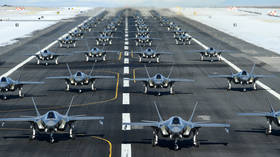
Germany is trimming the size of its armed forces by a similar amount and canceling orders for fighter jets, helicopters and other weapons systems. Italy, which imposed deep defense cuts two years ago, is confronting another round that could include steep reductions in the number of F-35 Joint Strike Fighters — a U.S.-made plane — that it had planned to buy.
“Of course it is a painful time,” Hans Hillen, the defense minister of the Netherlands, said in an interview. “The problem of cutting defense is not a European hobby, or an American one, these days. It’s because of the economic crisis.”
The Dutch government decided last year to ax 12,000 Defense Ministry jobs, including 30 percent of the military’s general staff. “All the countries have problems with budgets, and they have to make choices,” Hillen said.
U.S. and NATO officials fret that the cutbacks will further erode military weaknesses that were exposed during last year’s air war in Libya. Several European countries
quickly ran out of munitions and had to order them on an emergency basis from Washington. European militaries also lacked capability to refuel their own planes or conduct adequate surveillance from the air.
“If there ever was a time in which the United States could always be counted on to fill the gaps that may emerge in European defense, that time is rapidly coming to an end,” Ivo Daalder, the U.S. ambassador to NATO, told reporters in Washington last month.
At the same time, Europe’s austere economic outlook is leading to a “further weakening of the core ability to defend ourselves,” said Norwegian Defense Minister Espen Barth Eide.
Oil-rich Norway is an exception to the trend; it is increasing its defense budget. But Europe’s overall economic woes are exacerbating existing tensions within NATO, Eide said in a recent speech at the Center for Security and International Studies, a Washington-based think tank.
In Washington, the long-held “vision of Europe is that there’s a bunch of reasonably rich countries, relatively lazy, and not standing up for American-initiated missions abroad as much as they should,” he said.
In contrast, Eide said, resentment and opposition to the U.S.-led occupations of Iraq and Afghanistan has reduced popular backing for NATO among many Western European countries. “NATO was identified simply as the organization that takes away our sons and daughters and sends them to faraway places to do nation-building in the desert.”
Pentagon officials said the two Army brigades they are eliminating in Europe — each has about 5,000 soldiers — would be replaced in part by U.S.-based units that would rotate periodically to the continent to conduct joint training exercises. The reductions are part of a larger effort to cut $487 billion in projected spending over the next decade.
“I still think we’re going to have plenty of capacity to lead, if asked to lead, with boots on the ground, depending on the operation,” Gen. Ray Odierno, the Army chief of staff, told reporters Friday.
Odierno added that the U.S. military wasn’t counting on its cash-strapped NATO allies to fill the void. “We certainly are going to need our partners to move along with us as we do this, but I don’t think there’s any great expectation that they would provide more.”
There are about 80,000 U.S. service members stationed in Europe, along with more than 200,000 family members and civilian employees.
Plans have been afoot to reduce those numbers for many years. In 2004, then-Defense Secretary Donald Rumsfeld announced a similar plan to remove two of four U.S. Army brigades on the continent, but Army leaders successfully resisted.
As recently as April, the Pentagon said it would leave three brigades in Europe and wait until 2015 to bring the fourth one home. Army officials said the troops are critical to carrying out training missions with NATO allies, especially those from eastern Europe that joined the alliance only in the past decade.
The Pentagon has not publicly identified which of the four brigades will leave Europe. But officials Friday pointed toward the 170thInfantry Brigade, based in Baumholder, Germany; and the 172nd Infantry Brigade, based in Schweinfurt, Germany.
Remaining would be the 2nd Cavalry Regiment in Vilseck, Germany, and the 173rd Airborne Brigade Combat Team in Vicenza, Italy.
The locations of those bases are legacies from the Cold War, when U.S. and NATO forces were focused on the threat of a Soviet land invasion.
Hillen, the Dutch defense minister, said the withdrawal of the U.S. Army brigades was unlikely to trigger anxiety in western Europe but would be felt more keenly among NATO countries that border Russia and still see Moscow as a security concern.
As part of a new military strategy released this month, the Obama administration said it would devote greater attention and resources to Asia while maintaining a robust presence in the Middle East. That has fed concern among European allies that they will get short shrift over the long term and lose their influence in Washington.
More worrisome, however, is the possibility that the Pentagon’s attempts to get Europe to bear more of NATO’s costs could backfire, said Heather A. Conley, director of the Europe program at the Center for Strategic and International Studies. By bringing home U.S. troops, Washington may inadvertently give European allies an excuse to cut their defense budgets even more.
“I don’t see a plausible scenario for Europe to step forward,” said Conley, a former State Department official in the George W. Bush administration. “If we don’t start having these tough but important discussions, we run the risk of all of us just cutting away and leading to strategic drift.”