Showing posts with label Gaddafi. Show all posts

2/12/2022

Who actually owns Libyan oil?


Source: New Europe
Feb 12 2022
By James Wilson


In the past the long-term export of petroleum products allowed Libyans to maintain a high standard of living for several decades, outpacing most African countries in economic development. Libya has the largest oil reserves in Africa and the ninth largest known reserves in the world.

Impressive oil reserves allowed Libya to implement many infrastructure projects and opened doors to the stage of international politics, giving Libyan authorities the ability to influence the decisions of other countries. But the situation has now completely changed. Fluctuations within the Libyan political landscape have a direct impact on the country’s oil production and revenues.

Is oil to blame?

Libya’s ex-leader, Muammar Gaddafi, used the country’s oil wealth to lobby his interests in Europe by sponsoring political parties and candidates.

It was also oil that became one of the main reasons for the fall of the Libyan state in 2011. Attempts to establish a new unified system of power in Libya were unsuccessful. It resulted in a protracted and deep crisis that disrupted the oil supply chain.

During the Libyan civil war, oil became even more important as an expensive valuable resource. The confrontation between the Government of National Unity in western Libya and the House of Representatives in the east stems largely from disagreements about oil production and revenue sharing. Control over oil fields provides a constant stable income which can be easily used to purchase weapons and to conduct military operations. The party controlling the oil flows has a significant advantage over their opponents.

Libyan oil magnate

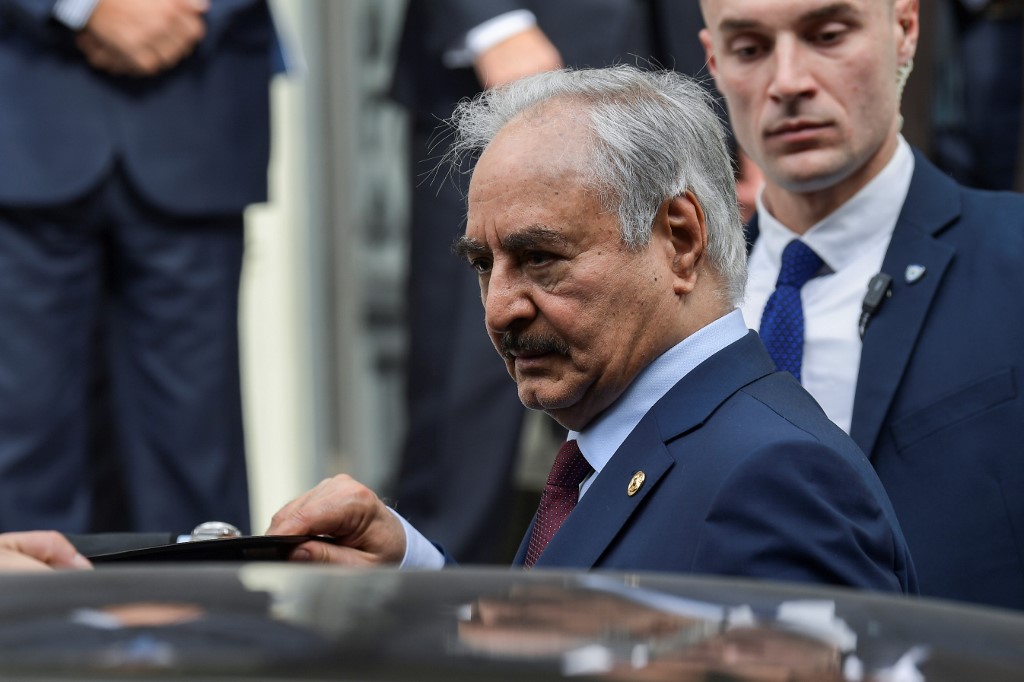
The success of Field Marshal Khalifa Haftar, one of the key figures in the modern Libyan political landscape, owes much to his oil revenues. Formally acting on behalf of the House of Representatives and defending the eastern region of Libya, Haftar has long conducted an independent policy, positioning himself as the sole head of this region in the country.

The Libyan National Army under his leadership has controlled the oil terminals of Ras Lanuf and Es Sider for 7 years. Before the escalation of the political crisis, Haftar observed the status-quo, trading oil through an intermediary, represented by the National Oil Corporation office in Tripoli, thus sharing the proceeds from sales. It is estimated that Haftar’s forces helped to maintain official production at the level of at least 1 million barrels per day.

But these agreements on the sharing of oil revenues were disrupted by Haftar’s failed march on Tripoli in 2019. The offensive allowed him to finally gain full control over oil flows in Libya. Haftar justified his claims for oil by the fact that the National Oil Corporation located in Tripoli and affiliated with the Government of National Unity, did not fairly take account of the needs of eastern Libyan citizens when they distributed revenues. All the money remained in Tripoli. Similar accusations were regularly made by Haftar’s supporters, despite the fact that National Oil Corporation representatives regularly
transferred funds to eastern Libya.


Khalifa Haftar during a meeting in Athens, Greece.

Leverage

Sole control over the oil industry in Libya gave Haftar the opportunity to manipulate and blackmail in the domestic and international political arena. In an attempt to strengthen and legalise his position, Haftar signed a document allowing him to monopolise the country’s oil sector for 10 years and create a parallel company that ignored the National Oil Corporation. Although this arrangement is completely strictly illegal, Haftar has stubbornly insisted on following it.

There are 5 major oil terminals in Libya: Brega, Ras Lanuf, Hariga, Zuwetina and Es Sider. All of them are located in the so-called oil crescent – a region which extends from Ajdabiya town (southwest of Benghazi) to the eastern outskirts of Sirte. With the growth of income and opportunities, Field Marshal Haftar’s political ambitions have become stronger, albeit against international pressure and the threat of sanctions.

Haftar exerted pressure on the international oil market in an effort to influence international political decisions regarding Libya. An example of this was when the main oil terminals of the country, which were under the control of the Libyan National Army, stopped working on January 18, 2020, before international negotiations in Berlin on the normalization of relations in Libya. As a result, Libya’s entire oil infrastructure, from the extraction of raw materials to sales, was paralysed. The stoppage, which lasted about six months, was Haftar’s political challenge to foreign politicians who, as he believed, threatened his position and intended to remove him from power.

Haftar’s illegal structure for the sale of petroleum products violates international agreements, disrupts the global oil supply system, and causes significant damage to Libyan citizens, who have to endure poverty, hunger and a humanitarian crisis. Haftar and his entourage use the profits from their illegal sales to purchase weapons and luxury real estate. Investigative journalists have alleged that relatives and associates close to Haftar have invested millions of dollars in luxury mansions in France, Italy, Canada and the US.

Tobruk Bay

Libya’s oil resources attract foreign traders who are interested in taking a margin on mediation and oil resales. It has been alleged that Haftar has sold oil through several intermediate companies registered in the United Arab Emirates.

Haftar’s illegal oil trade does not go unnoticed. Even if the navigation information systems of oil tankers arriving in Tobruk are disabled, the vessels are clearly visible on satellites. Their arrival in Tobruk Bay is confirmed by numerous eyewitnesses. Data on these vessels have stopped entering the tracking system since the beginning of January.

Oil tankers continue to arrive at the port of Hariga every few days. For example, on January 27, about 1,000,000 barrels of crude oil were shipped to the tanker Elandra Osprey. About 600,000 barrels were granted to buyers from Singapore, another 400,000 to an unnamed Dutch company. It is also known that on February 3,600,000 barrels were loaded onto the oil tanker Captain Astellas owned by Arabian Gulf Oil and located in the same port of Hariga.

Such actions impact global oil prices, allowing Haftar and his supporters to increase their profit margins, bypassing international markets and internal Libyan restrictions. Daily oil production in Libya is 1.2 million barrels, but the exact amount of oil supplied to the black market is not known. Haftar’s approximate monthly income, if at least 5 million barrels per month are shipped, would be about 450-500 million dollars per month. This is easily sufficient to enable Haftar to promote his military and political agenda. Libya has the largest oil reserves in Africa and the ninth largest known reserves in the world.

International reaction

Although Haftar’s actions violating Libyan and international laws have not gone unnoticed, the reactions of the UN, the US and the EU have been weak. US State Department representatives have informed Haftar of the threat of sanctions. Haftar is a naturalized American citizen, but if prosecuted he would be dealt with in accordance with local laws.

A representative of the US Department of State noted that Washington has called on all parties in Libya to reject any attempts to militarise the energy sector, divide the country’s economic institutions and subordinate the most important infrastructure facilities to foreign interests. However, these words have fallen short of action. In this context, it should be remembered that some illegal oil supplies may even be resold to the American market.

The lack of proper coordination of an international reaction to condemn Haftar’s actions has had a negative effect on the international oil market and on the lives of millions of Libyan citizens. As long as Haftar exploits his illegal sources of income, he will avoid any political compromise and refuse to comply with agreements that would otherwise contribute to national reconciliation in Libya and the establishment of a unified stable centre of power in the country.

* James Wilson is Founding Director of the International Foundation for Better Governance, a not for profit organization dedicated to promote, protect and defend the fundamental rights of citizens, human rights, democracy and the rule of law.


4/25/2020

Libya crisis: How Haftar is quietly building forces in the Fezzan

Haftar is pictured in Athens on 17 January, ahead of a peace conference in Berlin (AFP)

Source: Middle East Eye
April 24 2020
By Valerie Stocker

Developments in the southwest region, comprising roughly a third of Libya’s territory, are of major relevance to the warring sides battling in Tripoli.

A year ago, Field Marshal Khalifa Haftar launched an offensive on Tripoli in a bid to oust Libya’s Government of National Accord (GNA) and its armed allies, ushering in a phase of unprecedented violence.

The siege of Tripoli by Haftar’s Libyan Arab Armed Forces (LAAF) continues, remaining the almost exclusive focus of reporting. The Fezzan, Libya’s long-neglected and haphazardly governed southwest, is often seen as a side stage to national conflict dynamics.

Yet, developments there have been of major relevance to the escalation in Tripoli, offering clues about the LAAF’s broader expansion strategy. Comprising roughly a third of Libya’s territory, the Fezzan is also a key asset for warring camps. It holds some of the country’s largest oil and water reserves and is Libya’s gateway to the Sahelo-Saharan zone.

Striking a chord

In a strategic move, Haftar deployed LAAF contingents from the eastern and central region in early 2019, ostensibly targeting “outlaws and foreign armed groups”. The narrative struck a chord among southerners tired of rampant crime and patchy security provision, at a time of overall dissatisfaction with the GNA. Many thus welcomed the arrival of LAAF forces.

The operation was successful in large part due to the LAAF’s gradual penetration of the Fezzan’s security scene over the previous two years. Using tribal politics to his advantage, Haftar had built relationships with certain social leaders and helped them enhance their influence within their communities.

The momentum created by the LAAF’s rapid advances and accompanying propaganda machine led more southern commanders to side with Haftar

As a consequence, he could count on a number of local armed groups in advance of his move and capitalise on the southern army officers' frustrations with the GNA’s lack of leadership and support.

The momentum created by the LAAF’s rapid advances and accompanying propaganda machine led more southern commanders to side with Haftar, as a way to salvage their position or monetise their endorsement.

The GNA scrambled to organise a counter-offensive, relying on marginal actors and hurried decisions with insufficient local buy-in.

In March 2019, most LAAF forces abruptly withdrew from the Fezzan, leaving the maintenance of the “new order” to their local allies. As the LAAF directed all its efforts to seizing the capital, the Fezzan shifted out of focus again.

By this point, it was clear that the Fezzan operation had served as a launchpad for the subsequent Tripoli offensive, bolstering the LAAF’s image and supplying new manpower.

In the Fezzan, stability remained elusive, as local militias reappeared on the streets and smuggling resumed. Ethnic tensions, which had been exacerbated by the LAAF’s entry into Murzuq, escalated into full-blown conflict.

Restructuring the security landscape

But there appears to be more to Haftar’s Fezzan strategy than a short-sighted power play. A closer look suggests he embarked on restructuring the security landscape in view of consolidating the LAAF’s presence throughout the south.

Southern armed groups typically derive their legitimacy from their tribal backbone and how embedded they are within their communities. The LAAF leadership has been reshaping these groups based on wartime priorities and to weaken parallel loyalties.

Small units are being absorbed into larger battalions that the LAAF has built up as privileged partners. Fighters have also been recruited as individuals, wresting them from their previous formations and reshuffling them in a way that breaks with conventional patterns of mobilisation. Though impacted by southern power dynamics, this restructuring process is essentially led from above.

Meanwhile, Haftar has invested in military structures that have been largely dysfunctional since 2011, giving leeway to trusted army officers.

A Gaddafi-era intelligence official and Haftar’s military governor of Kufra in the southeast, Major-General Belgasem Labaaj, is now in charge of all southern military zones. He has been touring the Fezzan since last autumn, strengthening ties with army cadres on the ground, admonishing corrupt local officials, and trying to broker a peace agreement in Murzuq.

Signs of dissatisfaction

In parallel to the LAAF’s military track, affiliated political authorities have stepped up their role. The interim government authorised fuel deliveries to the Fezzan, which has been starved of its usual western Libyan supply because of the war and the GNA cutting off LAAF-controlled areas.

Southern banks are being supplied with cash from the east, supplementing deliveries from the Central Bank in Tripoli. After initially objecting to municipal elections held under the GNA’s auspices last year, the interim government recently announced substantial budgets for southern municipalities - expecting local officials to distance themselves from the GNA.

The interim government has also been training and equipping auxiliary police forces under its interior ministry.

Signs of dissatisfaction are surfacing, however, and persistent crises may erode popular support for the pro-LAAF camp. A quarrel between the interim government and southern MPs about money for the south that went missing has caused outrage.

In a recent social media outburst, the frontman of the Fezzan Anger Movement - a grassroots network with a broad support base - spilled his anger about the “absent” interim government “that serves the east only”, as well as the “liar” Fayez al-Serraj, referencing a one-billion-dinar development fund that the GNA prime minister promised in December 2018 but never delivered.

Most southerners still have no access to subsidised fuel, since the eastern distribution network is overburdened, the east barely has enough to cover its own demand, and thus continue paying exorbitant black-market prices.

Since the start of 2020, the LAAF has taken new measures to contain the black market, but systemic corruption and the smugglers’ social protection limit their impact.

Far-ranging repercussions

The LAAF’s Fezzan expansion is a double-edged sword. Southerners expect the stronger leadership to enhance security and rein in armed groups. At the same time, LAAF patronage enables approved groups to act with greater impunity and to further their own interests.

The relationship between the LAAF leadership and its tribal backers is not one-directional, but based on mutual benefits and tradeoffs. This has potentially far-ranging societal repercussions, in terms of tribes, or tribal branches, seeking to further their territorial and political influence at the expense of their neighbours.

There are fears that the LAAF’s reinstatement of Gaddafi-era security officials could come at the cost of sustaining structural discrimination toward non-Arab ethnicities and reviving former mechanisms of social control. The southern fighters’ return from the northern frontlines will likely inflame tensions. 

There are fears that the LAAF’s reinstatement of Gaddafi-era security officials could come at the cost of sustaining structural discrimination toward non-Arab ethnicities

Through its actions in the Fezzan, and previously in the east, the LAAF has demonstrated skill in navigating the local landscape, reactivating dormant networks and coopting aggrieved constituencies.

This holds clues to how it will pursue the recruitment of more groups in the northwest to aid its takeover. Yet, these trends are contingent on the trajectory of the conflict.

According to local sources, many southern actors sided with the LAAF because under the circumstances, they saw Haftar as being in the pole position to dominate the country.

But Turkey’s entry into the war strengthened the GNA’s position, and if Haftar is forced to back off from Tripoli, he may well lose ground in the Fezzan, too. Tribal support can be retracted and pro-LAAF figureheads can be replaced.

If the LAAF consolidates its territorial gains, the broader question is whether the ongoing restructuring and realignment processes can pave the way for deeper security sector reform. The national sense of purpose that the LAAF claims to embody is often praised as an antidote to the narrow tribal and localist interests driving conflict in Libya.


Yet, the LAAF’s hybrid nature and reliance on a broad range of actors with varying agendas constitute an obstacle to professionalising forces under centralised command.

This article draws on field research that the author conducted for a recently released Chatham House paper on the development of Libyan armed groups since 2014.


4/19/2017

Who Will Govern Libya Later This Year?


Πηγή: FAIR OBSERVER
By SHEHAB AL-MAKAHLEH
April 18 2017

Can Saif Gaddafi unite Libya with the support of the country’s numerous tribes?

Understanding the three key actors in the Libyan Civil War is critical during the coming months. Libyan National Army (LNA) Field Marshal Khalifa Haftar is pushing his Operation Dignity forces to the west and south of the country. His goal is to dislodge the failing UN-mandated Government of National Accord (GNA) and the fractured General National Congress (GNC) in Tripoli.

Former adviser to the deceased Libyan leader Muammar Gaddafi, his cousin Ahmad Gaddaf al-Dam, is planning a return to Libya from his home in Egypt, and Gaddafi’s son Seif al-Islam Gaddafi, who was released from prison least year, is now garnering tribal support for a potential national role.

In fact, recent developments in the beleaguered North African country reveal that preparations are underway for Gaddafi’s son Seif to be Libya’s next president following an interim period led by Haftar, with assistance from al-Dam. The tribes will be playing a key role in unifying the country behind these men.

These are not speculations. Indeed, al-Dam is currently preparing for his cousin, Seif, to have a say in the country’s political arena after ensuring the latter’s safety. Last summer, authorities released Gaddafi from prison after lifting his death sentence as a result of negotiations between Zintan authorities and the Gaddafi tribe.

LIBERATION

According to sources close to al-Dam, who is based in Egypt and pays frequent visits to the United Arab Emirates (UAE), Gaddafi will soon deliver a speech to the people of Libya once the country is fully “liberated” from actors in the civil war that the Tobruk-based administration, which Haftar is loyal to, recognizes as terrorist groups.

This will be done with assistance from Cairo and Abu Dhabi and logistical support from both Russia and the US, the latter of which is to guard Libyan oil fields. These plans entail American oil companies developing Libyan oil wells, guarded by US military. Reportedly, Russia will train Libya’s armed forces.

Gaddafi and al-Dam are holding peace talks with major Libyan tribes. Haftar’s talks in Moscow earlier this year were aimed at rehabilitating the LNA and supplying it with Russian weapons. There are good odds that the tribes that stood by Gaddafi in the past will fully support the LNA’s fight against Salafist jihadist militias that have won control over parts of post-Gaddafi Libya. Al-Dam is now looking into the role that the tribal structure would play to achieve peace, stability and reconciliation in the country to reunify it after six years of violent unrest that have resulted in hundreds of thousands of Libyans dying and being displaced.

The sources also talk about the key points of Gaddafi’s upcoming speech that will address the situation in the country and the need for reunification in order to counter all potential risks and threats, as well as exert all efforts to rebuild the country, drawing from oil revenues. Gaddafi will also highlight the importance of having good relations with African states, countries in southern Europe, US and Russia.

Moscow has been playing both sides of the Libyan Civil War by maintaining ties with the Tripoli- and Tobruk-based governments that broke ranks in 2014, splitting the country between the west — Tripolitania, and east — Cyrenaica. Yet Russia may well determine that no Libyan civilians can effectively rule the North African country and that the authorities in Tobruk, under the leadership of Haftar — who may pave the way for Gaddafi — should receive the Kremlin’s all-out support. In the event that the ineffectual, albeit internationally recognized GNA, crumbles this year, such a scenario would become increasingly likely.

As of now, the Russians seem to trust Haftar and prefer dealing with the field marshal more than other Libyan officials. Although the Trump administration has yet lay out its vision for Libya, the Tobruk-based authorities are seeking to secure a commitment from the 45th American president that he’ll lend Haftar future US support.

On April 10, Haftar met with a high-ranking US military official in Abu Dhabi to discuss the topic. Although the US still, at least officially, recognizes the GNA as Libya’s legitimate government, the anti-Islamist composition of Trump’s administration and Haftar’s narrative about leading the struggle against terrorism and extremism in Libya may well convince to Washington withdraw its support for the Tripoli-based government and back its rival in the east.

TRIBAL LOYALTIES

Muammar Gaddafi’s daughter, Aysha, is ruled out of the presidential race as her brother Seif has a better chance of representing a united country upon receiving the full support and allegiance of Libyan tribes. With more than 140 tribes and clans, Libya is believed to be the most tribal nation in the Middle East, where every single tribe has a say in a future Libyan government. This is well understood by Gaddafi, Haftar and al-Dam.

The goal is to orchestrate an effort to allow Gaddafi to lead the nation with a full support of those tribes whose influence extends beyond Libyan borders, including Gaddadfa, Bani Salim, Bani Hilal, Warfallah, Kargala, Tawajeer, Ramla, Turareg and Magariha. For this purpose, meetings were held in western Libya, near the Algerian border, to discuss this matter.

Perhaps only Saif Gaddafi is capable of reuniting the country in spite of friction and violent conflict that tears Libya apart. There are indications that there is growing support for him among Libya’s main tribes. Those who fought against his father’s regime during the 2011 revolution may not agree with this solution. But whether those forces will overcome their divisions, which are playing out in deadly clashes in Tripoli, and unify enough to really have a say in this development remains doubtful.

In other words, infighting seems likely to overtake any unified attempt to counter Gaddafi’s ascent. Gaddafi is pushing a Truth and Reconciliation Committee to air grievances to bring the shattered country together. His policy also seeks, along with Haftar and al-Dam, the lifting of sanctions to release frozen funds from the Libyan Investment Authority and those owed to the Central Bank of Libya to give the economy a much needed boost.

The tribes have high stakes in the country’s future leadership. The coming few weeks will witness many developments, starting with the trips that Haftar and al-Dam will pay to a Egypt, Russia and the UAE after they are given a carte blanche by the tribes who will voice their allegiance to Gaddafi to be the next Libyan leader.


8/08/2016

5 explosive secret intelligence memos on Libya everyone must read [VIDEO]


Πηγή: The Canary
August 8 2016

Libya is a mess following the western military intervention that started in 2011. We were told it was necessary because there’s an evil dictator who had to be taken out as he was massacring his own people. But is that really why we went to war with Libya?

Muammar Gaddafi did have much blood on his hands – from the so-called Toyota War (or Chadian-Libyan conflict) to taking responsibility for Lockerbie. Not to mention his handy role in George W. Bush’sextraordinary rendition program.

Gaddafi was an interventionist who favoured shady backroom deals and covert action, as well as support of proxies abroad to accomplish his goals.

When anti-Gaddafi protesters took to the streets of Libya in the midst of the ‘Arab Spring’, the UK, US, and France declared Gaddafi’s rule illegitimate. The soon to follow NATO military intervention on behalf of Libyan rebel militants ended with the brutal execution of Gaddafi on the road out of Sirte – ironically, the very city which Libyan ISIS has now made its de facto headquarters.

Some say Gaddafi deserved it. After all, he haphazardly exported enough Semtex around the world, in support of ‘revolutionary’ causes, to supply a small army of indiscriminate killers.

Libertarians, humanitarians, as well as Responsibility 2 Protect (R2P) ‘true believers’ are right to condemn Gaddafi’s legacy of interventionism.

But when western governments militarily intervened in Libya’s civil war, which included bombing urban centres and arming proxy forces, were they really motivated by notions of justice, democracy, and a desire to protect Libyan civilians?

Listed below are five leaked, declassified, and censored intelligence documents which reveal the ugly truths behind what has been described as the West’s “dirty war” in Libya. Direct excerpts from secret documents are in quotes:

1) France wanted control over Gaddafi’s billions in gold and silver bullion as revealed in Hillary Clinton’s 27 March 2011 confidential intelligence brief:

According to knowledgeable individuals this quantity of gold and silver is valued at more than $7 billion. French intelligence officers discovered this plan shortly after the current rebellion began. This was one of the factors that influenced President Nicolas Sarkozy’s decision to commit France to the attack on Libya.

2) The US and UK knew al-Qaeda terrorists were embedded in rebel groups, yet armed them anyway. Read this quote from another Hillary Clinton 27 March 2011 confidential intelligence brief:


French and British Special Operations troops are working out of bases in Egypt, along the Libyan border. These troops are overseeing the transfer of weapons and supplies to the rebels… …Sarkozy is also concerned about continuing reports that radical/terrorist groups such as the Libyan Islamic Fighting Groups and Al Qa’ida in the Islamic Maghreb (AQIM) are infiltrating the NLC and its military command… …[there’s] a seemingly endless supply of AK47 assault rifles and ammunition… …French, British, and Egyptian Special Forces troops are training rebels inside of western Egypt, and to a limited degree in the western suburbs of Benghazi.

3) A secret Libya to Syria ‘weapons pipeline’ was set up to fuel the devastating conflict in Syria as revealed in this 12 October 2012 Pentagon ‘Secret’ Intelligence Information Report (Defense Intelligence Agency):

Weapons from the former Libya military stockpiles were shipped from the port of Benghazi, Libya to the Port of Banias and the Port of Borj Islam, Syria. The weapons shipped during late-August 2012 were Sniper rifles, RPG’s, and 125 mm and 155mm howitzers missiles.

During the immediate aftermath of, and following the uncertainty caused by, the downfall of the ((Qaddafi)) regime in October 2011 and up until early September of 2012, weapons from the former Libya military stockpiles located in Benghazi, Libya were shipped from the port of Benghazi, Libya to the ports of Banias and the Port of Borj Islam, Syria.


4) Fake propaganda was planted in the media to make Gaddafi look like a fanatical monster that must be stopped. This from a 27 March 2011 Hillary Clinton confidential intelligence brief:

I communicated more than a week ago on this story—Qaddafi placing bodies to create PR stunts about supposed civilian casualties as a result of Allied bombing—though underlining it was a rumor. But now, as you know, Robert Gates gives credence to it. (See story below.)

Sources now say, again rumor (that is, this information comes from the rebel side and is unconfirmed independently by Western intelligence), that Qaddafi has adopted a rape policy and has even distributed Viagra to troops.


5) Secretary of State Clinton was informed there was no real humanitarian basis for NATO’s bombing, though NATO would continue its devastating bombing of Libya for another seven months anyway. This according to Hillary Clinton’s 30 March 2011 confidential intelligence brief:

…extending US influence…should be obvious. It is a vital national interest today, now, at this moment. The humanitarian motive offered is limited, conditional and refers to a specific past situation.

See below video of then Secretary of State Hillary Clinton grilled by a congressional committee over the secret weapons shipments sent from Libya to fuel the war in Syria:


11/02/2015

The Detritus of Regime Change in Libya


Πηγή: NewsClick
By Vijay Prashad
1 Nov 2015

Comment: The doctrine of liberal interventionism has destroyed post-Gaddafi Libya, just as it destroyed post-Saddam Iraq, writes Vijay Prashad.

Four years ago, as NATO prepared to bomb Libya, I asked a senior Western diplomat if he thought the experience of Iraq would inform this adventure.

After all, regime change in Iraq had resulted in chaos - out of which had emerged, in 2006, the Islamic State of Iraq. Regime change produced chaos, which allowed the worst aspects of politics to reveal themselves. The Western diplomat scoffed at my concerns.

Libya would be different, he said.

What made Libya exceptional? My friend the diplomat suggested that in Libya everyone hated Muammar Gaddafi. The depth of support for him was weak. Once toppled, the Libyan people would flock to the National Transitional Council, welcoming them to Tripoli with sweets and flowers.

The expectation was that Gaddafi, like Saddam Hussein before him, had limited pockets of support. They were - after all - dictators, and dictators fell as easily as concrete statues of them in the squares of their cities.

My own experience of Libya did not allow me to be so sanguine. There were large sections of Libyan society that relied upon the patronage of the state, and even considerable parts of the population that genuinely liked Gaddafi.

There was no way to test this because there had been neither elections nor polls, nor indeed any other good methodology at work here. It was also true that the Libyan military had barely recovered its morale since its humiliation in the 1987 Chad War.

It would not stand by Gaddafi to the end - antithetical to the experience of the Syrian Arab Army. However weak the support, there were still some pockets of allegiance to Gaddafi.

Would it not have been better to push for peace...? Western diplomats were not keen on peace Would it not have been better to push for peace - sometime in the summer of 2011 - between the already centripetal Libya, being torn apart by town and tribe?

Western diplomats were not keen on peace. They wanted to burnish their doctrine of humanitarian interventionism, which had been tainted by the Iraq experience. Libya was to be its success story.

A fractured Libyan population saw the state institutions destroyed, Gaddafi lynched on the street outside his hometown of Sirte and the various fractions of the rebels take the spoils without concern for the well-being of the nation.

This was a free-for-all. Regional powers pushed forward their own proxies, who then took charge of parts of the country. Oil flowed. Europe smiled. That Libya now has two recognised governments, as well as the Islamic State group, is no surprise. It was written into the way the NATO war functioned.

What happened to that section of Libya that supported Gaddafi? Many went to prison, of course - perhaps more than 10,000 people. Among them were Gaddafi's religious advisor, Khalid Tantoush, and Gaddafi's sons Saif al-Islam and Saadi. Their trial, which began on April 14, 2013, continues with little progress.

Others went into exile. Among those who fled, some disappeared with their skills into mundane lives in Algeria, Tunisia, Egypt and Malta. A few consolidated themselves under the leadership of Gaddafi's close friend and ally, Khuwaildi al-Hamidi, who died this August in Cairo.

Their Libyan Popular National Movement drew in some of the hardened Gaddafi figures, but also slowly reasserted itself inside Libya.

One of Washington's great errors in Iraq was to cashier the country's bureaucracy and army through the vindictive policy named "De-Baathification". One would have thought that that misjudgment would not be repeated in Libya.

Nonetheless, the new government - egged on by the West - passed a Political Isolation Law, which disenfranchised anyone with ties to the Gaddafi establishment.

This threw large numbers of highly skilled Libyans to the wolves. Some had seemed receptive to the Libyan Popular National Movement. Most of these, however, felt terrified to expose themselves. They lived in fear, although with the first glimmer of confidence through their new networks.

It was these networks that emerged a month ago across the country in the first public pro-Gaddafi rallies.

These demonstrations took place in Bani Walid, Benghazi, Sabha, Tobruk, and of course Tripoli.

On the day after the fourth anniversary of the killing of Gaddafi (October 20), chants on the streets of Tripoli included "inshallah ashra Saddam, ashra Muammar" ["May God Send Ten Saddams, Ten Muammars").

In Iraq, parts of the deposed army and some Baath Party members linked up with al-Qaeda in Iraq, and then later the Islamic State of Iraq. It was these motivated and trained men that formed the backbone of the IS advance on Fallujah and Ramadi in 2014.

Much the same story is being repeated with the emergence of IS in Libya. Adversaries of Gaddafi in the 1990s took refuge in the Libyan Islamic Fighting Group; one of whose strongholds was the town of Derna.

These fighters fled the country to join the Jihad International in Afghanistan, Chechnya, Iraq, Yemen and Syria.

It had become a familiar matter to meet an al-Libi in the redoubts of the jihadis. Studies show that Libya provided per capita the highest number of jihadis to this global campaign.

No question that these men returned to Libya in 2011 to the battlefield against their old adversary, and then to shore up their own sectional groups.

The hardened jihadis formed Ansar al-Sharia in Benghazi and Ajdabiya, while others returned to their own Derna-based group, the Shura Council of Islamic Youth.

In 2014, the Shura Council put up the black flag of al-Qaeda, while some of their fighters went off to form the Libyan branch of IS. It is those fighters - including jihadis from their international circuit - that blind-sided the militia of Misrata by taking control of Sirte earlier this year.

Old Gaddafi loyalists, brushed off by history, have dusted off their jackets and their guns to join this IS contingent. They have replicated the connections made by the old Baathist Izzat al-Douri in Ninevah and Anbar with IS.

Was there an alternative to this regime change strategy? When Saddam Hussein was arrested near Tikrit, also his hometown, he reportedly said: "I am Saddam Hussein, president of Iraq, and I want to negotiate."

In both cases, the West and their allies prosecuted a complete victory - which always ends in complete disaster

The US troops humiliated him and threw him in prison, where he was then executed.

That moment was essential - "I want to negotiate". Negotiations are the antidote to regime change.

Saddam Hussein would have brought his Fedayeen Saddam to the table, asking for a truce and a new dispensation to save Iraq from destruction. In 2011, Gaddafi should have been allowed to surrender, and then bring his political bloc to the table.

Instead, in both cases, the West and their allies prosecuted a complete victory - which always ends in complete disaster.

The lesson of Iraq was not learned. It was repeated in Libya. Both countries still hang by a thread. Their people suffer painfully. They have been sacrificed to a theory that is arrogant and erroneous. It deserves a place only in the dustbin of history.

Vijay Prashad is a columnist at Frontline and a senior research fellow at AUB's Issam Fares Institute of Public Policy and International Affairs. His latest book is The Poorer Nations: A Possible History of the Global South (Verso, 2014 paperback).

10/31/2015

Benghazi Smokescreen: Hiding Western War Crimes in Libya


Πηγή: counterpunch
By Thomas Mountain
30 Oct 2015

The recent Benghazi smokescreen produced by the US Congress may have tried to hide the war crimes committed by the USA and its western vassals in Libya but reality on the ground has blown all the smoke away bringing to light who the west really empowered once again, the Islamic State a.k.a. Da’esh.

Through out the Benghazi hearings no mention was made of the tens of thousands of Libyans that were massacred by the over 10,000 bombing raids flow by western pilots, part of a no fly zone enacted even though there was not a single aerial raid by Gaddafi prior to the imposition of such. No mention of this at the hearings of course, the fact that there was absolutely no need for a no fly zone because there never had been any bombings by Gaddafi of anyone in Libya during the entire rebellion.

The fraudulent no fly zone was part of a trio of fabricated charges used to incite international support for a particularly criminal war that destroyed a country whose people enjoyed a life that was the envy of their neighbors.

During the golden age of Libyan peace and prosperity under Muammar Gaddafi and his peoples movement Libya was generally an island of religious moderation surrounded by neighbors fighting powerful extremist movements that were the forefathers of today’s Islamic State takfiri/wahabists.

Today’s Islamic State leader in what used to be Libya is one Bel Haj, infamous for his role in recruiting suicide bombers to slaughter untold thousands of Iraqi Shi’ite during his reign over Al Queda in Iraq after the US invasion.

During the Libyan rebellion he was recast as an anti Gaddafi patriot fighting a despotic regime in Libya. Tens of thousands of US made bombs later and the death of Gaddafi, the man who released him from prison, Bel Haj is now Caliph of a large chunk of north Africa, once part of Gaddafi’s Jammahariya.

Where do you think Boko Haram in Nigeria is getting its weapons from?

The other two lies used to whip up international opinion against the Gaddafi government where so intertwined in an historic racism rooted deep in the Arab psyche that all it took were broadcasts alleging Black, African mercenaries were raping Arab women to send hundreds of thousands of Libyan families fleeing their homes. Yet not one case of rape has ever been proven never mind Hillary Clinton’s viagra fueled mass rape charges. Of course, this question will never be raised in the likes of the Benghazi hearings, though an Amnesty International senior investigator was in Benghazi a week after the rebellion broke out in 2011 and reported that there had been no rapes,, no African mercenaries and only 110 dead total, including both sides, before the No Fly Zone was launched under fraudulent pretexts.

No black mercenaries, no rapes, and no aerial bombardments, the war against Libya was based entirely on lies. No wonder Pax Americana had to try so hard to divert attention from anything resembling scrutiny of what they created, the lawlessness and terrorism in what was once the state of Libya.

With a homeland under the Islamic State and its Caliph, Bel Haj, fanatics from the entire region have a haven to rest and recuperate, and rearm, before returning to the front lines to commit more murder against apostates and infidels where ever they may be. Boko Haram has certainly benefited from Libyan arms and Bel Haj’s support.

All the smoke used to dress the Benghazi melodrama and punditry has blown away for now, and no one in the USA is any wiser about what really happened in the destruction of a once proud nation, Libya. For this we can thank the Benghazi smokescreen and those behind the fog machines, the ever faithful media in the West.


Thomas C. Mountain attended Punahou School for six years some half a dozen years before “Barry O’Bombers” time there. He has been living and writing from Eritrea since 2006. He can be reached at thomascmountain at g_ mail_ dot _com


3/24/2015

UK and France Among Countries Blamed for Chaos in Libya


Πηγή: Sputnik
March 24 2015

The international community - and the UK in particular - has come under severe criticism for allowing the situation in Libya to descend into chaos after the fall of Gaddafi, causing ISIL to establish a foothold in North Africa.


A House of Commons Foreign Affairs committee report, released on March 24, says that following the air and sea strikes, led by the UK and France with the US, Libya was left largely without functioning institutions and there was a failure to dissolve the various militias and prevent the flow of weapons across North Africa.

The report said:

"That the current crisis and conflict in Libya was brought about by failures among the Libyan politicians and militias does not absolve the international community, or the UK, from a particular responsibility to assist Libya to repair itself."

"The fact that ISIL appears to have taken advantage of the chaos in Libya to establish itself there is a security concern reaching beyond Libya, and is further motivation for the international community to provide assistance."


Brave Words, Few Deeds


Britain joined France and the US in the air strikes to allow opponents of Gaddafi to take control of the major cities of Libya. In the aftermath, in September 2011, the UK Prime Minister David Cameron and French President Nicolas Sarkozy were given a rapturous reception as they toured Tripoli and Benghazi.


"It is great to be here in free Benghazi, and free Libya," Mr Cameron said. "Your city was an inspiration to the world as you threw off the dictator and chose freedom. People in Britain salute your courage."


© AP PHOTO/ RAQQA MEDIA CENTER

President Sarkozy said "You wanted peace, you wanted liberty, you want economic progress. France, Great Britain and Europe will be on the side of the Libyan people".

However, the report says the country has now disintegrated into a patchwork of militias fighting each other, which has allowed ISIL to establish itself and take advantage of the chaos. The committee said this had led to a direct threat of terror attacks on mainland Europe.

"Illegal migration through and from Libya is undoubtedly a major concern, not least because of a potential security threat from terrorists who could use this means to travel to Europe to conduct attacks," the report said.

It also said the appointment of Jonathan Powell as the UK Special Envoy to the Libyan Political Transition has led to "some limited criticism of his role and lack of visibility".


1/31/2015

US Intelligence. saw false narrative in Libya


Πηγή:  The Washington Times
 
January 29, 2015


The intelligence community gathered no specific evidence of an impending genocide in Libya in spring 2011, undercutting Secretary of State Hillary Rodham Clinton’s primary argument for using the U.S. military to remove Col. Moammar Gadhafi from power, an event that has left his country in chaos, according to officials with direct knowledge of the dispute.

Defense officials, speaking in detail for the first time about their assessments of the Libyan civil war four years ago, told The Washington Times that Mrs. Clinton’s strong advocacy for intervention against the Libyan regime rested more on speculative arguments of what might happen to civilians than on facts reported from the ground.

The Defense Intelligence Agency ran the Libya intelligence operation.

“It was an intelligence-light decision,” said one senior U.S. intelligence official directly familiar with the Libyan matter, who spoke to The Washington Times only on the condition of anonymity because he was not authorized to speak to reporters.

The official’s sentiments were echoed by nearly a dozen other key players inside the intelligence and military communities who described to The Times a frustrating period during which the concerns of senior military leaders, including Defense Secretary Robert M. Gates and Chairman of the Joint Chiefs of Staff Adm. Mike Mullen, were repeatedly cast aside.

Speculative arguments often trumped reporting from the ground, the officials added.

The intelligence community wasn’t the only one concerned that Mrs. Clinton was selling the war on exaggerated pretenses.

In secretly tape-recorded conversations, an emissary sent by the Pentagon and Democratic Rep. Dennis J. Kucinich openly discussed with Gadhafi regime officials in 2011 concerns that there was a false narrative being used to sell the war, The Washington Times reported Thursday.

In one pointed conversation, the officials suggested Mrs. Clinton was engaging in the same misleading tactics as the George W. Bush administration when it went to war with Iraq in 2003 claiming the country had large stocks weapons of mass destruction, a claim that proved to be inaccurate.

“It was like the WMDs in Iraq. It was based on a false report,” Seif Gadhafi, the son of the Libyan leader, said in a May 2011 phone call with Mr. Kucinich. “Libyan airplanes bombing demonstrators, Libyan airplanes bombing districts in Tripoli, Libyan army killed thousands, etc., etc., and now the whole world found there is no single evidence that such things happened in Libya.”

The gap between Mrs. Clinton’s rhetoric warning of a Rwanda-like slaughter of civilians in Libya and the facts gathered by career intelligence staff is taking on significance as the former secretary of state prepares another bid for the White House and her national security credentials are re-examined.

Predictions of genocide

When the Arab Spring fervor touched off a civil war in Libya in early 2011, U.S. officials were caught off guard. The CIA had little information about the rebels leading the fight, the Libyans who set up an interim government or Gadhafi’s own intentions in repressing the rebellion, officials said.

In fact, intelligence agencies didn’t even have a good estimate of how many civilians were living in Benghazi, which was expected to be the conflict’s flashpoint, officials told The Times.

The DIA was put into the lead role for assessing the situation, and a separate working group within the Pentagon’s joint chiefs quickly gathered valuable insights from an American asset who was in direct contact with the Gadhafi regime, including the leader’s son Seif and Mohammad Ismael, Seif Gadhafi’s chief of staff.

Soon, however, the information being gathered by the intelligence community was at loggerheads with claims of the main supporters for war with Libya, which included French President Nicolas Sarkozy; Sen. John McCain, Arizona Republican; Senate Foreign Relations Committee Chairman John F. Kerry, Massachusetts Democrat; and three powerful women close to President Obama: Mrs. Clinton; Susan E. Rice, the U.S. ambassador to the United Nations; and adviser Samantha Powers.

Mrs. Clinton ultimately became the most powerful advocate for using U.S. military force to dethrone Gadhafi, both in her closed-door meetings with Mr. Obama, who ultimately made the decision, and in public with allies and the news media

Her argument was best summed up in comments she made in March 2011, when she warned that Gadhafi was on the cusp of a genocide against civilians in Benghazi on par with those in Rwanda and Bosnia in the 1990s when her husband, Bill, was president.

“Imagine we were sitting here and Benghazi had been overrun, a city of 700,000 people, and tens of thousands of people had been slaughtered, hundreds of thousands had fled either with nowhere to go, or overwhelming Egypt while it’s in its own difficult transition,” Mrs. Clinton told ABC News on March 27 after the U.S. signed off on a U.N. resolution granting military intervention.

If “we were sitting here, the cries would be, ‘Why did the United States not do anything?’” she predicted.

Few objective indicators

The intelligence community had few facts to back up Mrs. Clinton’s audacious predictions, officials told The Times.

In fact, the Pentagon’s judgment was that Gadhafi was unlikely to risk world outrage by inflicting large civilian casualties as he cracked down on the rebels based in Benghazi, the officials said.

The specific intelligence was that Gadhafi had sent a relatively small — by Western standards — cadre of about 2,000 troops armed with 12 tanks to target armed rebels in Benghazi. Ground intelligence indicated that the Gadhafi forces were defeating the rebels, killing about 400 and wounding many more.

In comparison, 10,000 people have been killed at the hands of Boko Haram in Nigeria in the past year alone. Estimates of the number of people killed in Rwanda, mostly Tutsi civilians, range from 500,000 to 1 million over a 100-day period. The Bosnia war lasted, at varying levels of intensity, for three years and claimed at least 100,000 lives, with some estimates reaching 200,000.

Some accounts said the Libyan forces were attacking unarmed protesters, but no genocide was reported, the officials said. There was strong evidence that most civilians fled Benghazi ahead of the expected battle, officials said.

Furthermore, defense officials had direct information from their intelligence asset in contact with the regime that Gadhafi gave specific orders not to attack civilians and to narrowly focus the war on the armed rebels, according to the asset, who survived the war.

All spoke to The Times on the condition of anonymity but confirmed Col. Gadhafi’s order.

Defense officials said the Gadhafi forces were serious about routing the uprising and that some collateral damage to civilians remained possible, though they were unable to give the White House specifics. No intelligence suggested that a genocide was imminent, the officials said.

“Gadhafi was serious, but I wouldn’t classify it as Rwanda,” said an unidentified defense official close to the intelligence available at the time.

Political issue

Mrs. Clinton is keeping mum these days about Libya as she mulls a run for president, in part because the subsequent assault on the U.S. diplomatic post in Benghazi by an Islamist militia and her reaction to the incident have come under harsh criticism.

Along with other administration officials, Mrs. Clinton falsely blamed that attack, which killed Ambassador J. Christopher Stevens and three other Americans, on an anti-Islam video. She also famously asked, “What difference does it make” whether the attack was planned terrorism or a spontaneous protest as she had claimed

Her official representative declined to comment for this report.

The State Department confirmed that its primary goal in 2011 was regime change, meaning ousting Gadhafi from power. But it deferred comment to Mrs. Clinton about the specifics on intelligence and her own public statements.


Mr. Kerry, who succeeded Mrs. Clinton as secretary of state, backed the Libya intervention with similar language. He told The New York Times that “the memory of Rwanda, alongside Iraq in ‘91, made it clear that the United States needed to act but needed international support.”

With the benefit of hindsight, diplomatic analysts frown on such comparisons to Rwanda and say the rhetoric in 2011 was simply overstated.

“We are prone to think in terms of analogies, and the analogy in Rwanda was one that administration officials like Hillary Clinton and others used, and I think it was an inappropriate analogy because you cannot say Libya was Rwanda,” said Paul Miller, who served as an adviser on security matters for Mr. Obama and Mr. Bush.

“[Libya] was a war between an autocratic government and a bunch of tribes, and amidst that kind of war there will be a humanitarian crisis, there will be innocent people killed. But that is very different than a straight genocide against a group,” Mr. Miller said.

The notion that a genocide was imminent was rooted in Gadhafi’s Feb. 22, 2011, speech in which he pledged to “sanitize Libya an inch at a time” and “clear them of these rats.”


Civilian deaths vs. genocide

Supporters of the intervention argued that Gadhafi’s use of the words “rats” and “cleans” resembled the genocidal language used by Hutu leaders and militias in Rwanda in 1994. Rwandan radio was calling on Hutus to “cut down the tall trees” and “crush the cockroaches.”

A month later, Gadhafi delivered another speech in which he made it clear that only those standing against him with arms would face reprisal.

“If you read [Gadhafi’s comments] closely, they were clearly directed only at the rebels who were going to stand and fight,” said Alan Kuperman, a public policy professor at the University of Texas who composed an exhaustive study on the Libyan civil war.

“If you threw down your weapons, you were considered harmless. If you ran away, you were considered harmless. And if you were just a civilian, you were considered harmless,” Mr. Kuperman said. “Rebels were going to be targeted, and those were the ‘rats’ he was talking about.”

Human rights groups offered a similar assessment. Amnesty International and Human Rights Watch, both of which were tracking the crisis before the U.S. intervention, said there was no way to determine that spring whether Benghazi would develop into a Rwanda-type crisis.

“We can’t definitively predict whether the State Department’s claims of an impending crisis on the scale of the Rwanda genocide would have come to pass,” Robyn Shepherd, a spokeswoman at Amnesty International, said in an email statement. “What we can confirm is that Libyan forces were committing serious violations of international humanitarian law.”


Amnesty recorded acts in which Gadhafi’s regime “deliberately killed and injured scores of unarmed protesters” and “launched indiscriminate attacks and attacks targeting civilians in their efforts to regain control of Misrata and territory in the east.”

But academics argued that such acts were not unusual coming from a dictator trying to defend his throne in the midst of a civil war.

“I never came across any evidence that indicated intention or actions consistent with an imminent bloodbath,” said Mr. Kuperman. “I found nothing in terms of reports on troop movements, nothing in terms of threats from his regime or actions anywhere else.”

Mrs. Clinton’s defenders could argue that Americans will never know whether a genocide would have occurred because the U.S. did the right thing and intervened before it could happen. They also are certain to note that the final decision rested not with Mrs. Clinton but with Mr. Obama.


Paul: ‘Hillary’s War’

What is not in dispute is that the intelligence community’s assessment and the military leadership’s concerns were not given full credence, and that almost certainly will provide fodder to Mrs. Clinton’s critics to attack her leadership style.

“I think there was a rush headlong toward war in Libya and [the State Department and the administration] weren’t listening to anyone saying anything otherwise, including the Defense Department and intelligence communities, who were saying, ‘Hold on a minute. This may not be a good idea,’” said Sen. Rand Paul, Kentucky Republican and a presidential contender himself.

“Hillary’s judgment has to be questioned. Her eagerness for war in Libya should preclude her from being considered the next commander in chief,” he said.


Mr. Paul, who has a libertarian flair, has begun calling Libya “Hillary’s War.” What remains to be seen in the months ahead is whether Mrs. Clinton embraces the moniker as she begins her campaign.

The intelligence community gathered no specific evidence of an impending genocide in Libya in spring 2011, undercutting Secretary of State Hillary Rodham Clinton’s primary argument for using the U.S. military to remove Col. Moammar Gadhafi from power, an event that has left his country in chaos, according to officials with direct knowledge of the dispute.
Defense officials, speaking in detail for the first time about their assessments of the Libyan civil war four years ago, told The Washington Times that Mrs. Clinton’s strong advocacy for intervention against the Libyan regime rested more on speculative arguments of what might happen to civilians than on facts reported from the ground.

The Defense Intelligence Agency ran the Libya intelligence operation.

“It was an intelligence-light decision,” said one senior U.S. intelligence official directly familiar with the Libyan matter, who spoke to The Washington Times only on the condition of anonymity because he was not authorized to speak to reporters.

The official’s sentiments were echoed by nearly a dozen other key players inside the intelligence and military communities who described to The Times a frustrating period during which the concerns of senior military leaders, including Defense Secretary Robert M. Gates and Chairman of the Joint Chiefs of Staff Adm. Mike Mullen, were repeatedly cast aside.

Speculative arguments often trumped reporting from the ground, the officials added.

The intelligence community wasn’t the only one concerned that Mrs. Clinton was selling the war on exaggerated pretenses.

In secretly tape-recorded conversations, an emissary sent by the Pentagon and Democratic Rep. Dennis J. Kucinich openly discussed with Gadhafi regime officials in 2011 concerns that there was a false narrative being used to sell the war, The Washington Times reported Thursday.

In one pointed conversation, the officials suggested Mrs. Clinton was engaging in the same misleading tactics as the George W. Bush administration when it went to war with Iraq in 2003 claiming the country had large stocks weapons of mass destruction, a claim that proved to be inaccurate.

“It was like the WMDs in Iraq. It was based on a false report,” Seif Gadhafi, the son of the Libyan leader, said in a May 2011 phone call with Mr. Kucinich. “Libyan airplanes bombing demonstrators, Libyan airplanes bombing districts in Tripoli, Libyan army killed thousands, etc., etc., and now the whole world found there is no single evidence that such things happened in Libya.”

The gap between Mrs. Clinton’s rhetoric warning of a Rwanda-like slaughter of civilians in Libya and the facts gathered by career intelligence staff is taking on significance as the former secretary of state prepares another bid for the White House and her national security credentials are re-examined.

Predictions of genocide

When the Arab Spring fervor touched off a civil war in Libya in early 2011, U.S. officials were caught off guard. The CIA had little information about the rebels leading the fight, the Libyans who set up an interim government or Gadhafi’s own intentions in repressing the rebellion, officials said.

In fact, intelligence agencies didn’t even have a good estimate of how many civilians were living in Benghazi, which was expected to be the conflict’s flashpoint, officials told The Times.

The DIA was put into the lead role for assessing the situation, and a separate working group within the Pentagon’s joint chiefs quickly gathered valuable insights from an American asset who was in direct contact with the Gadhafi regime, including the leader’s son Seif and Mohammad Ismael, Seif Gadhafi’s chief of staff.

Soon, however, the information being gathered by the intelligence community was at loggerheads with claims of the main supporters for war with Libya, which included French President Nicolas Sarkozy; Sen. John McCain, Arizona Republican; Senate Foreign Relations Committee Chairman John F. Kerry, Massachusetts Democrat; and three powerful women close to President Obama: Mrs. Clinton; Susan E. Rice, the U.S. ambassador to the United Nations; and adviser Samantha Powers.

Mrs. Clinton ultimately became the most powerful advocate for using U.S. military force to dethrone Gadhafi, both in her closed-door meetings with Mr. Obama, who ultimately made the decision, and in public with allies and the news media

Her argument was best summed up in comments she made in March 2011, when she warned that Gadhafi was on the cusp of a genocide against civilians in Benghazi on par with those in Rwanda and Bosnia in the 1990s when her husband, Bill, was president.

“Imagine we were sitting here and Benghazi had been overrun, a city of 700,000 people, and tens of thousands of people had been slaughtered, hundreds of thousands had fled either with nowhere to go, or overwhelming Egypt while it’s in its own difficult transition,” Mrs. Clinton told ABC News on March 27 after the U.S. signed off on a U.N. resolution granting military intervention.

If “we were sitting here, the cries would be, ‘Why did the United States not do anything?’” she predicted.

Few objective indicators

The intelligence community had few facts to back up Mrs. Clinton’s audacious predictions, officials told The Times.

In fact, the Pentagon’s judgment was that Gadhafi was unlikely to risk world outrage by inflicting large civilian casualties as he cracked down on the rebels based in Benghazi, the officials said.

The specific intelligence was that Gadhafi had sent a relatively small — by Western standards — cadre of about 2,000 troops armed with 12 tanks to target armed rebels in Benghazi. Ground intelligence indicated that the Gadhafi forces were defeating the rebels, killing about 400 and wounding many more.

In comparison, 10,000 people have been killed at the hands of Boko Haram in Nigeria in the past year alone. Estimates of the number of people killed in Rwanda, mostly Tutsi civilians, range from 500,000 to 1 million over a 100-day period. The Bosnia war lasted, at varying levels of intensity, for three years and claimed at least 100,000 lives, with some estimates reaching 200,000.

Some accounts said the Libyan forces were attacking unarmed protesters, but no genocide was reported, the officials said. There was strong evidence that most civilians fled Benghazi ahead of the expected battle, officials said.

Furthermore, defense officials had direct information from their intelligence asset in contact with the regime that Gadhafi gave specific orders not to attack civilians and to narrowly focus the war on the armed rebels, according to the asset, who survived the war.

All spoke to The Times on the condition of anonymity but confirmed Col. Gadhafi’s order.

Defense officials said the Gadhafi forces were serious about routing the uprising and that some collateral damage to civilians remained possible, though they were unable to give the White House specifics. No intelligence suggested that a genocide was imminent, the officials said.

“Gadhafi was serious, but I wouldn’t classify it as Rwanda,” said an unidentified defense official close to the intelligence available at the time.


Political issue

Mrs. Clinton is keeping mum these days about Libya as she mulls a run for president, in part because the subsequent assault on the U.S. diplomatic post in Benghazi by an Islamist militia and her reaction to the incident have come under harsh criticism.

Along with other administration officials, Mrs. Clinton falsely blamed that attack, which killed Ambassador J. Christopher Stevens and three other Americans, on an anti-Islam video. She also famously asked, “What difference does it make” whether the attack was planned terrorism or a spontaneous protest as she had claimed.

Her official representative declined to comment for this report.

The State Department confirmed that its primary goal in 2011 was regime change, meaning ousting Gadhafi from power. But it deferred comment to Mrs. Clinton about the specifics on intelligence and her own public statements.


Mr. Kerry, who succeeded Mrs. Clinton as secretary of state, backed the Libya intervention with similar language. He told The New York Times that “the memory of Rwanda, alongside Iraq in ‘91, made it clear that the United States needed to act but needed international support.”

With the benefit of hindsight, diplomatic analysts frown on such comparisons to Rwanda and say the rhetoric in 2011 was simply overstated.


“We are prone to think in terms of analogies, and the analogy in Rwanda was one that administration officials like Hillary Clinton and others used, and I think it was an inappropriate analogy because you cannot say Libya was Rwanda,” said Paul Miller, who served as an adviser on security matters for Mr. Obama and Mr. Bush.

“[Libya] was a war between an autocratic government and a bunch of tribes, and amidst that kind of war there will be a humanitarian crisis, there will be innocent people killed. But that is very different than a straight genocide against a group,” Mr. Miller said.

The notion that a genocide was imminent was rooted in Gadhafi’s Feb. 22, 2011, speech in which he pledged to “sanitize Libya an inch at a time” and “clear them of these rats.”


Civilian deaths vs. genocide

Supporters of the intervention argued that Gadhafi’s use of the words “rats” and “cleans” resembled the genocidal language used by Hutu leaders and militias in Rwanda in 1994. Rwandan radio was calling on Hutus to “cut down the tall trees” and “crush the cockroaches.”

A month later, Gadhafi delivered another speech in which he made it clear that only those standing against him with arms would face reprisal.

“If you read [Gadhafi’s comments] closely, they were clearly directed only at the rebels who were going to stand and fight,” said Alan Kuperman, a public policy professor at the University of Texas who composed an exhaustive study on the Libyan civil war.

“If you threw down your weapons, you were considered harmless. If you ran away, you were considered harmless. And if you were just a civilian, you were considered harmless,” Mr. Kuperman said. “Rebels were going to be targeted, and those were the ‘rats’ he was talking about.”

Human rights groups offered a similar assessment. Amnesty International and Human Rights Watch, both of which were tracking the crisis before the U.S. intervention, said there was no way to determine that spring whether Benghazi would develop into a Rwanda-type crisis.

“We can’t definitively predict whether the State Department’s claims of an impending crisis on the scale of the Rwanda genocide would have come to pass,” Robyn Shepherd, a spokeswoman at Amnesty International, said in an email statement. “What we can confirm is that Libyan forces were committing serious violations of international humanitarian law.”

Amnesty recorded acts in which Gadhafi’s regime “deliberately killed and injured scores of unarmed protesters” and “launched indiscriminate attacks and attacks targeting civilians in their efforts to regain control of Misrata and territory in the east.”

But academics argued that such acts were not unusual coming from a dictator trying to defend his throne in the midst of a civil war.

“I never came across any evidence that indicated intention or actions consistent with an imminent bloodbath,” said Mr. Kuperman. “I found nothing in terms of reports on troop movements, nothing in terms of threats from his regime or actions anywhere else.”


Mrs. Clinton’s defenders could argue that Americans will never know whether a genocide would have occurred because the U.S. did the right thing and intervened before it could happen. They also are certain to note that the final decision rested not with Mrs. Clinton but with Mr. Obama.

Paul: ‘Hillary’s War’

What is not in dispute is that the intelligence community’s assessment and the military leadership’s concerns were not given full credence, and that almost certainly will provide fodder to Mrs. Clinton’s critics to attack her leadership style.

“I think there was a rush headlong toward war in Libya and [the State Department and the administration] weren’t listening to anyone saying anything otherwise, including the Defense Department and intelligence communities, who were saying, ‘Hold on a minute. This may not be a good idea,’” said Sen. Rand Paul, Kentucky Republican and a presidential contender himself.

“Hillary’s judgment has to be questioned. Her eagerness for war in Libya should preclude her from being considered the next commander in chief,” he said.

Mr. Paul, who has a libertarian flair, has begun calling Libya “Hillary’s War.” What remains to be seen in the months ahead is whether Mrs. Clinton embraces the moniker as she begins her campaign.


8/23/2014

Ralph Nader: Hillary the Hawk Flies Again

"We came, we saw, he died!". Hillaty laughing on Gaddafi's death


Πηγή: Litchfield County Times
By Ralph Nader
Aug 21 2014

“Hillary works for Goldman Sachs and likes war, otherwise I like Hillary,” a former Bill Clinton aide told me sardonically. First, he was referring to her cushy relationships with top Wall Street barons and her $200,000 speeches with the criminal enterprise known as Goldman Sachs, which played a part in crashing the U.S. economy in 2008 and burdened taxpayers with costly bailouts. Second, he was calling attention to her war hawkish foreign policy.

Last week, Hillary, The-Hawk emerged once again with comments to The Atlantic attacking Obama for being weak and not having an organized foreign policy. She was calling Obama weak despite his heavy hand in droning, bombing and intervening during his presidency. While Obama is often wrong, he is hardly a pacifist commander. It’s a small wonder that since 2008, Hillary,The-Hawk has been generally described, in the words of the New York Times journalist Mark Landler, “as more hawkish than Mr. Obama.”

In The Atlantic interview, she chided Obama for not more deeply involving the U.S. with the rebels in Syria, who themselves are riven into factions deprived of strong leaders and, with few exceptions, trained fighters. As Mrs. Clinton well knows from her time as Secretary of State, the White House was cautious because of growing Congressional opposition to intervention in Syria. Congress was seeking to determine the best rebel groups to arm and how to prevent this weaponry from falling into the hands of the enemy insurgents.

She grandly told her interviewer,“Great nations need organizing principles, and ‘Don’t do stupid stuff’ is not an organizing principle.” Nonsense. Not plunging into unconstitutional wars could have been a fine “organizing principle.” Instead, she voted for the criminal invasion of Iraq, which boomeranged back into costly chaos and tragedy for the Iraqi people and the American taxpayers.

Moreover, the former Secretary of State ended her undistinguished tenure in 2013 with an unremitting record of militarizing a department that was originally chartered over 200 years ago to be the expression of American diplomacy. As Secretary of State, Hillary Clinton made far more bellicose statements than Secretary of Defense Robert Gates did. Some career Foreign Service Officers found her aggressive language unhelpful, if not downright hazardous to their diplomatic missions.

Such belligerency translated into her pushing both opposed Secretary of Defense Robert Gates and a reluctant President Obama to topple the Libyan dictator, Muammar Gaddafi. The Libyan dictator had given up his dangerous weapons and was re-establishing relations with Western countries and Western oil companies. Mrs. Clinton had no “organizing principle” for the deadly aftermath with warring militias carving up Libya and spilling over into Mali and the resultant, violent disruption in Central Africa. The Libyan assault was Hillary Clinton’s undeclared war — a continuing disaster that shows her touted foreign policy experience as just doing more “stupid stuff.” She displays much ignorance about the quicksand perils for the United States of post-dictatorial vacuums in tribal, sectarian societies.

After criticizing Obama, Mrs. Clinton then issued a statement saying she had called the president to say that she did not intend to attack him and anticipated “hugging it out” with him at a Martha’s Vineyard party. Embracing opportunistically after attacking is less than admirable.

Considering Hillary Clinton’s origins as an anti-Vietnam War youth, how did she end up such a war hawk? Perhaps it is a result of her overweening political ambition and her determination to prevent accusations of being soft on militarism and its imperial Empire because she is a woman.

After her celebrity election as New York’s Senator in 2000, she was given a requested seat on the Senate Armed Services Committee. There, unlike her war-like friend, Republican Senator John McCain, she rarely challenged a boondoggle Pentagon contract; never took on the defense industry’s waste, fraud and abuse; and never saw a redundant or unneeded weapons system (often criticized by retired generals and admirals) that she did not like.

The vaunted military-industrial complex, which President Eisenhower warned about, got the message. Hillary Clinton was one of them.

Energetically waging peace was not on Secretary of State Clinton’s agenda. She would rather talk about military might and deployment in one geographic area after another. At the U.S. Naval Academy in 2012, Generalissma Clinton gave a speech about pivoting to East Asia with “force posture” otherwise known as “force projection” (one of her favorite phrases) of U.S. naval ships, planes and positioned troops in countries neighboring China.

Of course, China’s response was to increase its military budget and project its own military might. The world’s super-power should not be addicted to continuous provocations that produce unintended consequences.

As she goes around the country, with an expanded publically funded Secret Service corps to promote the private sales of her book, “Hard Choices,” Hillary Clinton needs to ponder what, if anything, she as a presidential candidate has to offer a war-weary, corporate-dominated American people. As a former member of the board of directors of Walmart, Hillary Clinton waited several years before coming out this April in support for a restored minimum wage for 30 million American workers (a majority of whom are women).

This delay is not surprising considering Hillary Clinton spends her time in the splendors of the wealthy classes and the Wall Street crowd, when she isn’t pulling down huge speech fees pandering to giant trade association conventions. This creates distance between her and the hard-pressed experiences of the masses, doesn’t it.


8/13/2014

How Libya Blew Billions and Its Best Chance at Democracy


Πηγή: Bloomberg
By David Samuels
Aug 7 2014

In October 2011, Amr Farkash was enjoying life as an investment banker for HSBC (HSBC) in London when he heard that Muammar Qaddafi, the dictator who had subjected Libya to his bizarre and often terrifying rule for 42 years, was dead. Farkash was elated by the news. Raised in Egypt by Libyan parents, he was eager to participate in rebuilding his country, which he had never seen. “I really had no reason whatsoever to leave London and my high-status job,” he recalls recently over dinner at a restaurant in Cairo. “My life was wonderful.”

In the weeks that followed Qaddafi’s death, Farkash was seized by a vision of how rebuilding the country might also be a pathway to personal riches. The more he studied Libya, the more convinced he became that it was a gold mine—a strip of coastal desert in North Africa, next to Egypt, with a relatively well-educated population of 6 million in need of seemingly every kind of consumer product and service, for which the country would easily be able to pay by continuing to pump its usual 1.3 million to 1.5 million barrels of oil per day. The Central Bank of Libya, according to Reuters, had more than $100 billion in foreign reserves, mostly money collected from oil sales under Qaddafi. The Libyan Investment Authority (LIA), the overseas investment arm of the Qaddafi government, had about $70 billion invested with blue-chip Western companies such as Société Générale (GLE:FP) and Goldman Sachs (GS), and an additional $50 billion or more invested throughout Africa. And in Libya, every asset you could imagine was dirt-cheap. “It was a clean page,” he remembers. “You could start from scratch.”


Farkash returned to Libya that very month, along with two friends from London. Together, they started a Libyan investment bank with offices in Tripoli and Benghazi, with the aim of encouraging direct foreign investment in Libya. “You could smell that there were deals everywhere. Attractive deals,” he recalls. “Deals about to be done, and deals waiting to be done.” Land was inexpensive and increasing by the day in value, he says. You could fill your gas tank for $5.

His first inkling that something was rotten came several months after he arrived when the National Transitional Council, then Libya’s chief governing body, decided to give every family a cash payout of $2,400 from the national treasury. That implied an outlay of billions. “I thought that money would have been better spent collecting all the weapons in the country,” he says. “I thought, ‘We’re not going in the right direction.’ ”

As months passed, the system of cash giveaways by the central government became institutionalized, with payments—easily exceeding $20 billion in total—being distributed to the general populace of Libya but also additionally to anyone who claimed to have fought or been injured in the revolution. While many of the so-called revolutionaries had only a distant connection to overthrowing Qaddafi, they formed the core of the militias, which set themselves up as permanent fixtures in Libya’s cities in place of the army and the police, whose members had been sent home or jailed for collaboration with Qaddafi, regardless of whether they had actually done anything wrong.

“Anyone could stop you on the street and ask you for identification,” Farkash says. Out of fear, he usually complied. The militias began fighting each other for territory and for the cash payouts from a central state authority that was effectively held hostage as billions of dollars per month were drained from its treasury.


In June 2012, Farkash learned that people were being tortured in underground prisons in Benghazi. What made the discovery particularly upsetting was that the largest of these torture chambers was located in the 17th of February revolutionary camp, right down the street from the apartment where he was living. Farkash had always thought of the 17th of February crew as the good guys.

“I didn’t sleep that night,” he says. “The first thing that ran through my mind was, ‘If that’s happening now, what difference does it make that there was also injustice in the time of Qaddafi?’ ” The person who had told him about the torture chambers was a member of the Libyan state security apparatus, and Farkash was afraid to act. “I realized it was too dangerous to say anything,” Farkash says, still looking horrified. “This was not why I came back over. I don’t want to be part of a new nation that is being built on torture and injustice.”

Farkash left Libya two days later—then changed his mind and went back. He decided to close up shop in Benghazi, where his family is from, and join his partners in Tripoli. The capital city felt safer because of the presence of foreign embassies, which employed their own security forces. He shared an apartment with a friend who worked as a reporter for the New York Times and CNN. Night after night after work he watched footage of the street battles fought by militias who had little training in warfare, but all the equipment of a modern army. In the homes of friends and business associates, he saw heavy machine guns, grenade launchers, and shoulder-held antitank missiles. He left soon after, for good. “These are rockets used in war,” he says. “They have them stored in their houses. So if these people get pissed, what will they do with it?”

In the last few months, the Libyans have been finding out. Warring militias have destroyed large sections of Tripoli’s international airport with mortars, shoulder-launched missiles, rockets, and tanks. The fighting made the news again in July when a rocket or shell set a large oil depot on fire, sending clouds of choking black smoke over Tripoli. Shortly thereafter, 27,000 Libyans fled the fighting on foot in a single day, arriving as refugees in neighboring African countries. In just one week in July, according to a brief issued by the Soufan Group, a consultancy specializing in the Middle East, more than 60 people were killed in Benghazi, and the U.S., Britain, France, Germany, and Canada have evacuated their diplomatic personnel.

Libyan oil production has declined to about 300,000 barrels a day, and a half-dozen prominent figures on the Libyan political scene, whose names had appeared in optimistic Western newspaper articles about the brave Libyans who opposed Qaddafi and fought for a more equal and democratic future, have been murdered. Their deaths have passed without any demonstrations or other significant forms of public notice inside Libya, a measure of how irrelevant the causes for which Libyans fought three years ago have become.

Libya’s economic future, once touted as the brightest in Africa, looks equally bleak. Western news sources around the time of Qaddafi’s death reported that the dictator had stashed tens of billions of dollars away in overseas accounts that the country desperately needed to pay its bills. After the dictator was toppled, the search began for his hidden personal fortune—an El Dorado of imagined gold that was built in part on the confusion between Qaddafi’s personal assets and state-controlled assets such as the LIA. This fortune was estimated in various publications to be from $70 billion to $100 billion and quickly gave rise to a cottage industry in which fortune hunters struck deals with representatives of Libya’s National Transitional Council to locate missing assets in return for 10 percent of the take.


Not all these efforts were in vain. In London, a £10 million ($17 million) townhouse belonging to Qaddafi’s son Saadi was shown to have been purchased with diverted Libyan state funds through a company called Capitana Seas and deemed to be the property of the Libyan state. A chunk of a London real estate agency, Chesterton Humberts, was shown to have been purchased in 2011 by the family of Ali Dabaiba, a longtime member of the dictator’s inner circle. Perhaps the biggest finds were two bank accounts containing almost €100 million ($134 million) belonging to Qaddafi’s son Mutassim, who was killed during the uprising. The accounts were located in Malta, a common offshore home for hidden bank accounts and shell companies. So far the Libyan government has failed to get Malta to release the funds, and the transcripts of the trials are a hilarious primer in the art of not asking inconvenient questions when large amounts of money are wired from strange locations to accounts held by the son of a notorious dictator.

When the accounts were discovered, the person nominally in charge of Libya’s stolen asset recovery program was Abdalla Kablan, a 27-year-old mathematician whose experience in international finance was with a company called Exante. Based in Malta, it is a broker for, among other currencies, Bitcoin, the virtual currency favored by drug dealers and money launderers. Kablan also happened to be a Maltese citizen, which made him either a very clever or a highly unlikely choice to represent Libya in adversarial proceedings with that country: His appointment was apparently helped by his being the son-in-law of Libya’s current minister of foreign affairs, Mohammed Abdelaziz.

While the amounts involved in these cases are large by normal standards, they barely add up to $1 billion—pocket change for the oil-rich dictator and his petro state. “A lot of the smokescreens you are seeing are masking the biggest robbery in the history of humanity,” says Libyan-born Hafed al-Ghwell, a member of the World Bank’s Development Research Group. (Al-Ghwell adds that he doesn’t speak on behalf of the World Bank.) He is talking about the disbursal of state assets under the new country’s leadership, if it could be called that. “I can tell you financially that, in terms of foreign reserves, Libya had close to $125 billion to $130 billion until the end of last year. These numbers are verifiable.”

In addition to the country’s foreign currency reserves, the economist estimates that the LIA has from $55 billion to $60 billion in various portfolios. “They do not know what assets they have,” he says. Tens of billions of dollars, he adds, were invested in hotels, telecommunications companies, and other assets in Africa that may not be traceable. Still, a close reading of the LIA ledgers, which were leaked to a nongovernmental organization and are now available online, reveals that if tales of Qaddafi’s hidden fortune proved to be a myth, the rumors that tens of billions of dollars were looted from Libyan accounts are entirely real. And it didn’t begin with the collapse of the country.


Late one Sunday afternoon in March 2003, three officers of the Secret Intelligence Service, Britain’s foreign intelligence service (commonly known as MI6), arrived at a hotel in London’s Mayfair district for a meeting with Seif al-Islam Qaddafi, another of the dictator’s sons. Educated in the West and promoted as a moderate reformer, Seif was a familiar face in London, where he had helped broker a deal that lifted Western sanctions in exchange for Libya turning over two men suspected of facilitating the 1988 bombing of Pan Am Flight 103.

Now, on the eve of the American invasion of Iraq, Seif offered the British spies a new deal: In exchange for taking steps to further open to the West, his father would be willing to come clean about Libya’s weapons of mass destruction—which, unlike Saddam Hussein’s programs in Iraq, turned out to be far more advanced than the West imagined.

In addition to secret WMD facilities hidden in the Sahara, Qaddafi had something else of interest: billions of dollars in oil wealth that the regime was desperate to invest in banks, stocks, hedge funds, property markets, infrastructure projects, advanced fighter planes, and almost anything else that Western governments and corporations had to offer. The resulting gold rush was so wildly lucrative, and obscenely unprincipled, that it continues to reverberate at the highest levels of global finance and politics a decade later.

After British Prime Minister Tony Blair left office in 2007, he joined JPMorgan Chase’s (JPM) investment banking unit in London and became a frequent visitor to Libya. According to documents made available by the muckraking nonprofit Global Witness, Blair, accompanied by British police, would fly into Tripoli on a Bombardier Challenger 300 jet hired by the elder Qaddafi, where he’d be transported from the airport to the British Embassy and treated like a visiting head of state. He’d stay at the British ambassador’s residence and meet regularly with Seif, who oversaw the activities of the $70 billion LIA, as well as with Seif’s close friend, Mustafa Zarti, the deputy head of the LIA. While Blair has said that his trips to Tripoli didn’t involve doing deals with the LIA, the careful wording of his denials doesn’t contradict the assessment of a senior British diplomat quoted in a Sept. 17, 2011, article in the Sunday Telegraph who described Blair’s visits as devoted to lobbying for J.P. Morgan, the investment banking unit of JPMorgan Chase.


Internal e-mails from J.P. Morgan obtained by Global Witness add some texture and color to the diplomat’s assessment. One e-mail, sent on Dec. 28, 2008, from J.P. Morgan Vice Chairman Lord Renwick to Zarti, then vice chairman of the LIA, said: “On behalf of J.P. Morgan, we would like to invite you to London in the week beginning 12 January to finalise the terms of the mandate concerning Rusal before Mr. Blair’s visit to Tripoli which is scheduled to take place on around 22 January.” Rusal is an aluminum company owned by Oleg Deripaska, a Russian billionaire who was close to Blair adviser and cabinet minister Peter Mandelson; J.P. Morgan was in the running to float Rusal’s shares on the London Stock Exchange, according to the Daily Telegraph’s detailed reporting. Blair made six visits to Libya, none of which is listed on his official website, which regularly publishes the details of his foreign travels.

On April 7, 2009, Blair’s private office wrote to the British Embassy in Tripoli outlining a visit in which he hoped to meet with Qaddafi and Zarti: Rusal would eventually take its initial public offering to Hong Kong, with the LIA buying $300 million of the company shares. J.P. Morgan and the office of Tony Blair did not respond to requests for comment.

In France, a growing scandal led magistrates in April 2013 to open an investigation into the allegation that former President Nicolas Sarkozy accepted tens of millions of euros in Libyan state funds to finance his successful campaign in 2007. It became headline news on June 30, 2014, when police took Sarkozy’s lawyer into custody and held him for 48 hours. Criminal charges have thus far been filed against 10 people, including Sarkozy’s former campaign manager.


Goldman Sachs charged $350 million in fees for trades that lost the Libyans 98 percent of their $1.3 billion investment

Blair’s, Sarkozy’s, and JPMorgan Chase’s efforts to profit from association with the Qaddafis may have been unseemly, but they don’t appear to have violated U.S. law. Other financial institutions may have crossed a legal line: The LIA is suing Goldman Sachs and Société Générale in London, while the U.S. Department of Justice and the Securities and Exchange Commission are investigating several U.S. companies, including hedge fund Och-Ziff Capital Management (OZM) and the asset advisory firm Blackstone Group (BX), for violating the Foreign Corrupt Practices Act. Publicly traded Och-Ziff has warned shareholders that its future results may be affected by the Justice Department’s probe. Goldman Sachs, Och-Ziff, Société Générale, and Blackstone declined to comment.

Of the nine companies to which the LIA entrusted its $70 billion bankroll, almost all appear to have lost incredible amounts of money while charging sky-high fees. According to an audit conducted by KPMG, Société Générale managed to lose more than half of a $1.8 billion investment, while charging the Libyans tens of millions for its financial expertise. London-based investment management firm Permal Group, which received $300 million from LIA, lost 40 percent of it while earning $27 million in fees. BNP Paribas (BNP:FP) lost 23 percent: “High fees have been directly responsible for the poor results,” the auditor noted. Credit Suisse (CS) lost 29 percent of the funds that it managed. Millennium Global Investments, based in London, apparently lost all of a $100 million investment in its emerging credit fund, while a $300 million investment in Lehman Brothers vanished from the books after Lehman collapsed in 2008. Credit Suisse and Permal did not respond to a request for comment. Millennium could not be reached.

But the outstanding single offender was Goldman Sachs, which charged $350 million in fees for a series of trades that lost the Libyans 98 percent of their $1.3 billion investment. The Goldman fleece, as it might be known, was masterminded by Youssef Kabbaj, an executive in charge of North Africa, and Driss Ben-Brahim, the firm’s emerging-markets chief. Ben-Brahim, a good-humored trader educated in France, had made headlines in England in 2004 when Goldman awarded him a bonus of £30 million; in 2006, British newspapers reported he received a £50 million bonus. “We were in awe of Driss,” a former LIA executive later told the Wall Street Journal. “He was like a rock star.”

According to court documents filed by the LIA in London, Kabbaj and Ben-Brahim, who are both native Arabic speakers, courted the star-struck Libyans by taking them on a trip to Morocco, where Ben-Brahim’s father was born, and by offering them gifts such as after-shave lotions and chocolates. From January to June 2008, Goldman set up a $1.3 billion investment in options contracts on Citigroup (C),UniCredit (UCG:IM), Banco Santander (SAN), Allianz (ALV:GR), Electricité de France (EDF:FP), Eni (ENI:IM), and a basket of currencies, based on the thesis that the assets would rise in value. They went down. By February 2010, the value of the Libyan investment was $25.1 million. Kabbaj and another Goldman employee traveled to Tripoli to explain the losses to Zarti, who cursed at and physically threatened the two men. The Goldman Sachs executives were terrified enough to request the protection of bodyguards until they could flee the country.


In an apparent attempt to fix its relationship with Libya—which, after all, had proven to be supremely profitable—Goldman Sachs then offered to pay a $50 million fee to a Dutch fund called Palladyne International Asset Management, through which the LIA had already invested $300 million. Goldman could hardly have been interested in Palladyne because of the fund’s financial acumen: According to an audit conducted on behalf of the LIA, 45 percent of the funds, virtually all from Libya, invested in Palladyne were held in cash, while the rest of the investments didn’t do particularly well: “To date we have paid in excess of $18m in fees, for losing us $30 million,” an LIA investigator noted in a report. What made Palladyne notable was that it was owned by Ismael Abudher, whose father-in-law Shukri Ghanem was the longtime head of Libya’s National Oil and a trusted member of Qaddafi’s inner circle. In April 2012, shortly after Qaddafi’s death, Ghanem was found floating face-down in the Danube River in Vienna. Palladyne did not immediately respond to comment.

According to a detailed lawsuit filed in March in U.S. District Court in Connecticut by a trader named Dan Friedman, who was hired by Palladyne in 2011, the company “lacked both the management competence and the infrastructure to manage money.” Friedman, who’s suing the recruiter who hooked him up with the firm, alleges in the complaint that, “Palladyne was the asset management company equivalent of a Potemkin village, fronting for a kickback and money-laundering scheme.” The complaint offers an unusually intimate account of a corporate mirror world in which recruitment meetings, trading strategies, and the company’s vaunted “man-and-machine” trading model were used as props to disguise good, old-fashioned theft. Palladyne’s true purpose, Friedman alleges, was to serve as the investment bank version of the fake betting joint in the film The Sting, while laundering “money defalcated from Libyan government oil revenues by the family and friends of Muammar Ghaddafi” and serving as the “recipient and guardian of bribes and kickbacks from companies doing business with the Ghaddafi regime (or hoping to do business with them) or the state oil company run by Abudher’s father-in-law.” According to reports published in the financial press, the SEC is investigating whether Goldman’s payment to Palladyne violated the Foreign Corrupt Practices Act.

“People were making crazy amounts of money for introductions to the Libyans,” says Mohammed Rashid, an Iraqi-born Kurd based in London, who arranged the meetings between Blair and Seif. Rashid is now a financial adviser to wealthy individuals and entities from the Middle East and to Europeans and Americans who wish to do business with them. According to him and others who have direct knowledge of those transactions, paying money to fixers, matchmakers, advisers, and consultants was a common practice, and such connections were eagerly sought. One London banker says consulting fees for such transactions could range anywhere from 2 percent to 5 percent of the initial investment. None of which would have mattered as much if the performance of the investments wasn’t so dismal.

And if the West relieved Libya of a decent-size share of its national wealth in the years immediately before NATO toppled the dictator, the situation today is even worse. In April 2012, Mohsen Derregia, a research fellow at the University of Nottingham Business School, was appointed chairman and chief executive officer of the LIA following what he describes as “totally a freak accident”—an accident that left him in charge of what, at an estimated $66 billion, was still one of the most valuable investment portfolios on the planet. (That the portfolio remains somewhere near its original value is no triumph in a market that has almost tripled from its low five years ago.) Derregia’s area of academic specialization was accounting, and he knew nothing about finance. On the other hand, he was honest. He was soon forced out of the job and replaced by Ali Mohamed Salem Hibri, the deputy governor of the Central Bank of Libya, which took effective control of the LIA in April 2013.

“Libya is a monkey box,” says Rashid when asked if the Libyan government is capable of managing what remains of its wealth. “You see the chairman of the National Council or whatever it’s called appearing on television wearing slippers and holding a Kalashnikov. They have no idea what they have, and what they have, they steal.” The game of wildly overstating the personal wealth of Middle Eastern dictators, and then stealing national assets under cover of civil conflict and social chaos, Rashid suggests, is one that Western governments and financial institutions and their co-conspirators in Arab countries play hand-in-glove. “They said Hosni Mubarak and his family were worth over $20 billion,” Rashid says. “The real number turned out to be a few tens of millions. Meanwhile, when Mubarak was removed from office, the foreign currency reserves and national investments of Egypt were $54 billion. Now they are below zero. You tell me where that money went.”

In a way, it might be lucky for Libyans that 95 percent of the country’s assets in the West—including the money being managed by some of the same big-name companies who lost so much the last time around—has been frozen. Abdulmagid Breish, the latest head of the LIA, recently announced plans to hire companies to manage billions of dollars of assets, which from one perspective might help the Libyans get a handle on fees—or open up further opportunities for catastrophic losses. As for history, so many people have now left the LIA that it may be impossible for anyone to figure out what those assets were and where they went.

Sitting in a modest hotel in Qawra, a district in Tripoli favored by visitors from the Middle East, Fatima Hamroush provides a firsthand account of watching money disappear while working for Libya’s nominal government. After spending most of her adult life as a physician in Ireland, Hamroush returned to her native country after Qaddafi’s fall to become health minister. The experience appears to have done little to squelch the sparkle in her eyes or the laughter with which she punctuates her stories about the armed fighters who came to her office demanding money that was intended to heal the sick. Tales of Qaddafi’s secret fortune also make her laugh. “The man was the state,” she says in her Arabic-accented brogue. “He didn’t have to hide money from himself.” What makes her angry, she says, are the treasure hunters who sign contracts with Libyan officials to locate Qaddafi’s assets, such as the accounts in Malta. “They are a plague,” she pronounces. “I hear them on TV, in the newspaper, some are getting letters signed by government ministers, or the GNC [General National Congress, Libya’s Parliament], and it’s all illegal. It’s part of a scam.”

When asked to provide an example of how this scam works, Hamroush says Ireland has $2 billion in Libyan assets. She knows the exact sum, she says, because Irish officials made a point of telling her how much money they had and where it was located. She took the information to Mustafa Jalil, head of the National Transitional Council, at which point at least one group of asset hunters applied to receive 10 percent of the total, she says. “Somebody in the NTC is either a complete idiot or an evil genius,” she concludes. “Money is being squandered everywhere like mad.”

Giveaways to individuals and militias from Libyan state coffers during her time in office from November 2011 to August 2012 amounted to $20 billion, according to her own estimate. In addition, the government, to buy loyalty, pays 40 percent of the adult population a salary at a cost of about $6 billion a month. While that figure could have easily been covered by oil revenue during Qaddafi’s time, the country’s production is now less than a quarter of what it was. Today, the practice of loading up the budget with public salaries in order to buy public loyalty has continued—but with a difference. “Now there are two or three times as many salaries as before,” Hamroush says, and they are being paid out of the state’s foreign reserves. At the rate that they are being used, the reserves will be entirely depleted in two years.


As with the army and the police, many qualified civil servants and administrators are banned from doing their jobs because they held the posts under the Qaddafi regime, even though they aren’t accused of any crime. So they stay home and cash checks for jobs that they hold only in name. Plenty of Libyans receive checks for more than one state job. In disbanding the army and the police, the Libyan government has had to create new jobs, which are filled by militia members, many of whom had been incarcerated under Qaddafi for political offenses and also for ordinary crimes. The result, as Hamroush describes it, is a topsy-turvy world in which the state is defenseless against bands of criminals that it funds and arms. “And if you don’t follow what they say,” she adds, “they threaten you or come to kill you.”

Running a government ministry under such conditions was a challenge, Hamroush says. “I was receiving every day a huge number of people without appointments. Even if you wanted to finish your work, they would bang on the doors, screaming, shouting. It’s like that from 8 in the morning until 1 a.m.” When automatic weapons and grenade launchers failed to make enough of an impression, she adds, militias surrounded her ministry with heavy artillery and antiaircraft missiles to emphasize their demands for cash benefits, contracts, and control over government resources and funds. The leader of the men who surrounded her ministry with missiles, she says, is now head of Libya’s war wounded committee, which distributes billions of dollars to the militias. Another militant, who held four of Hamroush’s staffers hostage and forced them to sign letters related to the disposal of ministry funds, was recently appointed to a senior diplomatic post in France. “Then there was a kidnap attempt,” she sighs. She was saved by her driver, who knew the kidnapper, a petty criminal from his hometown.


It’s hard for the West to understand the full scope of the disaster that’s befallen Libya. It’s happened, in part, because no one in or outside Libya bothered to figure out what the country might really look like after the dictator was gone. “Even after Afghanistan and Iraq, no one seems to have thought seriously about what would happen afterward,” says al-Ghwell, the World Bank economist. Al-Ghwell, one of the world’s leading experts on the development of North African economies, says Libya is well along the road to becoming something new: the world’s first failed petro state. “You can imagine Somali rebels and pirates with money to burn,” he says, when asked why the collapse of Libya should bother anyone besides the Libyans.

Unlike many political leaders, Ali Zeidan, Libya’s former prime minister, is willing to discuss on the record his fear of radical Islamist cells that are often referred to by Libyans as Al Qaeda. While some of those cells do have direct links to Al Qaeda, others are linked to Ansar al-Sharia and to other salafist factions that share a willingness to die for their radical Islamist ideology. Some of these cells function as the spearhead for larger Islamist militias. “You can’t come to a compromise with them,” Zeidan says over coffee in a hotel in a small town outside Munich, where he now makes his home. “They don’t accept the civil state, the state of law, in principle. They want Islamic government. Or fanatic government.” In the vacuum left by the collapse of the state, the fanatics are extending their grip. “The problem is that there is nobody against them, no intelligence service, no army, no nothing,” he says. “So 300 fanatics can have a lot of power.”

A balding man in a cheap brown suit, Zeidan hardly looks the part of either a revolutionary leader, which some say he was, or, as others argue, a monster of corruption who fled Tripoli with bars of stolen gold, which are nowhere in evidence during our meeting. In April, Zeidan’s successor, Abdullah al-Thinni, the fourth prime minister since Qaddafi was deposed in 2011, abruptly resigned after gunmen threatened his family. In May, Ahmed Matiq was elected prime minister after another group of gunmen attacked Parliament.

When Zeidan left Libya on March 11, his plane was detained on the (then-intact) tarmac at Tripoli International Airport for more than two hours by an Islamist militia that sentenced him to death on live television for corruption and treason. He was allowed to leave only after his personal bodyguard, who had fought against Qaddafi, convinced the Islamists that seizing the prime minister at the airport would start a war.

The result is a topsy-turvy world in which the state is defenseless against criminals that it funds and arms

One thing entirely clear from the raging chaos that has engulfed Libya is that Qaddafi lives on after his death. He bequeathed to his country a fortune and a uniquely destructive sense of how the political game is played. “If you are a politician in the U.S. or Great Britain, you have to play within the rules of the game. There is a limit,” Zeidan says. “With us, there is no limit.”

When asked for an example of what he means, Zeidan shrugs. “For example, when they come and kidnap me and put five guns to my head, trying to play with me, should we pull the trigger,” he says, alluding to one incident, widely reported in the Libyan and international press, in which he was kidnapped from his bedroom at 3 a.m., “I told them, ‘It is just one moment. Life will go on.’ ”

Most threats on his life weren’t reported, he says, in part because they were a normal part of his workday. “They also put a grenade in my office,” he adds. “I told them, ‘Let us all together go to heaven.’ ” It was routine for people to enter his office armed with pistols, rifles, grenades, and even grenade launchers, he says, because the militias were much stronger and better armed than the government’s own security personnel. To say that Libya is currently governed by anyone, he says, is a joke.

What Libya needs is security, he says. Without security, Somali-style chaos, fueled by the country’s vast oil wealth, is likely to define the future. Security means boots on the ground, of course. But it wouldn’t take that many soldiers—from Muslim countries, under the auspices of the United Nations or the Arab League—to drive the militias off the streets, he argues, and make Libya secure. Western countries wouldn’t have to send troops but merely provide air support to target the bands of armed tribesmen, raiders, and salafist fanatics who regularly slip in and out of the country. Pressed to suggest foreign countries that might be willing to send troops into Libya, Zeidan can’t name a single one.

Criminalizing service to the Libyan state under Qaddafi, he says, has left the state unable to function. “If you tell all the qualified administrators to stay home and you try to manage the state without them, you are not going to succeed,” he says. While Libya’s democratic experiment might have pleased outside observers from the U.S. and France, Zeidan continues, the country’s elected Parliament was a reflection of the backward and traumatized society produced by Qaddafi. “They are just people from the market and the fields,” Zeidan says. “They don’t have any idea of what should be done for the state. And some of them are fanatics. They don’t think about country, targets, aims—everybody thinks of what he wants for himself. And some of them, when you say, ‘This is our country, our nation, our people,’ they laugh.”